Languages
Wednesday, October 7, 2026



News and Views from the Global South
COP29

COP29 Must Set New Global Climate Finance Target, Says UNDP Adaptation Head
Empowering communities, fostering innovation and integrating socio-economic contexts into climate strategies are crucial for effective adaptation to climate change, says Srilata Kammila, Head of Climate Change Adaptation at the United Nations Development Programme (UNDP). In an exclusive interview with Inter Press Service, Kammila shed light on the agency’s pioneering approaches to locally-led climate adaptation.
Peace Talks—Delegates Turn To Climate Summit for Insights Into What Really Makes People Safe
At a time when the COP29 summit is primarily focused on climate finance as a tool to cool catastrophically high global temperatures and reverse consequences for all life on earth, delegates—alarmed and concerned by the state of world peace and stability—are seeking ways to enhance safety.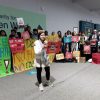
Youth Protest at COP29: ‘We Will Not Standby to Inherit Dead Planet’
“We cannot rely on capitalistic logic to serve our fight for liberation. More investments will not build houses after floods because it's not profitable. Corporations will not overthrow the industrial-agricultural complex that is completing our assault.”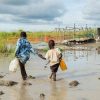
Children’s Needs Due to Climate Change, Conflict Often Ignored in Negotiations
As the world grapples with ongoing armed conflicts, from Ukraine to Gaza, advocacy for a more proactive approach to understanding and effectively responding to the needs of children affected by both armed conflict and climate-induced crises is growing.
Breakthroughs, Setbacks in COP29’s First Week of Ambitious Pursuit of Climate Consensus
It has been a high-profile packed agenda in Baku, Azerbaijan, marked by milestone events designed to complete the first enhanced transparency framework and the new collective quantified goal on finance, among other top priority matters.
Climate Change Threatens Our Existence, Says Indian Spiritual Leader Sadhguru
A sudden flurry of activity as Jagadish Vasudev, known widely as Sadhguru, emerges from an interview room in the COP29 media centre. It's early days of the conference and there is energy and excitement at the venue in Baku.
Climate Finance Loans a Disaster for Climate-Burdened African Communities
African environmental activists at the ongoing climate summit (COP29) in Baku have called on climate financiers to stop suffocating poor countries with unbearable loans in the name of financing climate adaptation and mitigation on the continent.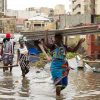
Robust Negotiations Still Needed to Push Rich Countries to Honor Financial Commitments
The irony is that whatever the stakes, finance always features as the “crying onion” at each COP. Hence for the COP29, dubbed the finance COP, no wonder we reach an ocean of tears—especially in view of the current geopolitics, when the world is facing the likelihood of having its historically biggest financial contributor on climate pull out.
Women, Indigenous Communities Must Lead Climate Finance Allocations at COP29—Plan International Global Director
Plan International, a global leader in advocating for children’s rights and gender equality, sees the need for women and Indigenous people to be at the forefront of climate negotiations.
CGIAR Developing Farmers’ Resilience in the Face of Climate Shocks
As COP29 negotiations continue in Baku, agricultural leaders are pitching the need for climate-resilient and data-driven solutions to support marginalized farmers and low-income communities.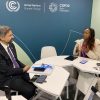
Building Resilience: Spotlight on Poorest, Rural Communities Amid COP29 Competing Priorities
Life in remote, marginal areas, drylands and deserts is increasingly becoming difficult because rural people are in the crosshairs of an unprecedented climate onslaught. A substantial number of lives and livelihoods are on the line, as nearly half of the world's population, 3.3 billion, lives in rural areas and 90 percent of them are in developing countries.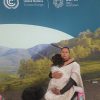
Walking with Wisdom: Whaia’s Mission to Bring Indigenous Knowledge to COP 29
Kaitiaki! Whaia says she is at COP29 to bring indigenous wisdom to influence policy and to provide guardianship (kaitiaki) of the climate negotiations.
From the Biodiversity COP16 to the Climate COP29: Building Equitable Accountability, Alignment, and Adequacy on Finance
The United States just went through its most consequential election. While the outcome raises questions about what the re-election of Trump means for U.S. engagement in global climate talks moving forward (in view of his previous stunt), the game is still on, with or without him. Despite the challenges, local communities, cities, states, private actors, and the public more broadly have embarked on an unstoppable journey—upholding the spirit of the Paris Agreement.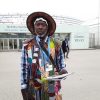
Africa’s Demands: Continent’s COP29 Irreducible Minimums Amid Release of First Draft Text
As expected, climate finance has taken center stage in Baku COP29 in a bid to renew the global focus on finance as a means to transform climate ambitions into tangible, sustainable action.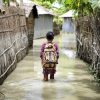
COP29 Negotiators Urged to Define Financial Path to Education for Climate-Affected Children
Directly destroying schools and learning materials, climate shocks are increasingly taking away the right to education. A staggering 400 million students globally experienced school closures from extreme weather since 2022. As COP29 negotiations deepen, defining a sustainable financial path to learning for vulnerable children, particularly those caught up in crises and conflict, is critical and urgent.
COP29: African Countries Must Wake Up from ‘Distributed Carbon Emission Guilt’ to People-Centered Climate Action
Global warming is no longer just an issue for the environment but a crisis of life itself. Yet, African governments’ climate action strategies, specifically those submitted under the Nationally Determined Contributions (NDCs), remain disproportionately focused on emission reductions—an approach that fails to address the most pressing health needs of African communities. For many Africans, it’s hard to explain why their leaders prioritize reducing emissions, which are rather low and insignificant when the immediate threat of climate change is not their carbon footprint but their vulnerability to its effects.
‘Show Me the Money’—Grenada PM Calls for Climate Justice
"Though I come from a 'no worries' island, climate change is deeply worrisome for us," Grenada's Prime Minister Dickon Mitchell told IPS in an exclusive interview at COP29 currently underway in Baku, Azerbaijan. Asked how his country was recovering from Hurricane Beryl, Mitchell said the island in the last 24 hours “experienced flash flooding and landslides... So, apart from Hurricane Beryl, we are also dealing with other climate catastrophes.”
Progress as Draft Decision Text for COP29 Presidency’s Top Negotiating Priority Released
Three days into the landmark COP29 conference, the co-chairs of the New Collective Quantified Goal (NCQG) have arrived at a workable basis for discussion on the summit’s top priority goal—a new climate finance goal. The COP29 Presidency says the draft will, moving forward, “guide conversations around potential landing zones and help identify concerns.”
Seeking COP29 Solutions as Desert Lake Disrupts Harmonious Co-Existence With Indigenous Community
Climate change exacerbates the difficulties already faced by indigenous communities, multiplying their vulnerabilities from political and economic marginalization and loss of land and natural resources. The ongoing climatic carnage is displacing indigenous communities at seven times the rate of the global population.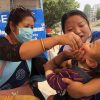
Make Health Top of Climate Negotiations Agenda—Global Climate & Health Alliance
Climate change and its impact on public health hasn't made the top of the agenda even at a forum like the UN Climate Conference, but is should, say the health community. Understanding the gap, more than 100 organizations from across the international health and climate community came together as the Global Climate and Health Alliance and have called wealthy countries to protect people's health by committing to provide climate finance in the order of a trillion dollars annually, in addition to global action with leadership from the highest emitting countries to end the fossil fuel era.
UNDP’s Sustainable Energy Director Calls For Innovative Financial Solutions for Adaptation, Mitigation
Riad Meddeb, Director of the Sustainable Energy Hub at the United Nations Development Programme (UNDP), stressed the urgency of finding innovative financial solutions during COP29.« Previous Page — Next Page »





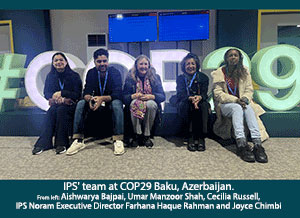
IPS COP29 Special Report

The Week with IPS

NEXT STOP - SDGs
Tracking global progress towards a sustainable world
Tracking global progress towards a sustainable world
