Languages
Thursday, October 8, 2026



News and Views from the Global South
COP29

2024 Poised to Be Warmest Year Ever—WMO Warns of Escalating Climate Crisis
Once again, scientists issued a red alert by analyzing ongoing world’s weather and its impact on the climate. The year 2024 is on track to be the warmest year on record, contributed by an extended streak of high monthly global mean temperatures.
Countdown Begins in Defining Twelve Days to Historic Global Climate Deal
The 29th session of the Conference of the Parties on climate change has officially kicked off in Baku, Azerbaijan, with the promise of striking yet another historic global climate deal and finance adaptation, gender responsive action and financing, and forgotten issues such as food waste are top on the agenda as every action is as crucial as every fraction in the rise or fall of a Celsius degree.
COP29: Making Space Applications Work for Women in Agriculture
When the first woman in space, Valentina Tereshkova, orbited the Earth in 1963, there were only three active Earth observation satellites. Today, the number is 114 times greater.
Cryosphere Crisis: Scientists Warn of Devastating Global Impacts Without Urgent Climate Action
Scientists warn of vastly higher impacts on billions of people’s livelihood and cost to the global economy by the accelerating losses in the world’s snow and ice regions, aka the cryosphere. Over 50 leading cryosphere scientists released an annual report on the status of the world’s ice stores on Tuesday (November 12) at the UN Climate Conference (COP29) in Baku. An updated report on the world's ice warns of “drastically higher costs without immediate emissions reductions.”
Without Supercharging Adaptation Funding Global Temperatures Could Surge
The Head of Impact Assessment and Adaptation, Henry Neufeldt, UN Environment Programme Copenhagen Climate Centre, has called for increased climate adaptation funding, particularly for developing nations facing significant climate risks.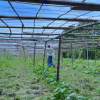
Farming in Crisis: Suicides and Climate Change Threaten India’s Agrarian Future
"Farming is in my blood, and I can’t imagine doing anything else," said Mahim Mazumder, a farmer from Assam. "Even though the past three to five years have seen drastic changes—with temperatures rising so much that even sitting under a tree no longer offers relief—I will keep farming, even if it only yields a small harvest. I've spent my entire life farming, and despite all the challenges, I’ll continue."
UNEP: Nations Must Step Up Adaptation—Starting with Bold Finance Action at COP 29
The United Nations Environment Programme’s (UNEP) 2024 Adaptation Gap Report has warned that adaptation actions are not keeping pace with the surging demands of a warming planet. Released ahead of the COP29 climate conference in Baku, Azerbaijan, the report—titled Come Hell and High Water—projected a bleak future where vulnerable communities bear the brunt of climate-induced hardships.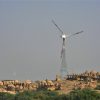
Is India Phasing Out Fossil Fuels Fast Enough To Achieve Its Emission Targets?
While India continues to rely heavily on coal, the south Asian economic giant is also aggressively pushing renewable energy production, especially after the costs of renewable energy production have fallen drastically in recent years around the world.
Knife-Edge November: Teetering on the Climate Abyss
Standing high on the vertiginous edge of the future and looking down into a volcanic seething of approaching doom, it is a totally understandable desire to want to close your eyes, walk away and turn on the sports channel. If you have one.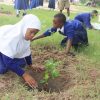
Tanzanian Students Drive Climate Action Through Tree Planting
At Gabimori primary school, located at Nyamagaro ward in Tanzania’s northern Rorya district, a 15-year-old Florence Sadiki kneels among polyethylene bags, carefully examining the seedlings she and her classmates have nurtured from tiny sprouts “We’ve planted many trees to make our school look better and to help fight climate change,” she says.
Scientific Research Can Play a Key Role in Unlocking Climate Finance
Climate finance will be at the epicenter of the discussion at the UN Climate Change Conference 2024 (COP29). The focus will be on strengthening the fund and defining the conditions under which the countries of the Global South will be able to access this money. However, little is said about the scientific research that is required to gather the evidence and data to prove the loss and damage caused by the impact of climate change in developing countries.
IMF isn’t doing enough to support Africa: billions could be made available through special drawing rights
At the 2021 UN Climate Summit, Barbados prime minister Mia Mottley called for more and better use of special drawing rights (SDRs), the International Monetary Fund’s reserve asset.
Without Accelerated Action, We Will Miss the Chance to Limit Warming to 1.5°C, Says UNEP Chief Climate Advisor
Anne Olhoff, Chief Climate Advisor at UNEP, underlined the urgent need for accelerated climate action ahead of COP29 in an exclusive interview with IPS. “The next six years are crucial—without accelerated action, we will miss the chance to limit warming to 1.5°C,” she warned.
UNEP’s 2024 Emissions Gap Report Warns: ‘No More Hot Air, Please’
The United Nations Environment Programme’s (UNEP) Emissions Gap Report 2024 delivered a stark reminder that the world is still far from meeting its climate commitments.
Salt: Bangladesh Communities On the Frontline of Climate Change
Global warming has far-reaching effects, and certain countries, particularly those with low lying coastal regions, are more vulnerable than others. Bangladesh, the largest delta in the world, is at the forefront of the global warming crisis. Its coastal areas are increasingly exposed to rising sea levels, natural disasters, and salinization, all of which have devastating effects on its population.
The Future of Food Security Lies Beyond COP29’s Negotiation Tables
Climate change has thrown our food systems into chaos. Extreme weather events and dramatic climate variations are hammering food production and supply chains across the world. As global leaders gear up for COP29, there’s plenty of buzz about climate action. But can we really expect these slow-moving, bureaucratic negotiations to deliver tangible and swift results to decarbonize and insulate our agri-food systems? Most likely not. But do not despair. While the COP29 talks unfold, crucial climate solutions for transforming food systems are already taking root on the ground.
Climate Justice Needs Recognition of Common, but Differentiated Responsibilities
Climate justice recognizes differential impacts of climate crisis between rich and poor, women and men, and older and younger generations. The UN Secretary-General António Guterres emphasized, “as is always the case, the poor and vulnerable are the first to suffer and the worst hit.” However, all people should have the agency to live life with dignity. Thus, climate justice looks at the climate crisis through a human rights lens.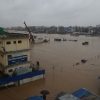
Nepal’s Deadly Flash Floods: What Went Wrong?
Nepal is trying to recover from recent flash floods and landslides caused by heavy rainfall over the last weekend of September, which claimed at least 226 lives. The mid- and eastern parts of the country, including the capital, Kathmandu, experienced the heaviest monsoon rains in two decades from September 26-28, leaving many parts of Kathmandu underwater. Experts say this is one of the deadliest and worst flash floods that impacted thousands of people in decades.
‘Australia Must Turn Its Climate Rhetoric into Action’
CIVICUS discusses the recent Pacific Islands Forum (PIF) meeting in Tonga with Jacynta Fa’amau, Pacific Campaigner at 350.org, a global civil society organisation campaigning for climate action.

COP 29: High Stakes for Small Islands Fighting for Climate Finance
Small Island Developing States (SIDS) are experiencing the most severe impacts of climate change. When leaders of those islands met in Antigua and Barbuda in May, they let the world know that achieving climate justice hinges on comprehensive climate finance.
Rising Temperatures Devastate Agricultural Eden of India’s Kashmir Region
Abdul Hameed Sheikh sowed his crop, working tirelessly for days in his paddy field. The 52-year-old farmer, from central Kashmir’s Budgam area, religiously irrigated his 3-acre plot to keep the soil well hydrated. He waited for the rain, but days passed and it didn’t come.« Previous Page — Next Page »





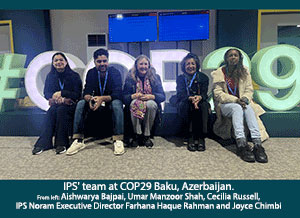
IPS COP29 Special Report

The Week with IPS

NEXT STOP - SDGs
Tracking global progress towards a sustainable world
Tracking global progress towards a sustainable world
