Languages
Thursday, October 8, 2026



News and Views from the Global South
COP29

Tanzania’s Maasai Women Adopt Climate-Smart Solutions To Tame Drought
In the scorching sun of Mikese village in Tanzania’s eastern Mvomero district, 31-year-old Maria Naeku tirelessly tends to her small vegetable patch. Each time she pulls a weed, the red soil stains her hands as she guides the trickle of water from a maze of pipes through an elevated bed to nurture her plants. In a drought-stricken area, Naeku's small garden is a lifeline for her family, giving them food and income.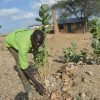
Governments Using Billions of Public Funds to Subsidize Climate-Destructive Industries—Report
A report examining corporate capture of public finance is accusing industries fueling the climate crisis, including fossil fuel ones, of draining public funds in the Global South, singling them out for squeezing out of governments USD 700 billion in public subsidies each year.
Explainer: Why Venezuela Needs To Reduce Its Gas Flaring
The most visible part of gas flaring in Venezuela is the so-called “Monagas illuminated nights.” These are red and orange skies, which are visible from the homes of the locals at night and which show the gas flaring in the oil fields of Monagas, a state located in the east of the Caribbean country and key in its oil production.
How Much is Too Much for Mount Everest? Isn’t it Time For Sagarmatha to Rest
"That’s Mt. Everest!" I overheard this from a trekking guide to his trekkers team. I stopped and asked him—which one! He was not our guide, but I approached. He pointed a finger and showed me Mt. Everest and I cried—I don't know why. I was overwhelmed and humbled to finally witness the world's tallest mountain—it was not from the base camp but from Thyangboche while returning.
Small Glacial Lakes’ Mass Destruction in the Himalayan Community
Small glacial lakes can cause destruction, which may impact the livelihoods of entire communities. Now this is the harsh reality that the community of Thame village in the Mt. Everest region of Nepal now faces as they rebuild after the August 16 disaster.
Rural Survival: Guardians of Mother Earth Saving Mau, Revitalizing Native Lands
The Great Rift Valley is part of an intra-continental ridge system that runs through Kenya from north to south. A breathtaking, diverse mix of natural beauty that includes dramatic escarpments, highland mountains, cliffs and gorges, lakes and savannas. It is also home to one of Africa’s greatest wildlife reserves—the Maasai Mara National Reserve.
Climate Action Greatest Economic Opportunity of this Century, Says UN Climate Chief
With fewer than 100 days to go to COP29, the highest decision-making body on climate issues under the United Nations Framework Convention on Climate Change (UNFCCC), the need for creative and innovative solutions to protect lives and livelihoods is now extremely urgent.
In Tonga the UN Secretary-General Declares a Global Climate Emergency
Three months ahead of the COP29 United Nations (UN) Climate Change Conference, the United Nations Secretary-General, António Guterres, has called for an emergency response from the international community as new data from the World Meteorological Organization (WMO) reveals a critical deterioration in the state of the climate.
Explainer: COP16—What’s It About and What Does It Need to Achieve?
‘Peace with Nature’ is the theme for the 16th meeting of the Conference of the Parties (COP16) to the Convention on Biological Diversity (CBD), which will take place in Cali, Colombia, between October 21 and November 1, 2024.
Pacific Community Photographic Winners Bring Impacts of Climate Change to Life
The Pacific Community’s photographic competition winners reflect the devastating climate impacts on beautiful and sensitive environments, documenting the most pressing issues the communities who live on the islands face today.
Climate Finance: The Planet is Speaking, Listen and Respond with Justice
As the planet groans under record-breaking temperatures and extreme weather events, Africa, which is responsible for only two to three percent of global emissions, stands out disproportionately as the most vulnerable region in the world. António Guterres, the United Nations Secretary-General’s special address on climate action titled ‘A Moment of Truth’ said 2024 was the hottest May in recorded history, and that this marks twelve straight months of the hottest months ever. For the past year, every turn of the calendar has turned up the heat.
LDCs Need Concessional Grants, Not Loans, Say Experts
Olaide Bankole was born and raised in Nigeria, and he observed how climate change was evident in the country with temperature rises and rainfall variability and how drought, desertification, and sea level rises have been affecting its people. He is also aware of how rising sea levels threaten southern Nigerian cities like Lagos and coastal areas, increasing their vulnerability to flooding and waterborne diseases.« Previous Page





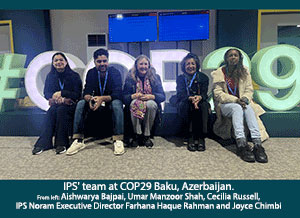
IPS COP29 Special Report

The Week with IPS

NEXT STOP - SDGs
Tracking global progress towards a sustainable world
Tracking global progress towards a sustainable world
