
Sunday, October 18, 2026



News and Views from the Global South
Environment

Venezuela Needs More Local Data To Understand the Impacts of Climate Change
A group of 55 researchers gathered and analyzed 1,260 bibliographic references to compile the Second Academic Report on Climate Change in Venezuela. Their final conclusion is that more local studies are still needed to record the direct impacts across different Venezuelan regions and, in particular, to provide data to design the adaptation plans necessary to address climate change.
Sindh People’s Housing Redefines Post-Disaster Adaptation Success
By any comparison, the statistics for Sindh People's Housing for Flood Affectees (SPHF) are phenomenal. In 2022, photographs from the region showed people treading carefully through waist-deep water with their few belongings grasped firmly above their heads in an attempt to escape the flooding caused by 784 percent more than average monsoon rains.
‘Once Conversations about Democracy and Equality Begin, They Are Very Hard to Silence’
CIVICUS discusses restrictions on civic space in Thailand and the detention of activist and human rights lawyer Arnon Nampa with Akarachai Chaimaneekarakate, Advocacy Lead at Thai Lawyers for Human Rights (TLHR).
CIVICUS 2025 Report Reveals Widespread Attacks on Civic Freedoms Worldwide
Over the course of 2025, global civic space conditions have deteriorated sharply, with most countries experiencing some degree of obstructed civil liberties. As authoritarian governments strengthen their hold and have even escalated the use of military force to suppress public dissent, civilians report facing increasing limitations of freedoms of association, peaceful assembly, petition and religion, as well as notable crackdowns on press freedoms.
International Funding for 30×30 Biodiversity Target Falls Billions Short of Global Goals
A new study and interactive dashboard released today in Nairobi at the seventh session of the United Nations Environment Assembly (UNEA) finds that current international financial flows remain billions of dollars short of what is required to achieve the global biodiversity target of protecting and conserving at least 30 percent of the world’s land and ocean by 2030 (30x30).
How Community Radio Is Powering Tanzania’s Climate Resilience
At dawn in the mangrove-choked Rufiji estuary, paddles from wooden canoes slice through still waters as a soft voice drifts across the tide.
Thousands Gather in Nairobi as Science Meets Diplomacy for Planet Protection
“There will never be a better time than now to invest in a stable climate, thriving ecosystems, and resilient lands, or in sustainable development that delivers for all,” said Amina J. Mohammed, the deputy Secretary-General of the United Nations, during the opening plenary of the seventh meeting of the UN Environment Assembly (UNEA-7) taking place from December 8 to 12, 2025.
Climate Crisis Disrupts Sundarbans Community Festival, Prosperity
A dried karam tree branch stands on the bank of a pond in a field in Datinakhali village adjacent to the Sundarbans. Despite many efforts, the tree could not be saved.
Cyclone Ditwah Leaves Millions Affected as Sri Lanka Faces Widespread Flooding, Displacement, and Rising Health Risks
In late November, Cyclone Ditwah made landfall in Sri Lanka and southern India, bringing heavy rainfall that triggered widespread flooding and devastating landslides. The storm caused extensive damage to civilian infrastructure and resulted in a significant loss of life. Communities have been severely impacted, with limited access to essential services, while humanitarian agencies face challenges in reaching the most vulnerable populations.
Sri Lanka & the Global Climate Emergency: The Lessons of Cyclone Ditwah
Tropical Cyclone Ditwah, which made landfall in Sri Lanka on 28 November 2025, is considered the country’s worst natural disaster since the deadly 2004 tsunami. It intensified the northeast monsoon, bringing torrential rainfall, massive flooding, and 215 severe landslides across seven districts.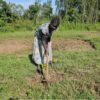
Farmers Earn While Reviving Native Forests Through a Blockchain-Powered App
For years, Morris Onyango had been trying to reforest his degraded land on the shores of River Nzoia, in Siaya county, 430 kilometers from Kenya’s Capital, Nairobi. But every time he planted trees on his farm, his efforts bore little fruit, as floodwaters would not only wash away his tree seedlings but also fertile topsoil on his land.
Businesses Impact Nature on Which They Depend — IPBES Report Finds
Nature is a double-edged sword for global business. A groundbreaking report will reveal how businesses profit from exploiting natural resources while simultaneously impacting biodiversity.
Fresh Lens For Nuanced Multifaceted Climate Solutions Needed
“I see more philanthropic support aligning with systems thinking, linking climate stability, biodiversity protection, Indigenous leadership, and community resilience,” says Michael Northrop, Program Director at the Rockefeller Brothers Fund.
Why the UN Environment Assembly is Essential to a Safer, More Resilient Planet
As geopolitical challenges and tensions escalate globally, one thing is clear: fragmented politics will not fix a fractured planet. This is why the United Nations Environment Assembly (UNEA) – the world’s highest decision-making body on the environment – is so critical to address our shared and emerging environmental threats.
Yemen’s Worsening Food Security Crisis: Economic Collapse, Continued Insecurity, and Humanitarian Challenges
For the past decade, Yemen has been at the center of a severe and multifaceted humanitarian crisis, marked by widespread violence between various Middle Eastern actors, widespread civilian displacement, economic decline, and the collapse of essential services that serve as lifelines for displaced communities.
‘Seven Million People Have Taken to the Streets to Stand up for Democracy’
CIVICUS discusses US civil society action under the second Trump administration with Bridget Moix, General Secretary of the Friends Committee on National Legislation, the oldest faith-based lobbying organisation in the USA, advocating for peace, justice and environmental stewardship. Bridget has participated in the No Kings movement, a nationwide grassroots response to democratic backsliding and attacks on rights.
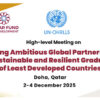
Graduation Must Be a Springboard, Not a Stumbling Block
As we gather in Doha for the High-Level Meeting on “Forging Ambitious Global Partnerships for Sustainable and Resilient Graduation of Least Developed Countries,” the stakes could not be higher. A record number of fourteen countries-equally divided between Asia and Africa are now on graduation track. Graduation from the Least Developed Country (LDC) category is a landmark national achievement—a recognition of hard-won gains in income, human development, and resilience. Yet, for too many countries, this milestone comes with new vulnerabilities that risk undermining the very gains that enabled graduation.
COP30 Fails the Caribbean’s Most Vulnerable, Leaders Say: ‘Our Lived Reality Isn’t Reflected’
Caribbean small island states say this year’s UN climate conference has once again failed to deliver the urgency and ambition needed to tackle escalating climate devastation across the region. From slow-moving climate finance to frustrating political gridlock, leaders say COP30 did not reflect the realities that small islands are living through every day.
Africa’s Critical Minerals Poised to Power Global Green Energy Transition
Although Africa holds more than 30 per cent of the world’s critical green minerals—including cobalt, lithium, manganese, and rare earth elements vital for building batteries, wind turbines and solar panels— this has not translated into prosperity for the continent.
From Access to Action — Carbon Markets Can Turn Developing Countries’ Ambitions into Realities
The UN climate talks at COP30 once again brought the critical issue of climate finance to the forefront of global discussions. However, while much of the debate revolved around traditional forms of aid directed at developing countries most vulnerable to the impacts of climate change, a faster, more transformative approach lies in expanding access to carbon markets.
Continued Inaction Despite G20 Report on Worsening Inequality
Although inequality among countries still accounts for a far greater share of income inequality worldwide than national-level inequalities, discussions of inequality continue to focus on the latter.« Previous Page — Next Page »





Through our global network of local writers, we are continuing our award-winning coverage of global and local environmental challenges, with a focus on the people for whom the ecosphere matters in a direct way: rural dwellers who have little means to protect themselves against adverse conditions; communities that need to switch to sustainable development in order to survive; poor women and children, who are the most vulnerable in natural disasters. Sponsored by the United Nations Environment Program (UNEP), the United Nations Development Program (UNDP) and The World Bank (WB), IPS also maintains the award-winning Tierramérica, a specialised information service on environment and development.

The Week with IPS

Tracking global progress towards a sustainable world


