
Wednesday, November 18, 2026



News and Views from the Global South
Environment
JAPAN: Vulnerability and Uncertainty Prevail In Wake of Nuclear Disaster
Accidents at four nuclear power reactors hit by the earthquake and tsunami in Fukushima have left thousands of residents in the vicinity facing an uncertain future as they prepare for evacuation orders to protect them from dangerous radiation contamination.
MALAWI: Enterprising Approach Underlies New Sanitation Campaign
The market can do better: a sanitation and hygiene campaign to be launched in Malawi plans to apply this tenet to improve cleanliness and public health in the country's cities.
LATIN AMERICA: Wave of Water Privatisation Over; Coverage Challenge Remains
Now that the wave of water privatisation of the 1980s and 1990s has let up, the main challenge facing water utilities in Latin America is expanding coverage of high-quality water services.
U.N. Water Conference Focuses on Cities
As a U.N. conference on water opens in South Africa today, the country's Council for Scientific and Industrial Research has repeated warnings that the country faces a water supply crisis. Experts attending the three-day conference will consider the challenges posed by growing demands, migration and water resources potentially limited by careless use and climate change.Manufacturing in Africa Can be Profitable – And Developmental
Investing in adding value to raw materials is crucial for the development of the African continent.
Water Management Transcends “Public or Private” Debate
A fund financed with public and private resources seeks to create a participatory and transparent water management model in Quito.
Cochabamba Still Thirsting for Water
In the Bolivian city of Cochabamba, scene of the 2000 “Water War”, both privatisation and public administration have failed to adequately provide citizens with this vital resource.Ecobreves – ARGENTINA: Shutdown of Embalse Nuclear Plant Urged
The Foundation for the Defence of the Environment in Argentina has challenged the decision of the government of the central province of Córdoba to continue operating the Embalse nuclear power plant without conducting an environmental impact assessment or public hearing.Ecobreves – BRAZIL: Banana Peels Can Filter Heavy Metals
Water contaminated with potentially toxic metals can be purified using banana peels as a filter, according to a study from the São Paulo State University (UNESP) in Botucatú, 230 kilometres from the city of São Paulo.Ecobreves – HONDURAS: Flood Risk Targeted in 10 Vulnerable Municipalities
The Honduran government has begun infrastructure work to reduce the risk of overflowing rivers and flooding in 10 highly vulnerable municipalities.Ecobreves – MEXICO: Birdwatching Tourism Potential Untapped
Mexico is failing to take advantage of the significant potential of ecotourism geared to birdwatching, says a report released by two environmental organisations on Mar. 15.
A Moment of Silence for Dying Millions on World Water Day
When the international community commemorates World Water Day next week, perhaps it should ponder the words of U.N. Secretary-General Ban Ki-moon, who once remarked he does not expect people the world over to stop what they are doing and observe a moment of silence, come Mar. 22.CHINA: Sympathy for Japan Drowns Out Historic Hate
Despite deep historic tensions between the two Asian powers, a surge of sympathy has emerged among Chinese toward victims of last week’s earthquake and resulting tsunami in northern Japan, which has left an estimated 10,000 dead or missing.
LATIN AMERICA: Brick-Making Industry Confronts Its Climate Impacts
Wearing rolled up trousers and a spattered shirt, Carlos Frías mixes mud, water and manure to prepare a row of red bricks.
AFRICA: Anxious Eyes on Green Climate Fund
The African Development Bank says it is concerned about administrative delays holding up progress on the Green Climate Fund - one of the most significant achievements from the Cancún climate talks.
Investment in African Economies Shifting Away from Raw Materials
Local and foreign investment on the African continent is slowly moving away from agriculture and raw materials to manufacturing, services, communication and tourism, despite poor infrastructure and low skills levels.Japan Nuke Disaster Could Be Worse Than Chernobyl
A global nuclear disaster potentially worse than Chernobyl may be under way in Japan as hundreds of tonnes of highly radioactive spent nuclear fuel are open to the sky, and may be on fire and emitting radioactive particles into the atmosphere.
TAIWAN: Public Demands Safety Review of New Reactor
The unfolding disaster at Japan’s Fukushima Daiichi Nuclear Power Plant has reignited debate over Taiwan’s own nuclear power programme and the controversy over continuing construction of a fourth nuclear facility here.Maldives Seeks “Smooth Transition” for World’s Poorest Nations
When the environmentally-threatened Indian Ocean island of Maldives "graduated" from the ranks of least developed countries (LDCs) to a middle-income country last January, the graduation was characterised as a milestone in the country's socioeconomic development.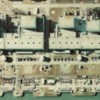
JAPAN: Food and Gasoline Shortages Plague Nuclear Exclusion Zone
For the past three days Hiroko Oogusa, 62 - following orders from the local authorities - has remained in her tightly shuttered home located 40 kilometres from the badly damaged Daiichi nuclear power plant in Fukushima.Japan’s Nuclear Nightmare Triggers Fears in France
Until the nuclear crisis started unfolding in Japan last week, most French citizens did not doubt that the country's 58 nuclear reactors were safe enough to continue operating for scores of years to come.« Previous Page — Next Page »


Through our global network of local writers, we are continuing our award-winning coverage of global and local environmental challenges, with a focus on the people for whom the ecosphere matters in a direct way: rural dwellers who have little means to protect themselves against adverse conditions; communities that need to switch to sustainable development in order to survive; poor women and children, who are the most vulnerable in natural disasters. Sponsored by the United Nations Environment Program (UNEP), the United Nations Development Program (UNDP) and The World Bank (WB), IPS also maintains the award-winning Tierramérica, a specialised information service on environment and development.

The Week with IPS

Tracking global progress towards a sustainable world


