
Saturday, November 21, 2026



News and Views from the Global South
Environment
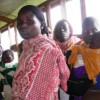
UGANDA: “Mount Elgon Eviction Has Reduced Us to Beggars”*
"We have been reduced to begging from relatives and to migrate to urban areas where life is not safe. We were living in the mountain for more than 200 years. Transferring us means burying us, completely. We want to stay in our area and develop."AFRICA: Water Summit Ends
As the Second Africa Water Week ends, participants have reiterated that lack of access to clean water and adequate sanitation has a direct bearing on public health and the economy in Africa.WATER-AFRICA: Civil Society Demands Action, Not Words
"No more commitments... We have had enough of the promises. Can we please see something happening on the ground? Right now, it is business as usual and that’s why Africa is off-track on the MDG target."CLIMATE CHANGE: Africa Told ‘Stop Playing the Victim’
Critics of carbon trading, a strategy meant to combat global warming, say the buying and selling of carbon credits is being exploited.CLIMATE CHANGE: Africa In the Global Carbon Trade
Carbon trading, as promoted by the Kyoto Protocol's Clean Development Mechanism (CDM), has become a key global strategy to reduce greenhouse gas emissions.AGRICULTURE-ARGENTINA: Desperately Dry
The persistent drought affecting some 90 percent of Argentine territory has slain cattle in the hundreds of thousands and caused forest fires, drastic restrictions on water use and local disputes over water.CLIMATE CHANGE: Signs and Portents of a Hostile New World
Lawrence Amos travelled from the Arctic at the top of the world to the tropical middle to recite in a soft voice the ongoing destruction of his home by climate change.VIETNAM: Human Rights, Health: Twin Issues for Climate Change
Vietnam will be one of five nations most affected by climate change. Worst-case scenarios see large parts of the low-lying and flood-prone Mekong Delta area, which produces much of the nation’s rice crop, flooded.
AFRICA: Taking the Lead on Water
Water is a resource that binds people together, for better or worse.WEST AFRICA: Helping Pirates to Plunder the Oceans
West Africa is one of the world’s regions most affected by pirate fishers. Illegal, unreported or unregulated fishing has been devastating local livelihoods and ecosystems for decades. National fisheries management authorities are often helpless to protect their maritime resources.JAPAN: Fresh Aid to Mekong Signals Rivalry with China — Experts
There is more to Prime Minister Yukio Hatoyama's pledge last week to extend at least 500 billion yen (5.6 billion U.S. dollars) in fresh assistance to the Mekong region than meets the eye, or so observers think.POLITICS: Big Breakthroughs May Elude Obama’s Asia Trip
U.S. President Barack Obama arrives in Tokyo Thursday for the first stop of his four-nation trip to Asia, but an ongoing disagreement over realignment of U.S. forces in Japan, new roadblocks to a free trade agreement (FTA) with South Korea, and continuing tussles over climate change, trade and currency issues with China have led the White House to downplay goals for the northeast Asian legs of the trip.
CLIMATE CHANGE-BRAZIL: Towards Carbon-Free Chimneys
Scientists in Brazil are developing a technique for absorbing industry-produced carbon dioxide before it ever reaches the atmosphere. The secret lies in half-centimetre ceramic spheres.PHILIPPINES: Guarded Optimism for New Climate Change Law
While pessimism continues to dog the lead-up to next month’s climate change talks in the Danish capital of Copenhagen, a new Philippine law aimed at streamlining the country’s efforts to mitigate and adapt to the effects of global warming has received a guarded welcome by environmental groups here.ENERGY-SPAIN: Windfall for the Grid
Wind energy notched up a new record in Spain on Sunday, when it generated 53 percent of total electricity demand nationwide for part of the day, according to official figures announced Monday.
ENVIRONMENT: ‘Temperature Rise Guaranteed, Thanks to Brown Clouds’
Regardless of success at the upcoming climate talks at Copenhagen this December, there will still be a 2.5 degree rise in temperatures.Ecobreves – MEXICO: Environmental Budget Plummets
Despite the Mexican government's statements in favor of environmental protection, the 2010 national budget sets aside only a small amount of money for it, denounced the environmental watchdog Greenpeace.Ecobreves – BRAZIL: Recycling Greenhouse Gases
A device invented by the company Carbono Brasil and the Federal University of Santa Catarina captures carbon dioxide and methane generated by industry and turns the gases into inputs for other productive activities.Ecobreves – HONDURAS: The Reforestation of El Merendón
Around 58 hectares of forest hit by a weevil plague will be reforested with cedar and mahogany over the next five months in El Merendón mountain range, which serves as the lungs of the northwestern Honduran city of San Pedro Sula.Ecobreves – ARGENTINA: Breaking the Silence of Chagas Disease
One hundred years after the discovery of Chagas disease, endemic in many Latin American countries, the organization Doctors Without Borders (Médicos Sin Fronteras) staged a photo exhibit in Buenos Aires, as well as informational talks and concerts to raise awareness of the disease.
Towards Carbon-Free Chimneys
An invention by Brazilian chemists that absorbs greenhouse gases reverses the predominating approaches to carbon dioxide reduction. Instead of attempting to sequester carbon from the atmosphere, it prevents emissions at the site of origin: the industrial chimney.« Previous Page — Next Page »


Through our global network of local writers, we are continuing our award-winning coverage of global and local environmental challenges, with a focus on the people for whom the ecosphere matters in a direct way: rural dwellers who have little means to protect themselves against adverse conditions; communities that need to switch to sustainable development in order to survive; poor women and children, who are the most vulnerable in natural disasters. Sponsored by the United Nations Environment Program (UNEP), the United Nations Development Program (UNDP) and The World Bank (WB), IPS also maintains the award-winning Tierramérica, a specialised information service on environment and development.

The Week with IPS

Tracking global progress towards a sustainable world


