
Saturday, November 21, 2026



News and Views from the Global South
Environment
Ecobreves – BRAZIL: Agrarian Reform Also Deforests
The settlements created or officialized by Brazilian agrarian reform in 2008 contributed 21 percent of deforestation in the nine states that are part of the Amazon jungle, according to a new report by the national agrarian reform and settlements institute, INCRA.Ecobreves – VENEZUELA: Newborn Whale Shark Rescued
A newborn whale shark (Rhincodon typus), measuring some 40 centimeters long, was found this month by artisanal fisherfolk off the coast of northeast Venezuela and taken to the Marine Museum of Isla Margarita.Ecobreves – HONDURAS: Spain Aids in Protecting Hummingbird
Spain has granted Honduras 1.9 million dollars to develop sustainable programs in the habitat of the endangered emerald hummingbird (Amazilia luciae).Ecobreves – CUBA: Urban Agriculture Boosts Production
The urban agriculture movement in Cuba produced 409,668 tons of fresh vegetables and herbs in the first quarter of this year, and is now working to offer products even at the height of the northern summer season.FINANCE: ExxonMobil Faces Growing Dissent in the Ranks
After years of boycotts and protests, the pressure on the world’s largest oil company to change its practices might soon be coming from the mutual funds that invest in it, some shareholders hope.
HEALTH: Flu Fuels Concerns about ‘Factory Farms’
While the swine flu virus does not appear to be as potentially devastating as first imagined, environmentalists and some public health activists argue that it should be considered a wake-up call to the public about the conditions in which much of our food is being produced.ENVIRONMENT: Deep CO2 Cuts May Be Last Hope for Acid Oceans
Ocean acidification offers the clearest evidence of dangers of climate change. And yet the indisputable fact that burning fossil fuels is slowly turning the oceans into an acid bath has been largely ignored by industrialised countries and their climate treaty negotiators, concluded delegates from 76 countries at the World Oceans Conference in Manado, Indonesia.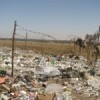
ENVIRONMENT: West Bank Becomes Waste Land
Israel has found a cheap and easy way to get rid of its waste, much of it hazardous: dump it into the West Bank. A few Palestinians can be bought, the rest are in no position to complain.
PERU: Talks Fall Flat; Indigenous Protests Rage On
The Peruvian government resumed talks with indigenous groups after a violent crackdown on protests left 10 injured and around 20 under arrest. But the dialogue has not yet brought results, and the demonstrations against decrees that affect indigenous lands and the rainforest continue, while a state of emergency remains in place in several Amazon regions.BRAZIL: Vigil Against Farming Offensive in Amazon
Celebrities and environmental organisations held a vigil at the Brazilian Congress in an effort to block passage of a bill that they say could cause an even greater "environmental disaster" in the Amazon jungle.EUROPE: Help the Economy, Hurt the Environment
The European Economic Recovery Plan devised by the European Commission last year to help deal with the financial crisis is likely to fast-track environmentally damaging projects in the new member states.BRAZIL: Flooding Highlights Lack of Disaster Prevention
Several weeks of unusually heavy rainfall and flooding that has affected nearly one million people in 10 of Brazil’s 26 states have revealed a problem that only becomes news when tragedies occur: the lack of public investment in disaster prevention, experts warn.HEALTH: Killer Diarrheal Diseases Eclipsed on Donor Agendas
Interest in reducing the harm caused by diarrheal diseases has waned among the global health and aid communities, said two new reports released Tuesday in Washington.
ENVIRONMENT: Scientists Shepherd Dwindling Right Whales
When a North Atlantic right whale swimming near Boston bellows at 3 a.m., a phone rings in a small town in upstate New York.HEALTH: WHO Shifts Away from DDT for Malaria Control
While much of the public health community’s attention is consumed by the H1N1 human swine flu outbreak, efforts are quietly being made to plug away at the continued threat of malaria.
Q&A: More Investment in Production Won’t Cure African Food Crisis
The food crisis in African states will not be solved by investment to spur agricultural production because the problem is not food output but poverty that is making food unaffordable for urban Africans.
Science on the Trail of New Flu's Secrets
Using genetic studies, scientists are seeking conclusive answers about influenza virus A/H1N1, which continues to mutate.
The Nuclear Club's New Clothes
It's false that electricity production from nuclear reactors does not produce carbon dioxide, the leading greenhouse gas, explains Chilean environmental expert Sara Larraín in this exclusive Tierramérica column.Ecobreves – BRAZIL: Biodegradable Plastic from Sugarcane
Brazil will produce 200,000 tons a year of biodegradable plastic made from sugarcane. This raw material could be used to make fuel tanks for vehicles and containers for yogurt, milk, detergents and other products.Ecobreves – LATIN AMERICA: Unionists Demand Eco-Jobs
Labor unionists in Latin America and the Caribbean are calling for greater participation in sustainable development through the promotion of jobs in environmentally friendly technologies.Ecobreves – MEXICO: Nudist Resort Destroys Mangrove
Residents of Marquelia, a coastal town of some 15,000 people in the southwestern Mexican state of Guerrero, have complained that municipal authorities allowed the destruction of mangrove forests in an area where a nudist resort is to be built.« Previous Page — Next Page »


Through our global network of local writers, we are continuing our award-winning coverage of global and local environmental challenges, with a focus on the people for whom the ecosphere matters in a direct way: rural dwellers who have little means to protect themselves against adverse conditions; communities that need to switch to sustainable development in order to survive; poor women and children, who are the most vulnerable in natural disasters. Sponsored by the United Nations Environment Program (UNEP), the United Nations Development Program (UNDP) and The World Bank (WB), IPS also maintains the award-winning Tierramérica, a specialised information service on environment and development.

The Week with IPS

Tracking global progress towards a sustainable world


