
Sunday, November 22, 2026



News and Views from the Global South
Environment
DEVELOPMENT-TOGO: High Cost of Living Exacerbated By Floods
Recent flooding in Togo caused the collapse of over 10 bridges connecting the capital of Lomé to the north of the country. The consequences have been increased transportation costs and a steady climb in the price of consumer products.ECONOMY-PERU: Easier to Extract Minerals than Accounting Information
Sixty-six percent of the Peruvian state’s revenue from the extractive industries does not appear on government accounts. Parliament is taking a hand in the matter amid pressure from oil, gas and mining companies for the government to flout an international agreement on transparency.INDIGENOUS PEOPLE: U.S. and Canada Found Guilty of Racism
The international community now fully recognises the native peoples’ right to protect their lands and live distinct lifestyles. Yet, most of the world’s 370 million indigenous peoples continue to face abuse and injustices at the hands of state authorities and commercial concerns.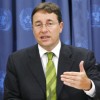
CHINA: Greening of the Games
Though human rights and environmental issues - such as censorship and pollution in Beijing - have been the two major focuses of criticism levelled against the Chinese government during the lead up to the Olympic games, Achim Steiner, the Executive Director of the United Nations Environment Programme (UNEP), is expected to address some of Beijing’s environmental successes during the opening ceremonies.
BURMA/CHINA: Avoid ‘Blood Jade’ Olympic Souvenirs – Activists
They make attractive mementos for the thousands of visitors to Beijing for the Summer Olympics. But souvenirs and jewellery made out of prized jade from Burma are ridden with a history of abuse and blood, say activists from the military-ruled country.INDIA/US: Racing to Clear Last Lap of Nuke Deal
As the Bush administration pushes the outer limits of the political timeline for the passage of the controversial nuclear cooperation deal with India in the United States Congress, two potential stumbling blocks have become apparent in securing exemptions for the agreement from the tough export rules of the Nuclear Suppliers' Group (NSG).DISARMAMENT: China Key Arms Supplier to Human Rights Abusers
As China tries to boost its international image, playing host to a summer Olympic games, the government in Beijing is being singled out as a key arms supplier to some of the world's worst human rights abusers, according to a new study released here.TRADE: ''Doha Collapse Won't Mean Suffering for The Poor''
At the heart of the collapse of the World Trade Organisation’s Doha Round last week are the different opinions on liberalisation and its relation to development. Developed countries promote the idea that liberalisation will bring about development and thus that the failure of the Round constitutes a blow for the poor.TRADE: ‘Increased Foreign Investment Will Not Lift All Boats’
Paul Moist, the President of Canada’s largest union, expressed concern about a free trade deal between Canada and Colombia during a recent meeting with Fabio Valencio, Colombia’s Minister of the Interior.ENVIRONMENT-SPAIN: Number Two in Wind Energy
Spain is the world’s second producer of wind energy, after Germany and ahead of the United States, and plans to continue expanding its infrastructure so as to double its current output by 2012. But new regulations may slow this development.
Small Hydroelectric Dams Not So Green
An attractive business with a reputation of being eco-friendly, small hydroelectric dams do pose some dangers to the environment, especially if there are many in the same river basin.
“There Are Seven Million People Who Lack AIDS Treatment
Three million people today receive treatment against AIDS. It was what the World Health Organization proposed for 2005, and we are achieving it with difficulty in 2008, but meanwhile there are seven million who lack treatment, says Argentina's Pedro Cahn, co-chair of the 17th International AIDS Conference.Ecobreves – VENEZUELA: Caribbean Brings Garbage to Shores of Tortuga Island
The sea is the vehicle for pollution of the islands of the southern Caribbean, even the nearly uninhabited ones like La Tortuga, located 150 kilometers northeast of the Venezuelan capital.Ecobreves – CHILE: Illegal Logging in Native Forest Under Investigation
The investigative police in Chile are looking into a report of illegal logging in a native forest for the construction of a road to a dam on the Cuervo River, a project of the Energía Austral company.Ecobreves – HONDURAS: Date Set for Withdrawal of Canadian Mine
The Honduran mining development agency announced the withdrawal, in one year, of the Entremares mining company, a subsidiary of Canada’s Glamis Gold, which launched operations in this country in 2000.Ecobreves – BRAZIL: Recycled Plastic for Solar Water Heaters
An apparatus made from discarded plastic containers provides hot water, making use of the abundant solar energy of the southern Brazilian state of Paraná.ENVIRONMENT-THAILAND: River Diversion Plans For Whose Benefit?
Thai Prime Minister Samak Sundaravej’s plans to divert water from rivers in neighbouring Laos to help feed agricultural production faces stiff opposition from activists, who argue the ambitious projects could threaten the environment and local people’s lives.ENVIRONMENT: Tierramerica Centre Born in Heart of Amazon Jungle
The Tierramérica International Centre for Sustainable Development and Environmental Defence held its founding assembly Thursday in Manaus, a city in the heart of the Brazilian Amazon, during a seminar on the world’s big environmental challenges.PERU: Seeking Ways to Remedy Unequal Distribution of Mining Taxes
The Peruvian parliament is studying ways to improve the distribution of the "canon minero", the portion of the taxes paid by mining companies that is transferred to the regions, in order to benefit the country’s poorest provinces.
AGRICULTURE: The Climate Costs of a Glass of Milk
A simple glass of milk on the breakfast table can carry high environmental costs. Because of this, some farmers and scientists are looking for ways to reduce the impacts of agriculture and livestock, which are responsible for 12 to 14 percent of global emissions of greenhouse gases.
VIETNAM: Coping With Skyrocketing Fuel Prices
Nguyen Van Minh has just delivered a consignment of apples from China in his modified Hyundai at Long Bien market where, each night, hundreds of trucks pull up laden with fruits and vegetables from distant provinces and neighbouring countries.« Previous Page — Next Page »


Through our global network of local writers, we are continuing our award-winning coverage of global and local environmental challenges, with a focus on the people for whom the ecosphere matters in a direct way: rural dwellers who have little means to protect themselves against adverse conditions; communities that need to switch to sustainable development in order to survive; poor women and children, who are the most vulnerable in natural disasters. Sponsored by the United Nations Environment Program (UNEP), the United Nations Development Program (UNDP) and The World Bank (WB), IPS also maintains the award-winning Tierramérica, a specialised information service on environment and development.

The Week with IPS

Tracking global progress towards a sustainable world


