
Sunday, November 22, 2026



News and Views from the Global South
Environment
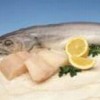
BIODIVERSITY: Hake Could Disappear from Argentina’s Seas
An urgent government plan is the only thing that can save the common hake (Merluccius hubbsi), Argentina's leading fish export, say environmentalists and experts.ECONOMY-ANGOLA: Slowdown Will Hurt Trade Partners
Slower economic growth in Angola will have a negative effect on exports from the southwest African nation’s main trading partners, especially Portugal and Brazil.ENERGY: Not So Small, And Beautiful
While the big debate continues about oil prices, the alternatives to oil and the development of biofuels, scattered groups are finding new successes in generating all the energy they need, doing it cleanly - and now doing it on an impressive scale.DEVELOPMENT: Gulf Eyes ‘Oil-For-Food’ Deal With Neighbours
Recent attempts by Gulf countries to invest in farmlands abroad to counter soaring inflation and guarantee long-term food security could prove to be a win-win situation in the short-term for both the oil-rich region and its investment-hungry neighbours, but continued high oil prices may neutralise the gains in the long-run, feel experts.
MIDEAST: Anything for a Bath, Anything for Fuel
The girl, about 16, is wandering about Jebaliya refugee camp, picking up anything she thinks can burn. She cannot find enough bits of wood, so she gathers plastic bags, old notebooks and even a pair of broken plastic sandals.EGYPT: Govt Forced to Bend on Israel Gas Deal
In the last two months, popular and parliamentary opposition to the sale of Egyptian natural gas to Israel - at undisclosed prices - has mounted. As a result, in a rare nod to public opinion, the government recently announced it was "revising" the terms of the sale agreement.CUBA: Don’t Worry, Be Ready – for Hurricanes
Cuba has decided not to make public announcements of the overall outlook for the coming hurricane season, because it makes little practical difference to people’s lives and tends to create false apprehensions, said José Rubiera, regarded as this Caribbean country’s top expert on hurricanes.
DEVELOPMENT-ANGOLA: Stressing the Importance of Clean Water
A survey of Angolan households has revealed less than half of caregivers always treat water with a reliable method before giving it to children. And one third of those interviewed by Population Services International (PSI) believes water is blessed by God and does not need to be sterilised before use.EAST TIMOR: Outsourcing Sugar Cane
The East Timor government’s recent decision to grant vast lands to an Indonesian company to plant sugar cane has been heavily criticised by Timorese society, who are demanding that the government immediately revoke the contract with the foreign company.
DEVELOPMENT-ANGOLA: Absorbing Lessons on Clean Water
Playing happily in the sand with her twin sister, it's hard to believe Vivia Paulino was only months ago on the brink of death.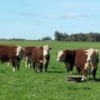
How to Atone for Beef's Sins
Cattle consume many kilos of feed for each kilo of meat they produce and they are an enormous source of greenhouse gases in Argentina, Brazil and Uruguay.
Hake Could Disappear from Argentina's Seas
Electronic systems to track fishing, support for industrialization and environmental certification as a market incentive are among the recommended steps to save the hake.Ecobreves – MEXICO: Last Gasp of Rare Porpoise
Efforts are failing to prevent the extinction of the vaquita (Phocoena sinus), a rare species of porpoise that is native to Mexico. From 1999 to 2008, its population has plummeted from 600 to 150 animals.Ecobreves – BRAZIL: Tepid Project on Climate Change
Brazil has a project in place to create a National Climate Change Policy, defined by interministerial commissions and sent to Congress as part of the government's celebrations of World Environment Day, Jun. 5.Ecobreves – HONDURAS: Eye on Waste Management Bill
The Honduran Congress is to debate a law to regulate and recycle waste, especially in urban zones, parliament president Roberto Micheletti told Tierramérica.GREECE: Energy Deal Creates Nervousness
An agreement between Russia and Greece to cooperate in the construction of a part of the South Stream gas pipeline has been received with mixed feelings.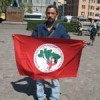
DEVELOPMENT: Brazilians Resist Finnish Plantations
Displaced Finnish factory workers and landless peasants in Brazil have become unlikely allies in a struggle for livelihoods. They are both fighting the Finnish-Swedish forestry giant Stora Enso.EUROPE: Getting Allergic to Climate Change
Climate change induced by global warming is provoking health hardships in Europe, especially through new, prolonged allergies, authorities say.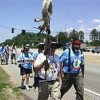
ENVIRONMENT-US: "Water Is Alive, It Hears Our Words"
Native Americans and others completed a 10-day "Walk for the Water" this week along the Chattahoochee River, which some estimates say will dry up completely by 2025 due to pressure from the rapidly growing city of Atlanta.SCIENCE: Paint that Purifies the Air
Rooms with foul odours? Cigarette smoke? A new paint for interior walls is capable of breaking down toxic substances in the air.BRAZIL: Agroenergy Can Boost Food Production – Experts
The web of truth and lies surrounding the controversy over agrofuels has led to the distortion or oversight of certain facts. For instance, making biodiesel from soybeans does not reduce food production, but increases it, according to experts.« Previous Page — Next Page »


Through our global network of local writers, we are continuing our award-winning coverage of global and local environmental challenges, with a focus on the people for whom the ecosphere matters in a direct way: rural dwellers who have little means to protect themselves against adverse conditions; communities that need to switch to sustainable development in order to survive; poor women and children, who are the most vulnerable in natural disasters. Sponsored by the United Nations Environment Program (UNEP), the United Nations Development Program (UNDP) and The World Bank (WB), IPS also maintains the award-winning Tierramérica, a specialised information service on environment and development.

The Week with IPS

Tracking global progress towards a sustainable world


