
Monday, November 23, 2026



News and Views from the Global South
Environment
ENVIRONMENT-SRI LANKA: In Denial Mode on Sanitation Issues
Compared to the rest of South Asia, Sri Lanka has impressive sanitation statistics with 90 percent of the population having access to latrines. But what happens to human waste thereafter is another story.
AGRICULTURE-BRAZIL: Green Revolution on the Savannah
Joao Venancio Soares is a living example of the prosperity of this town in west-central Brazil and the process that turned this country into an agricultural powerhouse over the last three decades.ENVIRONMENT: Women Demand Voice in Climate Debate
Calls for increased participation of women in policy-making decisions are on the rise as world leaders prepare to attend an international meeting on climate change to be held at U.N. headquarters next week.ENVIRONMENT-BRAZIL: Earth Summit Score Card, 15 Years On
Fifteen years after the 1992 Earth Summit, Brazil is again playing host to representatives from around the world who are assessing the results of the actions that arose from that landmark conference.LABOUR-US: Mine Tragedy Spurs Calls for Reform
The worst mine disaster in the United States this year, which occurred in mid-summer, has highlighted what appears to be a pattern of lackadaisical inspection and enforcement by the agency charged with overseeing safety compliance in the industry.ENERGY-ARGENTINA: Handing Out Concessions ‘In Perpetuity’
Political leaders and activists have asked the justice system in Argentina to rule on the legality of the Chubut provincial government’s extension until 2047 of a foreign corporation’s concession to the country’s largest oil reserve. The decision was taken 10 years before the current concession expires.
ENVIRONMENT: Scramble for Resources Driving Sudan Conflicts
A U.N. Environment Programme (UNEP) report released here this week emphasises strong linkages between environmental stresses and the ongoing conflict in Sudan.ENVIRONMENT: The Chemical That Must Not Be Named
Delegates from 191 nations are on the verge of an agreement under the Montreal Protocol for faster elimination of ozone-depleting chemicals, but the United States insists it must continue to use the banned pesticide methyl bromide.
ECONOMY-IRAN: Petrol Rationing – Bumpy Ride
Two months after the government of President Mahmoud Ahmadinejad began rationing petrol to ‘’vaccinate’’ itself against possible sanctions, critics say the plan has failed to cut down gasoline consumption. Instead it has hurt the agriculture, tourism, transportation and other sectors of the economy.CLIMATE CHANGE: ‘Incentives Offered to Destroy Forests’
Instead of providing positive incentives to tropical nations to conserve their rainforests and so reduce greenhouse gases emissions, the world indirectly gives "perverse incentives" to destroy them by demanding goods produced by intensive logging, a leading environmental activist says.BALKANS: Hot Summer Takes Its Toll
As rain falls and autumn approaches, countries across the Balkans are taking stock of the damage caused by one of the hottest summers in recent times, with temperatures in the 40s since mid-June until the beginning of September.
BRAZIL: Amazon Logging Means Short-Lived Prosperity
Devastation, violent land conflicts and rapid - but short-lived - economic growth are the traces left by deforestation in the Brazilian Amazon over the last 30 years, according to a new study.
ENERGY-CANADA: Wind vs. Water in Giant Dam Dispute
A controversial hydroelectricity expansion project in Quebec has drawn sharp criticism from aboriginal and environmental organisations on both sides of the Canadian-U.S. border.
ENVIRONMENT-SRI LANKA: Tsunami Alert Systems Working – Too Well
A tsunami alert, last week, sent thousands of Sri Lankans living along the coasts of this island nation fleeing inland, but authorities were exultant that the early warning systems installed after the disastrous Dec. 26, 2004 Indian Ocean tsunami were working.ENVIRONMENT-LATIN AMERICA: Coming Together to Rescue the Reserves
Many reserves in Latin America are walking a tightrope between degradation and isolation. To overcome these problems and appreciate the contribution of natural heritage areas to fighting poverty, Argentina will host an international congress attracting wide participation at the end of this month.
ENVIRONMENT: Experts Call for Action on Ocean Preserves
As much as 50 percent of the world's fish stocks are fully exploited and 17 percent are over-exploited, putting marine biodiversity at severe risk, according to a new report released Tuesday by the Worldwatch Institute.DEVELOPMENT-PAKISTAN: For Village Women an Indoor Latrine Is Heaven
For as long as Hatal Bibi, 50, can remember, women in her village, Ahmed Khaskheli, 250 km east of this port city, in Sindh province’s Sanghar district, spent hours fetching water from a canal four km away and used an enclosed communal patch to relieve themselves.ICELAND: Hydropower Scheme Generates Heat
Controversy is building up over a proposal to erect a set of three hydroelectric power plants and their associated dams in the lower Thjorsa river in South Iceland.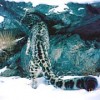
ENVIRONMENT-INDIA: Snow Leopards Earn Their Keep in Tourist Dollars
Tsring Angmo a student from Rumbak village in Ladakh attended a workshop conducted by the Snow Leopard Conservancy (SLC) in India out of sheer curiosity. "I came away feeling responsible for the safety of the endangered animal,’’ she said.PERU: Communities Say ‘No’ to Mining Company in Vote
For the second time in Peru, a mining project was rejected by local communities in a popular referendum. More than 90 percent of those who came out to vote in three districts in the northern province of Piura said "no" to the mining operations of the Minera Majaz company.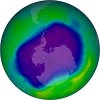
ENVIRONMENT: Ozone Treaty Could Slow Climate Change
Delegates from 191 nations are in Montreal, Canada this week to celebrate and extend the world's most successful environmental treaty, the Montreal Protocol to protect the ozone layer.« Previous Page — Next Page »


Through our global network of local writers, we are continuing our award-winning coverage of global and local environmental challenges, with a focus on the people for whom the ecosphere matters in a direct way: rural dwellers who have little means to protect themselves against adverse conditions; communities that need to switch to sustainable development in order to survive; poor women and children, who are the most vulnerable in natural disasters. Sponsored by the United Nations Environment Program (UNEP), the United Nations Development Program (UNDP) and The World Bank (WB), IPS also maintains the award-winning Tierramérica, a specialised information service on environment and development.

The Week with IPS

Tracking global progress towards a sustainable world


