
Monday, November 23, 2026



News and Views from the Global South
Environment
DEVELOPMENT-CAMEROON: Solar Power Starts Muscling Out Kerosene
For Merline Momo Azeufac, a teacher at Balefock village in western Cameroon, the days of fearing nightfall while correcting pupils' work are over. She's no longer hostage to the poor light provided by kerosene lamps.CHINA: Sustainable Development Gets Priority
Chinese leaders are seeking a new formula for expansion of the world's fastest-growing economy, which addresses the costs of growth such as environmental damage and a widening income gap. They want to switch to a more sustainable mode of development where China consumes and pollutes less.CUBA-VENEZUELA: Making Biofuels Without Wasting Food
The governments of Cuba and Venezuela are planning to move forward together on biofuels production, but they will rely on producing alcohol from sugarcane, in order to spare food crops.ENVIRONMENT-SRI LANKA: Elephants as Partners in Conservation
Decades after unsuccessful attempts to minimise the elephant-human conflict in Sri Lanka, authorities are trying out a bold experiment - allowing both mammals to live together in harmony with the environment.ENVIRONMENT: Ocean Fisheries Maxed Out
Two-thirds of fish stocks in the world's high seas are overfished, while most of those closer to shore are failing or fished to the maximum, a new U.N. report said Monday.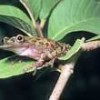
Frogs Fading Into Silence
The extinction of amphibians in Latin America has reached alarming proportions: 209 species in Colombia and 198 in Mexico alone are in danger of disappearing forever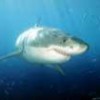
Dangerous Waters – Even for Sharks
In 15 years the shark population in European waters has plummeted 80 percent. Some 100 million of these fish die each year, victims of the lucrative global market for their fins.Ecobreves – MEXICO: Breaking the Car Habit
In 2008 the results will be ready from a study about the dependence of Mexicans in 50 urban areas on their cars. The unprecedented study will define indicators for tracking the issue and suggest strategies to reduce reliance on automobiles.Ecobreves – BRAZIL: Banana's Useful Fibers
Students from the State University of Rio de Janeiro (UERJ) are taking advantage of the banana stalk to develop BananaPlac, a colorful laminate that can be used for furniture, walls, car panels, among other things, replacing traditional formica.Ecobreves – ARGENTINA: Refrigerator Exchange
The Argentine government will grant credits and subsidies in 2007 to consumers to exchange -- over the next three years -- old refrigerators for new ones that are more energy efficient.ENERGY: Major Oil Consumers Warm to Biofuels
Despite their diverse - and sometimes sharply conflicting - political and economic interests, the world's major powers seem to be getting closer to each other in their quest to develop clean alternative sources of energy.ENERGY-U.S./LATIN AMERICA: An OPEC for Ethanol?
U.S. President George W. Bush will visit Latin America next week seeking a strategic alliance with Brazil to develop biofuels - and Venezuela, the region's main oil exporter, is taking this as a warning sign.ENVIRONMENT-MEXICO: Farmers and Scientists See Risks in Wind Energy
With the blessing of development agencies, transnational corporations and environmentalists, the Mexican government is breaking ground for a big wind energy project. But peasant farmers and bird experts aren't too happy about it.ENVIRONMENT-SENEGAL: Setting Fire to the Future
It's the season for bush fires in Senegal, and there are once again concerns that vast tracts of fertile land could be set alight, and ravaged.ENVIRONMENT: Understanding Climate Change in Drake Passage
Infamous for its storms and shipwrecks, Drake Passage, which separates South America from Antarctica, will now be the focus of a multidisciplinary study by scientific researchers from nine countries, with the aim of assessing the impact of climate change on the ecosystem.ENVIRONMENT-CHAD: Rats, Where There Once Were Elephants
Leaving the Chadian capital, N'Djamena, isn't what it used to be.ENVIRONMENT: The Niger River in Intensive Care
Stretching over more than 4,000 kilometres, the Niger is West Africa's longest river, and greatly threatened in the country of the same name by environmental degradation that is causing the water course to silt up.BRAZIL: Soap Opera Actors Stand Up for Amazon Jungle
An open letter demanding "an immediate halt to the deforestation of the Amazon jungle" has been released by Brazilian television stars taking part in the Globo Network series " Amaz- nia, de Galvez a Chico Mendes" (Amazonia, from Galvez to Chico Mendes).BURMA/THAILAND: Dams on Salween Threaten Indigenous Groups
Being a village headman means little if you live in a community nestling in the hills close to Thailand's northern border with Burma. More so, if officials have plans to use your village for a large ‘development' project.ENVIRONMENT: Fighting Warming Key to Anti-Poverty Goals
Driven by increased concerns and mounting evidence of the threats posed by global warming, some of the world's most eminent scientists are telling policymakers to get their act together before it is too late to avoid a doomsday scenario.ENVIRONMENT-ALGERIA: Fighting Desertification Through Conservation
In May, Algeria will inaugurate a reserve around a small oasis in the south-west where plants and animals are to be protected in the service of a broader goal. Hopes are that the Taghit National Park will help stop the advance of the Sahara Desert, which already stretches across almost all of this North African country.« Previous Page — Next Page »


Through our global network of local writers, we are continuing our award-winning coverage of global and local environmental challenges, with a focus on the people for whom the ecosphere matters in a direct way: rural dwellers who have little means to protect themselves against adverse conditions; communities that need to switch to sustainable development in order to survive; poor women and children, who are the most vulnerable in natural disasters. Sponsored by the United Nations Environment Program (UNEP), the United Nations Development Program (UNDP) and The World Bank (WB), IPS also maintains the award-winning Tierramérica, a specialised information service on environment and development.

The Week with IPS

Tracking global progress towards a sustainable world


