
Monday, November 23, 2026



News and Views from the Global South
Environment
Ecobreves – HONDURAS: Contamination from Mine Confirmed
Contamination of the main source of potable water for the Honduran town of Valle de Angeles, 20 minutes from the capital, is the result of waste found at the mouth of a mine that was shut down 50 years ago, according to CESSCO, a contamination control and research center.TRANSPORT-CHILE: Transantiago – Ready for Take-Off?
A new public transport system will start operating this Saturday in the Chilean capital, aimed at improving quality of life and curbing air pollution. But its success depends on overcoming infrastructure problems and the difficulty of changing entrenched cultural habits.SCIENCE: Primordial Ocean Ooze May Hold Wonder Drugs
A new breed of prospector is hunting for buried treasure on the sea floor, this time looking for breakthrough drugs derived from the natural heritage of the world's oceans.ENVIRONMENT: Recapturing Carbon Won’t Come Cheap
Putting climate-altering greenhouse gases back in the ground where they came from is an essential part of any global plan to avoid catastrophic climate change, scientists say.NEPAL: ‘Privatisation’ Violates Right to Health – Activists
Hiring a private firm to manage the drinking water system in Nepal's capital violates the right to health guarantee in the country's interim constitution, activists are set to argue before the Supreme Court.DEVELOPMENT-INDIA: Dam Displaced Tribes Lose Fishing Rights
The philosophy of satyagraha or non-violent resistance, first employed by Indian independence leader Mahatma Gandhi, has been adopted by tribal fisherfolk in 44 hamlets on a dammed river in central India to protest the loss of their livelihoods.CUBA: Versatile Sugar Provides Food, Fuel, Electricity
The Cuban government is making another effort to boost generation of electricity from sugarcane biomass to meet the high electricity demand of the sugar industry itself, and gradually increase its contribution to the national grid.SOUTHERN AFRICA: Floods Leave Trail of Destruction, Disease
Floods have hit a swath of southern Africa, from Mozambique in the east to Angola in the west, causing a marked increase in cholera and malaria cases, say aid workers.CLIMATE CHANGE: Deforestation Main Challenge for UNEP
The severe degradation of the environment and its impact on climate change are dominating discussions currently underway at the 24th meeting of the governing council of the United Nations Environment Programme (UNEP) in the Kenyan capital.PERU: UN Mission Probes Private Security Groups
A priest who provides support for Peruvian farmers in their conflict with a transnational gold mining corporation complained to a United Nations mission that he was under surveillance by a private security company.CLIMATE CHANGE: One Step Forward, Two Steps Back
The causes of global warming have been established firmly by world scientists, and the solutions set out. The question now is, who will implement these solutions.ENVIRONMENT: Climate Change, Yes – But How Fast?
The predictions in the new report by the Intergovernmental Panel on Climate Change (IPCC), which says the planet's average temperatures could increase four degrees Celsius by 2100, are seen as solid forecasts by some scientists, while others say they fall short.DEVELOPMENT-SUDAN: Oil Boom Causing Land Prices to Skyrocket
Sudan's oil reserves paired with a dearth of water make it a nation of fierce battles for land - most notably in Darfur and southern Sudan where, for centuries, squabbles over rich terrain have ignited into brutal conflicts.ENERGY-CHILE: Home-Grown Biofuels – Big-Time?
The government of President Michelle Bachelet seems determined to develop the biofuels industry in order to diversify Chile's energy sources, in spite of doubts that have arisen about their desirability.ENVIRONMENT: No Getting Around Emissions Caps, Experts Say
With the stark realisation that global warming is transforming our world, there will be crazy new era of "greenwashing", desperate "geo-engineering" schemes, "grandfathering" of newly-built coal power plants and carbon-credit "profiteering", environmentalists warn.BRAZIL: Biodiversity Goes to Market
Biodiversity, like the proverbial prophet, is not without honour save in its own country: it tends to be valued more highly abroad than at home. Brazil is now trying to become an exception to the rule by commercialising its native species on a large scale.ENVIRONMENT-CHINA: Prosperity or Pollution?
Following the release of an authoritative United Nations report that unequivocally links human activities with climate change, the rulers of the world's most populous country are faced with the quandary of balancing prosperity against pollution.DEVELOPMENT-PAKISTAN: Twin Disasters in the Making, Locals Say
To the developers of a resort project to rise on Bhundar island, Rehmat Bibi's dilapidated hut must be quite an eyesore. Yet the spirited woman has so far stood her ground and refused to give in to the pressure - at first gentle cajoling, then sterner words - by the uniformed men to leave.CLIMATE CHANGE: Europe’s Endangered Ski Resorts
Ski lovers in Europe are joining the list of those hurt by global climate change. This year the northern hemisphere winter is seeing moderate temperatures and little snowfall - and is looking more like springtime.CAMBODIA: Poverty, Tourism – Bane of Floating Villages
Life ebbs and flows with hardships and vulnerability for the residents of this floating village at the northern end of Cambodia's great lake, the Tonle Sap.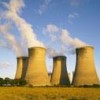
Climate Change, Yes – But How Fast?
For some, it is a realistic assessment -- for others, it is too conservative. Experts consulted by Tierramérica react to the fourth report by the global panel of climate change experts, which predicts an average global temperature increase of 1.8 to 4 degrees Celsius.« Previous Page — Next Page »


Through our global network of local writers, we are continuing our award-winning coverage of global and local environmental challenges, with a focus on the people for whom the ecosphere matters in a direct way: rural dwellers who have little means to protect themselves against adverse conditions; communities that need to switch to sustainable development in order to survive; poor women and children, who are the most vulnerable in natural disasters. Sponsored by the United Nations Environment Program (UNEP), the United Nations Development Program (UNDP) and The World Bank (WB), IPS also maintains the award-winning Tierramérica, a specialised information service on environment and development.

The Week with IPS

Tracking global progress towards a sustainable world


