
Monday, November 23, 2026



News and Views from the Global South
Environment
ENVIRONMENT: Desertification Gains a Foothold in Rwanda
As recently as 2002, 41-year-old Marie Mutezinka was still able to meet the needs of her four children by farming in Gako, in the Bugesera region of south-east Rwanda.ENVIRONMENT-US: Slow Rescue for Famed River of Grass
Both the state of Florida and the U.S. federal government agree that the Comprehensive Everglades Restoration Project (CERP), the largest wetlands restoration project in the world, is a critical endeavor that must be carried out.SOUTH PACIFIC: Anti-Whaling Activists Say It with Love
When Greenpeace Pacific activists and volunteers presented a Valentine's Day card to the diplomatic corps at the Japanese embassy here with the theme, ‘We love Japan but whaling breaks our hearts,' they were adopting a different tack to save the giant mammals.ENVIRONMENT: Germany Putting More Wind Into Energy
Germany is blowing more wind into energy with the setting up of new offshore facilities. Germany already has the world's largest installed capacity for wind energy.ENVIRONMENT: Legislators Debate Climate Road Map
Legislators from the world's most industrialised nations and from major developing countries are meeting here in Washington to chart out a plan to battle global warming and address growing worries over climate change.ENVIRONMENT: Scientists Put an Ear to the Ocean Floor
Canada will spend 38 million dollars to install thousands of undersea listening posts along the continental shelves of North America, the Mediterranean, Gulf of Mexico and Australia.ANTARCTICA: Argentina to Study Effects of Spill
The fuel spilled from a Norwegian cruise ship in Antarctica won't leave dramatic images of penguins covered in petroleum. But the spill is indeed a threat to the region's fragile biodiversity, warn experts.JAPAN: Leading Biodiversity Conservation
A call by the United Nations to restore and protect biodiversity in the world through a global convention is seen as being of particular importance to Japan, a leading importer of natural resources.CLIMATE CHANGE: Brazil Has No National Policy
Brazil has no national strategy to fight pollution that contributes to global climate change, in spite of being part of the trio of developing countries, with China and India, that emit most greenhouse gases, experts and environmentalists complain.DEVELOPMENT-TANZANIA: High Growth Still to Benefit the Poor
Just more than a year after Jakaya Kikwete was elected president of Tanzania his name was mentioned in the halls at the Africa Union (AU) summit in January in Addis Ababa, Ethiopia, as the possible new chairperson of the AU.ARGENTINA: Patagonia to the Highest (Foreign?) Bidder
A new book based on a journalistic investigation into major land purchases in Argentina's southern Patagonia region by foreign multimillionaires has been selling like hot potatoes, to both tourists and locals.HEALTH-VIETNAM: Choosing Illegal Duck Breeding to Penury
On a rough, earthen road flanked by green rice paddies, Phan Anh Tam throws unhusked rice, mixed with mash and dried fish, to thousands of white ducks waddling around his thin legs.NORTH KOREA: Nuclear Talks – Who Blinks First?
Despite great expectations for a breakthrough deal on ending North Korea's nuclear crisis, four days of tough international negotiations sponsored by China have produced little hope of a quick resolution.NIGERIA: Vice President Fights for His Political Life
‘'Military democracy,'' this is what Nigeria's vice-president Atiku Abubakar calls the electioneering process that is supposed to produce a successor for president Olusegun Obasanjo in April.EAST ASIA: Open Borders Expose Mekong’s Disparities
In the town of Bo Ten in Laos, near the border with China, local people are training to be card dealers so they can get jobs at a soon-to-rise casino owned by a Chinese company.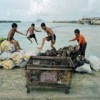
Islands Could Fall Off the Map
Sylt in the North Sea, Tuvalu in Oceania, and St. Thomas in the Caribbean all face the same challenge: they may disappear as sea levels rise as a result of global warming.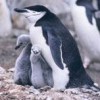
Argentina to Study Effects of Spill in Antarctica
Although it is a light fuel, diesel spilled by the Nordkapp cruise ship could hurt Antarctica's biodiversity, including its emblematic penguins. The Argentine National Directorate of the Antarctic is preparing a study.Ecobreves – CUBA: Demolishing Construction to Save Varadero
From 1996 to date, more than 80 buildings and three kilometers of walls and fences on the dunes in the resort of Varadero have been demolished as part of an integrated management program.Ecobreves – CHILE: Don't Rule Out Aysén Volcano
Tremors recorded since Jan. 22 in the southern Chilean city of Aysén are being caused by magma under the sea floor pressing for release, say experts, who are not ruling out the possibility of a volcanic eruption.Ecobreves – VENEZUELA: Fire Destroys Plain
A fire that started Feb. 2 on La Negra high plain, 600 km southwest of the capital, consumed more than 1,000 hectares of vegetation, Yuri Bermúdez, commander of the local firefighting team, told Tierramérica.Ecobreves – BRAZIL: Energy for Amazon's Frontiers
Oil from the inaja palm, or great Brazilian palm (Maximiliana regia), will be used to fuel small electrical plants for isolated communities in the Amazonian frontier.« Previous Page — Next Page »


Through our global network of local writers, we are continuing our award-winning coverage of global and local environmental challenges, with a focus on the people for whom the ecosphere matters in a direct way: rural dwellers who have little means to protect themselves against adverse conditions; communities that need to switch to sustainable development in order to survive; poor women and children, who are the most vulnerable in natural disasters. Sponsored by the United Nations Environment Program (UNEP), the United Nations Development Program (UNDP) and The World Bank (WB), IPS also maintains the award-winning Tierramérica, a specialised information service on environment and development.

The Week with IPS

Tracking global progress towards a sustainable world


