
Monday, November 23, 2026



News and Views from the Global South
Environment
CHALLENGES 2006-2007: Keeping the Sahara in Check
Two hundred kilometres. A long distance to some, perhaps, but in the context of desertification in Algeria, alarmingly short.ENVIRONMENT-JAPAN: Bear Depredations Trigger Open Season for Hunters
As hundreds of Asiatic black bears leave their dwindling forests in search of food and threaten villagers officials see an answer in increased hunting licenses.ENVIRONMENT: Hungry Whaling Ships Set Sail
Japan's controversial whaling fleet has arrived in the Southern Ocean, around Antarctica, and anti-whaling activists are promising to ram and sink any vessels attempting to kill whales.DEVELOPMENT-NIGERIA: Burnt Alive, as History Repeats Itself
"The location, the timing all made a perfect situation for this kind of tragedy," said Bode Olufemi of Environmental Rights Action, the Nigerian affiliate of non-governmental group Friends of the Earth – this after walking through the distressing aftermath of an oil pipeline fire that broke out in Nigeria’s financial hub of Lagos, Tuesday.ARGENTINA: Continued Green Light for Destruction of Forests
Despite the continued destruction of Argentina's forests due to the advance of the agricultural frontier, a draft law that would have declared a "state of emergency" for the country's forests was postponed until next year.ASIA: Tsunami Recovery Hit by Corruption, Apathy
Questions that have dogged the tsunami recovery effort through 2006 coalesced in a crop of media stories and critical reports as affected countries remembered in prayer and reflection the over 220,000 people killed in that December 2004 natural disaster.CHALLENGES 2006-2007: Malawi Struggles With Environment MDG
Chicken was once considered a delicacy which rarely graced tables in Malawi. Now fish has taken over this position, despite Malawi being famous for its lake - which is the fifth largest in the world by volume and contains an estimated 1,000 fish species.ENVIRONMENT-BRAZIL: Transgenic Cotton Ploughs Its Way Through Congress
In Brazil, cotton is following in soy's footsteps. Transgenic cotton varieties, smuggled into the country in recent years, may now be legalised by a draft law already quietly approved by the lower house of Congress.FRANCE: Burning of Toxic Waste Brings New Fears
Fears have arisen over a decision to burn toxic waste brought over from the C- te d'Ivoire at a French incinerator.CENTRAL AMERICA: Garifunas Set Sights on Ecotourism
The Garífuna communities along the Caribbean coast of Central America are placing their bets on ecological tourism as a means to escape poverty, which they say has been worsened by free trade policies.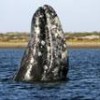
Hungry Whaling Ships Set Sail
Japanese hunters in the Southern Ocean, around Antarctica, will kill nearly a thousand whales, some in danger of extinction. Activists will try to stop the whaling ships, by sea and by air.
Mazahuas Choose Jail Over Going Without Water
Indigenous women are at the forefront of a protest in Mexico demanding water. "We won't give up until they give us water," says Beatriz Flores, one of the movement's leaders.Ecobreves – VENEZUELA: Birds Blamed for Arrival of West Nile Virus
The West Nile virus has been reported in Venezuela, north of the Orinoco River, likely carried into the country by migratory birds, researcher Juan Carlos Navarro, of Venezuela's Central University, told TierraméricaEcobreves – BRAZIL: Second Atlas of the Mata Atlantica
Less than seven percent of the Brazilian coastal forest ecosystem, the Mata Atlantica, remains intact, compared to its area in 1500, according to a study by the SOS Mata Atlantica Foundation and the National Institute of Space Research.Ecobreves – CHILE : Too Much Lead in Portezuelo
More than 3,200 milligrams of lead per kilogram of soil has been found in the area around the northern Chilean town of Portezuelo, 14 km southeast of Antofagasta, where there is a lead storage site.Ecobreves – CUBA: Farmers on Alert for El Niño
Cuban farmers are worried about excessive rains, blamed on the climate phenomenon known as El Niño-Southern Oscillation (ENSO), that continued to fall across this island nation in December.Ecobreves – ARGENTINA: A Study to Help Stop Rural Evictions
Students and professors from the National University of La Pampa, in central Argentina, are beginning a census this month of peasant farming families threatened with eviction in five departments of La Pampa province.CHALLENGES 2006-2007: Angola’s Oil Not Flowing for Safer Water
The cholera epidemic which has been plaguing Angola for nearly a year has placed the spotlight on the continuing lack of safe drinking water in that country.CHALLENGES 2006-2007: Docu-mania Sweeps U.S.
From Al Gore's "An Inconvenient Truth" to Barbara Kopple's "Shut Up and Sing" about the travails of the Dixie Chicks, U.S. audiences flocked to theatres in 2006 to watch films that took on heavy topics like global warming, the meaning of "patriotism" and the war in Iraq.PHILIPPINES: Typhoon Survivors Face Bleak Christmas
"Coconut farmers look up at their remaining trees and wonder when their next harvest will be," says Fernando Gonzales, governor of eastern Albay province, devastated by Typhoon Durian. "Despite all the relief goods coming and rehabilitation plans on the way, people here are still unable to imagine how the future can get brighter."ENVIRONMENT: Oceans Warming and Rising
Ocean levels will rise faster than expected if greenhouse gas emissions continue to rise, a leading German researcher warns.« Previous Page — Next Page »


Through our global network of local writers, we are continuing our award-winning coverage of global and local environmental challenges, with a focus on the people for whom the ecosphere matters in a direct way: rural dwellers who have little means to protect themselves against adverse conditions; communities that need to switch to sustainable development in order to survive; poor women and children, who are the most vulnerable in natural disasters. Sponsored by the United Nations Environment Program (UNEP), the United Nations Development Program (UNDP) and The World Bank (WB), IPS also maintains the award-winning Tierramérica, a specialised information service on environment and development.

The Week with IPS

Tracking global progress towards a sustainable world


