
Saturday, November 28, 2026



News and Views from the Global South
Environment
Ecobreves – AMERICAS: Congress on Privately Run Nature Preserves
The Inter-American Congress on Private Conservation is to meet Apr. 18-21 in Chile with the goal of contributing to protecting biodiversity across the Americas.Ecobreves – VENEZUELA: Lack of Oxygen Killing Fish
Three tons of sardines, sable fish and crustaceans were found dead in mid-February along the shores of Carenero Bay, on the Venezuelan Caribbean coast.
Fund Launched for Preserving Plant Genetics
More than forty million dollars are at hand to fund plant genebanks this year. But activists doubt that the fund will ensure equal North-South access to biodiversity.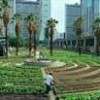
Cabbages and Peppers at the Feet of Skyscrapers
Caracas is following in Cuba's footsteps in experimenting with urban gardens. Critics, however, say it is a very costly "folkloric" endeavorENVIRONMENT: Bio-Pirates to Lose Patent Plank, States Pledge
Patent protection of bio-piracy might be ending after states at a global meeting agreed to work toward an international regime that will spell out who can access and benefit from the world's biodiversity.ENVIRONMENT: The EU’s North-South Fishing Divide
Two years ago the European Union began to draft a new common fisheries policy (CFP) to protect the region's fishing resources, but the bloc's 15 member states seem to be having difficulties reaching an agreement, stymied by efforts to impose stricter rules.ENVIRONMENT: Not Much to Celebrate in Biodiversity Pact – Critics
Environment officials from 120 countries consider a success their signing of a declaration of a global biodiversity Friday, but critics say they find little to celebrate because key green provisions have been watered down in the two-week negotiations.ENVIRONMENT-EAST ASIA: Sand Dunes along Mekong Worry Activists
What may have once appeared to be a perfectly natural phenomenon - the rise of sand dunes in the midst of the Mekong river - is now receiving special attention because of what critics say they portend.ENVIRONMENT: U.S. Buyers Spur Rainforest Destruction – Report
A leading environmental group accused several U.S. companies Thursday of fuelling violence and the possible destruction of millions of animals and plants in the sensitive Brazilian Amazon by doing business with a controversial local logger.CUBA: Sugar Industry Restructuring Good for Environment
The restructuring of Cuba's sugar industry, which began two years ago and has involved the closing of half of this Caribbean island nation's sugar mills and the transfer of a large number of workers to other parts of the economy, will be good for the environment, say experts.ENVIRONMENT: Argentina Assesses Vulnerability to Climate Change
One hundred Argentine scientists and technicians will work on a project over the next two years to measure the country's greenhouse gas emissions and to determine where its vulnerabilities lie with respect to the impacts of climate change.ENVIRONMENT-SOUTH ASIA: World’s Largest Hunt on for Tiger Pugmarks
Since mid-January, they have been combing through the maze of rivers and creeks and mangroves that form the Indian Sunderbans, armed with fiberglass vests, steel helmets, firecrackers, nylon nets and rifles.CHILE: Canines Suffer as Laws on Dog Fights Lag
The life of a dog is apparently worth nothing in the clandestine fights that have returned to the outskirts of the Chilean capital. The canines are put into the ring to kill or be killed - all for the benefit of the mafias that run the illegal betting operations.SOUTH AMERICA: Guarani Aquifer and Allegations of Terrorist Presence
Civil society groups in the tri-border region where Argentina, Brazil and Paraguay come together are planning their own ''social forum'' this year to protest what they see as the underlying objective behind U.S. allegations of a terrorist presence in the area.NICARAGUA: Advance of Oil Companies Alarms Indians
Indigenous groups in Nicaragua oppose the concessions granted four U.S. companies for petroleum and natural gas exploration and extraction, citing history and the potential harm to the environment.Argentina Measures Climate Change Impacts
A 1.14-million-dollar project announced for assessing Argentina's vulnerability to the effects of global warming.COP7 of the Convention on Biological Diversity
More than 2,000 experts in biodiversity and sustainable development are participating in the 7th Conference of Parties (COP7) to the Convention on Biological Diversity, in Kuala Lumpur, Feb. 9-20. The central theme of the two-week debate is how to reduce biodiversity loss at all levels.Ecobreves – HONDURAS: Indians Out to Protect Sea Turtles
Indigenous Miskito communities are promoting the creation of a hatchery preserve in northeast Honduras to protect green (Chelonia mydas), loggerhead (Caretta caretta) and leatherback (Dermochelys cariacea) sea turtles, all in danger of extinction.Ecobreves – ARGENTINA: Vicuña-Friendly Wool
Argentine scientists and shepherds have shown they can obtain the valuable wool from the wild vicuña (Lama vicugna) using methods that do not harm these cousins of the llama.Ecobreves – GUATEMALA: Network of Environmental Investigators
Strengthening and coordinating the networks of regional environmental investigators is one of the recommendations for fighting environmental crimes that emerged out of the first World Summit of Attorneys General, Prosecutors and Justice Ministers, held in Antigua, Guatemala Feb. 2-5.Ecobreves – PERU: Lead Poisoning in El Callao
Four impoverished districts in the port city of El Callao have high levels of lead contamination, which the World Health Organizations considers one of the greatest urban environmental dangers, because it affects the neurological development of children.« Previous Page — Next Page »


Through our global network of local writers, we are continuing our award-winning coverage of global and local environmental challenges, with a focus on the people for whom the ecosphere matters in a direct way: rural dwellers who have little means to protect themselves against adverse conditions; communities that need to switch to sustainable development in order to survive; poor women and children, who are the most vulnerable in natural disasters. Sponsored by the United Nations Environment Program (UNEP), the United Nations Development Program (UNDP) and The World Bank (WB), IPS also maintains the award-winning Tierramérica, a specialised information service on environment and development.

The Week with IPS

Tracking global progress towards a sustainable world


