Languages
Thursday, November 12, 2026



News and Views from the Global South
Featured

Financialization Increases Inequality
Financialization has worsened inequality through various channels, including macroeconomic policies. For example, quantitative easing and low, if not negative interest rates have fuelled credit and asset price bubbles, while fiscal spending cuts have adversely affected those depending on government assistance.
Women & Girls Up Front — the Humanitarian Response in Democratic Republic of Congo
Eleven-year-old “Anne” went to a health facility with her mother in the conflict-affected province of Ituri, in northeastern Democratic Republic of the Congo. At first, she could barely tell her story.
US Mideast Peace Plan: from a Paper Pharaoh & a Fake Moses
Israeli Prime Minister Benjamin (Bibi) Netanyahu was slapped corruption charges last week while he was hobnobbing with US President Donald Trump in Washington. Bibi has, apparently, done his homework in psychology. He knew the quickest way to get around Trump was to flatter him.
UN Staffers Rattled by Deadly Coronavirus Pandemic
With over 37,500 staffers in its global Secretariat payroll, the United Nations has gone high alert as the deadly coronavirus continues to take a heavy toll worldwide.
WHO Declares Coronavirus a Public Health Emergency, Highlights Need to Support Countries ‘Weaker Health Systems’
Weeks into widespread panic about the “Coronavirus” that has so far killed at least 170 people in China, the World Health Organisation (WHO) on Thursday declared it a public health emergency. As of Friday, the disease had spread to all the regions in Mainland China, with more than 7,500 cases in the country alone, according to the BBC.
India’s Unique Water Purification Wetland Could Soon Become Extinct
Ramkumar Mondal’s farm is awash in a brilliant yellow mustard bloom. A flock of grey cranes peck for food amidst the shallow watergrass. But Mondal’s fishpond digs in there like a do-or-die last sentinel as nearby high-rise buildings, a symbol of development and encroachment, menacingly tower over the fishpond, permanently blocking the eastern sun so essential for the pondwater to convert sewage into fish-feed.
The Role of Sherpas in Nature Conservation as Guardians of the Himalayas
 Since I was a kid, I grew up with adventures and stories of famous characters of the books of Jack London: White Fang, Make a Fire… and the incredible ode to perseverance of Martin Eden.

Our Message at Davos: Water & Sanitation Are a Critical Line of Defence Against Climate Change
There was only one topic on everyone’s lips at Davos this year – climate change. The headlines focused on the cold war between Greta Thunberg and Donald Trump, but there was much greater consensus among those gathered for the annual meeting of the World Economic Forum (WEF).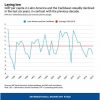
New Challenges to Growth in Latin America & the Caribbean
Economic activity in Latin America and the Caribbean stagnated in 2019, continuing with the weak growth momentum of the previous five years and adding more urgency and new challenges to reignite growth.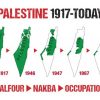
US Mideast Peace Plan: Israelis Offered the Cheese & Palestinians the Holes
The Israeli human rights organization B’Tselem has described the much-ballyhooed US Middle East peace plan as “more like Swiss cheese-- with the cheese being offered to the Israelis and the holes to the Palestinians”.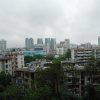
Coronavirus: Why China’s Strategy to Contain the Virus Might Work
On January 23, the authorities of Wuhan City, China, sealed off the motorways and shut down all public transport to stop the coronavirus outbreak from spreading. Shortly afterwards, at least ten other cities in China were under quarantine orders, most of them located in the areas surrounding Wuhan.
‘Organic is the Future’
Vandana Shiva, a pioneer of organic farming in India, is incensed by the 2019 draft law to compulsorily register all seeds used by farmers. On a wintry afternoon, at her farm Navdanya in the Himalayan foothills, the noted ecologist spoke on the future of the organic farming movement in India. Excerpts:
Inclusive Education Still Evades People with Disabilities
Neema Namdamu, 42, grew up in the village of Bukavu in eastern Democratic Republic of Congo where children with disabilities were considered a curse. As a child Namdamu contracted polio, leaving her paralysed from the waist down. Her neighbours advised her mother to do what they felt was the "right thing": to leave the child alone in a hut until she died of starvation.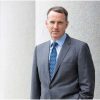
Urbanization as a Path to Prosperity
Growing up in New York City in the 1970s, Edward Glaeser saw a great metropolis in decline. Crime was soaring. Garbage piled up on sidewalks as striking sanitation workers walked off the job. The city teetered on the edge of bankruptcy.
Oil-rich Gulf Turns to Renewable Energy
The increased frequency of climate-induced weather extremes and public opinion pressure are forcing even major fossil fuel exporting countries in West Asia to make a big push towards renewable energy.
Kenya Leapfrogging on 4 SDGS- Building Bridges Between Silicon Savannah and Silicon Valley
One year ago, the UN began implementing reforms meant to make it more effective in delivering on sustainable development. Now, with the start of 2020, the global body has declared this as the "decade of action" to turn the ambitious Sustainable Development Goals (SDGs) into a living reality for all humanity. But what does this look like, on the ground?
Addressing the Low Female Representation in STEM Education
Dr. Anne-Maria Brennan loved science as a young girl. But instead of encouraging her, those around her made attempts to steer her in the "right direction". “The right direction was in nursing, teaching and secretarial courses. I was told that girls do not study physics,” she tells IPS.
Exchange Rate Undervaluation for Export-Led Growth Promotion
One mercantilist view is that exchange rate undervaluation – e.g., via accumulation of foreign exchange reserves in China’s case – is ‘industrial policy’ to promote export-led growth, benefiting producers of exports while discouraging imports.
Multilateralism Versus Regionalism: Which Path Should African Countries Pursue to Expand Trade and Investment Opportunities?
Increasingly, the ability of multilateralism to address contemporary global issues such as climate change and international trade is being questioned. In the case of international trade, WTO Members have thus far not been able to conclude the Doha Round, which was launched in November 2001. The Round was supposed to have been concluded on 1 January 2005, but it has been beset by persistent differences among the WTO Members. Whereas most developing countries believe that the Round is still active and have called for the fulfilment of all Doha mandates, several developed countries are of the view that the Round has run its full course and overtaken by developments in the global economy. They note that three out of the ten top economies in the world are developing countries – Brazil, China and India – and that several developing economies are also competitive in certain sectors of the global economy and that by granting significant flexibilities in the negotiations to these competitive developing economies, the Round's mandates are no longer valid and that differentiation among developing countries should be part of the broader on-going discussion on WTO reform.
Russia’s Prodigious Gift of Higher Education to the Developing World
Peoples’ Friendship University of Russia - popularly known as RUDN (acronym from its Russian name Rossiysky Universitet Druzhby Narodov) - is a renowned, world-class educational and research institution in Moscow.
**UPDATE** African Nations Caught in Conflict Re-commit to Inclusive Education
Djibouti’s President Ismail Omar Guelleh knows that his country is in need of an education system that is, “innovative, based on universal principles and values and adaptive of the local realities”.« Previous Page — Next Page »





The Week with IPS

NEXT STOP - SDGs
Tracking global progress towards a sustainable world
Tracking global progress towards a sustainable world
