Languages
Thursday, November 12, 2026



News and Views from the Global South
Featured
Ecuador in Frontline to Address Climate Change
As the UN commemorates World Environment Day, UNDP would like to take this opportunity to commend Ecuador’s efforts to address climate change and its commitment to raising its climate ambition.
We Must do More to Speed up Ending Fossil Fuel Subsidies
Fossil fuels—oil, gas, coal and their derivatives—pollute the atmosphere and emit the greenhouse gases that are ramping up global heating to dangerous levels. But did you know that governments around the world are subsidizing this pollution?
Mobilisation Needed for Climate-Related Disasters
Climate-related displacement and food insecurity is not a future possibility, but it is already happening and it’s only projected to worsen without urgent action in coming years.
Transforming Society, Financialization Destroys Social Solidarity
Finance has not stopped at dominating the real economy. The tentacles of finance have reached into significant, if not most parts of society. Gerald Davis characterises modern society, where finance is dominant, as a ‘portfolio society’, in which aspects of social life have been securitized and transformed into a kind of capital or investment to be managed.
We Won’t Achieve Gender Equality Until We Address the Lack of Water, Sanitation & Hygiene
Giving birth is a life changing moment for women. It can be - when women have a safe and caring environment, positive and empowering - a moment to find a previously untapped inner strength.
The World Has Lost Its Compass
The terrible feeling I had on waking up and seeing the Italian voting results at the recent European elections was that my country was suddenly full of strangers. How could the majority of Italians reconfirm a government which has been the most inefficient in history, quarrelling on everything every single day and looking with total indifference to the looming problem of how to establish the next budget without clashing with the European Union or squeezing Italian citizens? Its irresponsible debate on the Italian finances has now led to a spread (difference of value) of 290 points with the Germans.
An Escalating War on Reproductive Rights
Abortion has long been a contentious issue across the world, and the debate is only heating up, prompting women to stand up and speak out for their reproductive rights.
Watch Out: Your Money Is Being Used to Destroy the World!
Perhaps the most direct way to introduce this tough issue is what the United Nations Secretary-General, António Guterres, stated just one week ahead of the 5 June World Environment Day, which focuses this year on air pollution, caused chiefly by the use of fossil fuels both in transport, industry and even household cooking, heating, etc.
Exploitation and Acculturation
There are several means to make profitable use of other human beings, an endeavour that tends to turn others into tools by depriving them of their roots and self-respect. This happened in concentration - and work camps, where individuals were reduced to mere numbers.
Modi Cruises with Ease as Prime Minister of India for a Second Term
The boy who sold tea at railway platforms for a living has become the Prime Minister of world’s largest democracy for the second time. Narendra Dhamodaradas Modi, incumbent Prime Minister and leader of the BJP secured a second chance to be the Prime Minister at Indian elections which took place recently. The election was perhaps the largest held in any part of the world with 39 days of polling and involving as many as 900 million voters.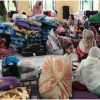
Pakistani and Afghan Refugees Seek Safe Haven in Sri Lanka
Thirteen-year-old Bariea, a Pakistani asylum seeker in Sri Lanka, is taking shelter at a mosque in the city of Negombo, where an uneasy mix of high anxiety and extreme boredom hover over the room.
We Can’t Halt Extinctions Unless We Protect Water
Global biodiversity loss has reached critical levels. One million species of plants and animals are now estimated to be at risk of extinction. The window for action is closing, and the world needs to urgently take note.
The New Face of Activism: Youth
Rather than waiting for adults to act, more young girls and boys are standing up and speaking out on the world’s pressing issues.
Water Research & Education Needs to Flow Towards Developing World
Post-secondary education relevant to the global water crisis is concentrated in wealthy countries rather than the poorer, developing places where it is needed most.
A Call for Concrete Changes to Achieve a More Gender Equal World
On the eve of the Women Deliver conference in Vancouver June 3-6, Princess Sarah Zeid of Jordan interviewed Dr. Olfat Mahmoud, a Palestinian refugee and women’s rights advocate.
US “Emergency” Arms Sales to Mideast Nations Under Fire
When the UN Security Council met last week to discuss the deaths and devastation caused to civilians in ongoing military conflicts and civil wars, the killings in Yemen and the air attacks on hospitals, schools, mosques, and market places—whether deliberate or otherwise-- were singled out as the worst ever.
Asia-Pacific Region Viewed as Engine of the World Economy
Since this Commission first met in 1947, our countries have travelled a long journey. Our economies are expected to become larger than the rest of the world combined, measured by purchasing power parity. It is often said the Asia-Pacific region is the engine of the world economy.
Finance’s New Avatar
Over recent decades, the scope, size, concentration, power and even the purpose and role of finance have changed so significantly that a new term, financialization, was coined to name this phenomenon. Financialization refers to a process that has not only transformed finance itself, but also, the real economy and society. The transformation goes beyond the quantitative to involve qualitative change as finance becomes dominant, instead of serving the needs of the real economy.
US Threats to Dismantle Palestinian Refugee Agency Trigger Protests
As it relentlessly pursues its strongly pro-Israeli policy – along with its disdain for multilateralism – the Trump administration continued to display its hostility towards the United Nations and its humanitarian agencies at a meeting of the UN Security Council focusing on the recent escalation of violence in Gaza.
Zimbabwe’s Resettled Farmers Hawking Cigarettes to Survive
For subsistence farmer Rogers Hove—who proudly brandishes a worn out letter for his five hectare piece of land he obtained from government following the chaotic land seizures from white commercial farmers over two decades ago—what matters most to him, “is to see my piece of land in my possession”.
Educating Girls about Menstruation and Menstrual Hygiene
The organisers of Menstrual Hygiene Day say that although there has been a lot of good work on Menstrual Hygiene Management (MHM) either currently underway or already completed, we are a long way off from achieving an even playing field for girls and women worldwide.« Previous Page — Next Page »





The Week with IPS

NEXT STOP - SDGs
Tracking global progress towards a sustainable world
Tracking global progress towards a sustainable world
