Languages
Thursday, November 12, 2026



News and Views from the Global South
Featured

Defining the End State Ecosystem: How Can We Get Better at it?
Restrictions on the movement of people impedes Africa's development, limiting economic integration and trade between African countries. Using a systems-thinking approach, champions and decision-makers have led the charge towards a visa free Africa.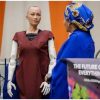
The Myth About the Race for Artificial Intelligence
UMEA, Sweden, 26 March 2019 (IPS) -- At this year’s Davos economic forum, US executives warned that China may be winning the so-called Artificial Intelligence (AI) race with Europe. In another recent article, Bloomberg pointed out that countries are rushing to not be left behind.
World Bank Financializing Development
The World Bank has successfully legitimized the notion that private finance is the solution to pressing development and welfare concerns, including achieving the Sustainable Development Goals (SDGs) through Agenda 2030. A recent McKinsey report estimates that the world needs to invest about US$3.3 trillion, or 3.8 per cent of world output yearly, in economic infrastructure, with about three-fifths in emerging market and other developing economies, to maintain current growth.
The Destruction of the Environment: An Unfolding Tragedy for Humanity
Late last year the World Wide Fund for Nature released their Living Planet Report for 2018. WWF’s estimates were stark: populations of mammals, birds, fish, reptiles, and amphibians have, on average, declined by 60 percent between 1970 and 2014.
World’s Best Teacher Prize and One Million Dollars Awarded to Kenyan Teacher from Impoverished Community
A maths and physical science teacher from an impoverished school in Kenya’s Rift Valley, Peter Tabichi, has won the one million dollar Global Teacher Prize, becoming the first teacher from Africa to clinch the prize established to honour the profession.
What They Need: Money, Resources, & a Seat at the Table
As a long-time advocate, I’ve been invited to speak at dozens of global conferences about the needs of girls and women in humanitarian emergencies.
Q&A: Why Treating Leprosy as a Special Disease Violates the Rights of the Person Affected by It
His multiple awards and degrees aside, Dr. Arturo Cunanan is known as a people’s doctor; one who has profound belief in the human rights of every person affected by Hansen’s disease, commonly known as leprosy.
Words Matter: Trump and the Massacres in Christchurch
These lyrics are from Fire, the only hit by The Crazy World of Arthur Brown, which in 1968 sold over one million singles. Brenton Tarrant played it in his car while he triumphantly left the Al Noor Mosque in Christchurch, New Zealand. He had just gunned down around 100 unarmed worshippers and was on his way to another mosque to continue the slaughter before Friday prayers ended on 15 March. His murderous rampage finished by the Linwood Islamic Centre, where he could not find the entrance. He shut a man and his wife, whom he encountered outside the building and then shattered a window with a hail of bullets, killing five more inside, while he shouted that everyone had to leave the mosque. A courageous shop keeper rushed out and throw a credit card reader at Tarrant, who rushed back to his car followed by the shop keeper, who shattered the windshield with a handgun he had picked up from the ground. Tarrant run away, but was almost immediately restrained by police who had been able to trace him.
South-South Cooperation: a Path to Implementing UN’s 2030 Agenda
I see five issues that will be central to implementing the Paris Agreement on climate change and achieving the 2030 Agenda for Sustainable Development. South-South Cooperation can offer solutions to all of them. First, rising inequality both between and within countries is eroding trust and deepening a sense of injustice. Globalization has enabled many people to escape poverty – but its benefits are not shared equitably and its costs fall disproportionately on the poor and vulnerable.
Communication, a Key Tool for South-South Cooperation
Communication can be a key tool for the development of cooperation among the countries of the global South, but the ever closer relations between them do not receive the attention they deserve from the media.
Tortured in Libya
Mominur Islam had paid Tk 3 lakh to some manpower brokers in Naogaon to go to Malaysia as a worker. The brokers, who were actually members of a human trafficking gang, sent him to Benghazi of Libya where he was confined to a den and tortured on a regular basis for ransom.
South-South Cooperation Now Triangulates with the North
It sounds like a contradictory play on words, but the countries of the industrialised North are currently the big supporters of South-South cooperation, as was demonstrated at the United Nations Second High-Level Conference on this subject, held in the Argentine capital.
A New Window for Delhi’s Migrant Women & Girls
When the most devastating flood in Bihar’s history came in 1987, Renu Devi recalled that the rampaging waters and landslides had swept away people who were sleeping, along with their beds.
South Florida’s Underserved Refugee Communities
South Florida has long been known as a haven for refugees and migrants. Widely referred to as the “gateway to Latin America”, 1 in every 5 Florida residents is an immigrant. Significantly, the “sunshine state” welcomes 1,000 new settlers every day.
How Many Journalists are Jailed in China? Censorship Means We Don’t Know
Reporting on China's harassment of journalists has never been easy. Lately it's been getting much harder, which suggests that conditions for the press could be worsening.
Myanmar and China’s Bride Trafficking Problem
Women and girls from Myanmar are increasingly being trafficked as “brides” to China, a human rights group found.
The System, Youth and Democracy
If we ever needed proof of how the political system has become self-referential and unable to update itself, the latest student march in more than 1,000 towns is a very good example.
Call for Returnee Migrants to Join Forces to Fight Irregular Migration
Elhadj Mohamed Diallo wants to make sure that others won’t experience what he has lived through. The former irregular migrant who has returned home to Guinea from a jail in North Africa is calling on his fellow returnee migrants to establish associations in their respective countries, which will serve as powerful platforms to combat irregular migration across the continent.
9 of the 10 Worst Global Risks are Linked to Water
Every year, the World Economic Forum asks some 1,000 decision-makers from the public sector, business, academia and civil society across the globe to assess the risks facing the world over the decade to come.Bangladesh moves to stop siphoning off money by multinational companies
(UNB/IPS) - Bangladesh is collecting data on international transactions of multinational companies to stop them from siphoning off money from the country.
Did a Backlash Against Trump Trigger Historic Highs for US Women in Politics?
The dramatic increase in women legislators voted into office last November and the historic high of women candidates for the 2020 presidential elections have visibly changed the male-dominated political landscape in the US.« Previous Page — Next Page »


The Week with IPS

NEXT STOP - SDGs
Tracking global progress towards a sustainable world
Tracking global progress towards a sustainable world
