Languages
Thursday, November 12, 2026



News and Views from the Global South
Featured
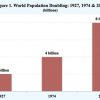
2, 4, 8 and ? Billion People
Two, four and eight billion people is the extraordinary doubling and redoubling of the world’s population that occurred in slightly less than a century. World population, which had grown to 2 billion by 1927, doubled to 4 billion by 1974 and will reach 8 billion by around 2023.
What’s in a Name? Everything.
On March 19, 78 years old Nursultan Äbisjuly Nazarbayev unexpectedly announced his resignation as President of Kazakhstan, referring to the need for “a new generation of leaders”. The same day the speaker of the nation´s parliament was appointed as interim president, awaiting presidential elections scheduled for 2020.
The NPT & Conditions for Nuclear Disarmament
Fifty years ago, shortly after the conclusion of the 1968 nuclear Nonproliferation Treaty (NPT), the United States and the Soviet Union launched the Strategic Arms Limitation Talks (SALT).
‘The First City Completely Devastated by Climate Change’ Tries to Rebuild after Cyclone Idai
The city of Dondo, about 30 kilometres from Beira, central Mozambique, didn’t escape the strong winds of Cyclone Idai. It is estimated that more than 17,000 families were displaced and more than a dozen schools were destroyed in the city.
UK Announces Aid Package for Gazan Hospitals Near Breaking Point
The UK Government has announced an aid package to support hospitals in Gaza that are “near breaking point”. The £2 million package will go to the International Committee of the Red Cross’s 2019 Israel and Occupied Territories (ILOT) Appeal. The aid will contribute to surgical equipment, drugs, wound dressing kits, prosthetics, and post-surgery physiotherapy for up to 3,000 disabled people.
Making it in India: Women Struggle to Break Down Barriers Starting a Business
Radhika Baburao Shinde was all of 12 years old when she was married off to a man who was 10 years older. She was sent away to live with her new husband, a truck driver, and his family in remote, drought-prone Satara district, 330 kilometers southwest of Mumbai. She left school and went to work as a laborer on her husband’s family farm.
Bridging the Gaps for the Disabled
People with disabilities are being left behind, and steps must be taken to ensure their inclusion in the world of education and work.
Militarised Government Attempts to Resume Mega-projects in Brazil
Two military-inspired initiatives are leading Brazil's new government, which includes a number of generals, down the path of mega-projects, which have had disastrous results in the last four decades.
Rising Inequalities in Asia-Pacific have become a Major Obstacle to Accelerating Progress
2019 will be a defining year for the 2030 Agenda; and the regional forums will pave the way for our first stocktaking on the SDGs in the General Assembly in September.
Civil Society Organisations Under Attack by Rightwing Governments & Extremist Groups
The widespread political repression in countries such as the Philippines, Egypt and Saudi Arabia-- and rising right-wing nationalism in the US, Brazil, Italy, India, Poland and Hungary-- have increasingly triggered attacks on human rights and civil society organisations (CSOs).
Safe Menstrual Practices Important for Progress
As menstruation continues to be shamed in many communities, one organisation is rising up to the challenge to ensure “safe menstruation for all women of Bangladesh.”
The Campaign Against Greta is an Index of the Loss of Values
Since the powerful march of hundreds of thousands of students in 1,000 towns against climate change, an unexpected campaign of delegitimation, ”demystification” and demonisation has started against Greta Thunberg, the Swedish teenager who started the movement. After searching the media, social media and websites, this campaign can be divided into four different groups.
Cyclone Idai: A Time to Reassess Disaster Management
It was one of the worst tropical cyclones hit Southern Africa in recent times. Cyclone Idai, which has been characterised by heavy rains and flooding including mudslides in some parts of Mozambique, Zimbabwe, and Malawi, has left more than 750 dead, with thousands marooned in remote rural areas, whilst others are still unaccounted for. More than 1,5 million people are affected by the cyclone in the region.
Anguilla’s Fishers Share their First-Hand Knowledge About Climate Change and its Impact
Fishers in Anguilla saw posted on Youtube this week a video they helped produce that depicts the impacts of climate change on their industry. Titled “Anguilla’s Fishing Dilemma”, the four-and-a-half minute video highlights some of the main challenges Anguilla’s 92 licensed fishers face in earning a living.
“Don’t Tell My Husband I Have Leprosy”: Social Stigma Silences Marshall Islands’ Women
Meretha Pierson has been a nurse for the past seven years, working in the government-run leprosy clinic in Majuro, the capital of the Marshall Islands. Her patients come in all ages, from different economic backgrounds and different professions. But, aside from their diagnosis, they all have something else in common: everyone wants to keep their illness a secret.
Japan’s Gender Gap
Japan is not making progress in gender equality, at least relative to the rest of the world. Despite the Japanese government’s attempts in recent years to pass legislation promoting the economic activity of women, Japan ranked a miserable 110 out of 149 in the World Economic Forum’s 2018 Gender Gap Index, which benchmarks countries on their progress toward gender parity across four major areas.
NHIF Reform Critical to Affordable Health For All in Kenya
Consider this. One million Kenyans fall into poverty every year due to catastrophic out of pocket health expenditures. For the almost four in every five Kenyans who lack access to medical insurance, the fear that they are just an accident or serious illness away from destitution.
Changing Weather Will Affect Living Standards of Half of India’s Population
The India Meteorological Department (IMD) on January 16 declared that 2018 was the sixth- warmest year in the last 117 years or since 1901, when recording started. Pointing towards changing weather and climate parameters, it also noted that the last monsoon rainfall was the sixth-lowest since 1901.
Monoculture Crops Threaten Community Water Projects in El Salvador
For nearly three decades, several communities in southeastern El Salvador have collectively and efficiently managed the water they consume, but monoculture production and climate change put their water at risk.
Q&A: Guyana’s Roadmap to Become a Green State
In 2008, the then president of Guyana, Bharrat Jagdeo, established within the Ministry of the Presidency the Office of Climate Change. Guyana became the first country in the region to do so. A year later, Jagdeo set out a vision to forge a new low carbon economy in the Caribbean nation.
French Museum Puts Spotlight on Immigrants’ Musical Impact
Amid the morass of Brexit and continuous debates on immigration, a French museum has launched a thought-provoking exhibition about music and migration.« Previous Page — Next Page »


The Week with IPS

NEXT STOP - SDGs
Tracking global progress towards a sustainable world
Tracking global progress towards a sustainable world
