Languages
Friday, November 13, 2026



News and Views from the Global South
Featured

New Agreement with China: Opportunity to Save Mozambique’s Forests
Mozambique’s forests are disappearing at an alarming rate, with most of the destruction caused by excessive logging, corruption and weak laws.
Q&A: Honouring Women of Africa and the Diaspora
This year, the African Union and the Diaspora African forum are honouring the first woman minister for education in Kenya for her long and outstanding work in girls’ education and governance.
Indigenous Peoples Least Responsible for the Climate Crisis
Indigenous peoples, who comprise less than five percent of the world’s population, have the world’s smallest carbon footprint, and are the least responsible for our climate crisis. Yet because their livelihoods and wellbeing are intimately bound with intact ecosystems, indigenous peoples disproportionately face the brunt of climate change, which is fast becoming a leading driver of human displacement.
Sousa, a Solar Power Capital in an Increasingly Arid Brazil
Sousa, a municipality of 70,000 people in the west of Paraíba, the state in Brazil most threatened by desertification, has become the country's capital of solar energy, with a Catholic church, various businesses, households and even a cemetery generating solar power.
Beyond Boundaries – Cultural Literacy in Indiana & Rwanda
For ten years now, in special partnership with the community of Musanze, Rwanda, Indiana University (IU) has created meaningful programs and connections across the country. It is an unlikely partnership, one that formed over 10 years ago with a university alum recognizing an opportunity for not only cultural literacy but friendship.
Why the Flooding in Grenada is a Clear Reminder of its Vulnerability to Climate Change
Grenada is still tallying the damage after heavy rainfall last week resulted in “wide and extensive” flooding that once again highlights the vulnerability of Small Island Developing States (SIDS) to climate change.
World Day for Indigenous Peoples
 370 million self-identified indigenous peoples are spread across the world, but continue to face discrimination and marginalization.
Dispossessed of their lands, territories and ancestral resources, these people have increasingly been forced to give up their way of life, and have been pushed into unfamiliar worlds to survive.

VIDEO: Climate Change Could Have Devastating Consequences for Saint Lucia
The Caribbean island nation of Saint Lucia is home to more than 2,000 native species — of which nearly 200 species occur nowhere else in the world. Though less than 616 square kilometres in area, the island is exceptionally rich in animals and plants. 
How the Yanadi, an Oppressed Indigenous People in India, are Reclaiming Their Rights One Village At a Time
Under the blazing midday sun, a tractor moves slowly along a dirt trail in Nacharwari Pallem, a village of the Yanadi indigenous people located some three hours from Chennai city in South India. Atop the tractor, women of the village – 36 in all – sit expectantly, ignoring the heat. Squeals of excitement fill the air as the tractor slowly halts near a stretch of rice fields.
Farmer-Herder Conflicts on the Rise in Africa
Violent clashes between farmers and herders in Nigeria’s Middle Belt in June reminded me of a smelting hot afternoon a year ago. I was sitting in my living room watching a herder grazing his cows in my yard in the small town in southwestern Cameroon where I live.
“Outrage is Appropriate, Surprise is Not”: Tackling Sex Abuse in the Aid Sector
A new report on the scale and extent of sexual abuse and exploitation in the aid sector should come as no surprise. It is now time for international agencies, including the UN, to step up and show some much-needed leadership to tackle this issue once and for all.
Helping Indigenous Peoples Live Equal Lives
Although indigenous peoples are being increasingly recognised by both rights activists and governmental organisations, they are still being neglected in legal documents and declarations. Indigenous peoples are only mentioned in two of the 17 United Nations’ Sustainable Development Goals (SDGs) and only seen in two of the 230 SDG indicators, says indigenous rights expert Chris Chapman.
As It Recovers, Argentina’s Beef Production Faces Environmental Impact Questions
Beef is one of the symbols historically identified with Argentina. After lean years, production and exports are growing, as is the debate on the environmental impact of cattle, which is on the radar of environmentalists and actors in the agricultural value chain.Paid Leave In New Zealand For Victims of Domestic Violence Praised Globally
New Zealand has one of the highest rates of domestic violence in the developing world. Recent legislation there that gives victims of domestic violence 10 days of paid leave, without having to present any documentation in support, has been praised across the globe.
Protecting the Rights of Indigenous Peoples as They are Forced to Move into Cities
On Aug. 9 the observance of the International Day of the World’s Indigenous Peoples will take place in the Economic and Social Council Chamber at the United Nations Headquarters in New York, bringing together U.N. agencies and member states, civil society and indigenous peoples’ organisations.
Laws and Threats Undermine Freedom of Expression in Honduras
A series of laws that came into force in the last five years and the petition for amparo by 35 journalists and 22 social communicators against the government's "Secrecy Law" give an idea of the atmosphere in Honduras with regard to freedom of expression.
Trump’s Attacks on Media Violate Basic Norms of Press Freedom, Human Rights Experts say
U.S. President Donald Trump’s repeated attacks on the free press are strategic, designed to undermine confidence in reporting and raise doubts about verifiable facts. The President has labelled the media as being the “enemy of the American people” “very dishonest” or “fake news,” and accused the press of “distorting democracy” or spreading “conspiracy theories and blind hatred”.
Going Cashless, Led by Sweden
Sweden is rapidly moving away from cash. Demand for cash has dropped by more than 50 percent over the past decade as a growing number of people rely on debit cards or a mobile phone application, Swish, which enables real-time payments between individuals.
Land Degradation: A Triple Threat in Africa
Sustainability, stability, and security—the three overlapping issues are an increasing concern among many especially in Africa where land degradation is displacing citizens and livelihoods.
From Crowdfunding to Development Platforms: 8 Ways to Make Use of a Networked World
Hardly a day goes by in the development world without hearing the term “platform”. Like in the business world, it’s becoming harder for any development organization to provide a single service or product that will make broad impact. Airbnb doesn’t build homes, it creates a network that brings together host and guests.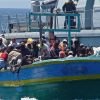
Save the Children Warns Untraceable Minors in Italy May be Trafficked
Thousands of migrant minors placed in reception facilities upon arrival in Italy, as a first step in identification and later relocation into other structures for asylum seekers, are untraceable and feared trafficked.« Previous Page — Next Page »


The Week with IPS

NEXT STOP - SDGs
Tracking global progress towards a sustainable world
Tracking global progress towards a sustainable world
