Languages
Friday, October 9, 2026



News and Views from the Global South
Gender

African Leaders Commit to Climate-Health Nexus and Adaptation Solutions
At the Second Africa Climate Summit (ACS2) held in Addis Ababa, Ethiopia, from 8-10 September, African leaders committed to the climate and health nexus and their desire to advance climate-resilient and adaptive health systems on the continent.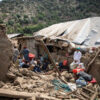
Afghan Women Die Needlessly After Natural Disasters
In normal times, women in Afghanistan face dire living conditions relative to their counterparts in other parts of the world, given the iron grip of Taliban repression. However, the powerful 6.0-magnitude earthquake that struck the eastern Afghan provinces of Kunar, Nangarhar, and Laghman at the end of August was out of the ordinary.
From Fishers to Forest Keepers: Women and Communities Reviving India’s Mangroves
As the climate crisis intensifies, long-term adaptation strategies have become urgent. Among the most effective nature-based solutions are mangroves—resilient coastal forests that protect communities, preserve biodiversity, and capture carbon.
How Stigma Undermines Contraceptive Use Among Women in Sierra Leone
Eunice Dumbuya, a young activist in Freetown, Sierra Leone, still remembers being called promiscuous after getting a contraceptive implant a few years ago. She knew the risks of an unplanned pregnancy in her conservative country, so she made a choice.
New Report Investigates Violence Against Women and Girls Through Surrogacy, Sparks Global Dialogue
A United Nations report calling for the global abolition of surrogacy has sparked intense debate among experts, with critics arguing that blanket bans could harm the very women the policy aims to protect.
Gender Equality: The Key to Peace, Prosperity, and Sustainability
On Monday, three decades on from the historic Fourth World Conference on Women, the General Assembly meets to discuss recommitting to, resourcing, and accelerating the implementation of the 1995 Beijing Platform for Action – an historic agreement which mapped the path to achieving gender equality and the empowerment of all women and girls.
Inside Africa’s Big Bet on Youth to Feed the Continent and Who’s Actually Getting Funded
Winnie Wambui leans forward on the panel stage, microphone in hand, scanning the room until she spots a raised hand.
Why Collective Healing is Central to Peacebuilding
 Wars and oppression leave behind not just rubble and graves. They leave behind invisible wounds, profound trauma carried by survivors. And most often, women carry the largest burden. They are targeted not only because of their gender, but because surviving and leading threaten structures based on patriarchy and domination.
UN Warns of Escalating Humanitarian Emergency in Haiti As Armed Gang Violence and Aid Deepen Crisis
In recent months, the humanitarian crisis in Haiti has taken a considerable turn for the worse, with armed gangs continuing to exert dominance over nearly 90 percent of the capital, Port-Au-Prince. Rising violence, the collapse of essential services for millions, and severe cuts to humanitarian funding have left the international community struggling to provide immediate relief and find a sustainable, long-term solution.
Experts Launch a Climate and Health Curriculum for African Negotiators Ahead of COP30
Despite climate change being a health risk multiplier, health is often underrepresented in climate negotiation processes. Experts attribute this to a lack of funding by the African governments and a lack of capacity building among climate negotiators.
Banks Embed Climate Risk, Gender and Sustainability in Finance Products
As climate shocks intensify across East Africa, from failed rains in Kenya’s arid north to devastating floods in Tanzania’s coastal belt, the region’s banks are emerging as unlikely but powerful players in the resilience race.
No Progress Without Women’s Freedom
In recent weeks, the walls of the Afghan capital have been plastered with slogans about women's hijab: “Unveiling is a sign of ignorance”; “Hijab is a father's honour and the pride of Muslims”.
50 Years On: Lebanon’s Civil War, Feminist Peacebuilding, and the Fight Against Silence
This year marks half a century since the start of Lebanon’s civil war in 1975 - a conflict that lasted 15 years, killed over 150,000 lives, and resulted in as many as 17,000 missing. Decades later, the legacy of that war is still everywhere: in the silence of classrooms without history books, in families who never knew what happened to their missing loved ones, and in violence made mundane in all parts of society.

UN Mobilizes Amid Cascading Earthquakes in Eastern Afghanistan, Aiming to ‘Build Back Better’
United Nations aid organizations are rallying after a series of earthquakes and powerful aftershocks wreaked unprecedented havoc across eastern Afghanistan—particularly in the mountainous provinces of Kunar and Nangarhar.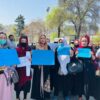
Afghan Women to the International Community: Real Action, Not Mere Sympathy or Words of Condemnation
This year marks the fourth anniversary of the Taliban retaking power in Afghanistan. All these years have been one long nightmare for the women of Afghanistan, the ones who have borne the brunt of oppression – arguably the worst of its kind anywhere in the world.
From Matriarchy to Victims: An Ongoing Story of Indigenous Women in Canada
If European colonialism had never happened in Canada, matriarchy would still have been strong in Indigenous culture.
‘Who Will Take the Mic at the United Nations When Doing so Might Cost Them Their Freedom?’
CIVICUS discusses civil society’s challenges in engaging with United Nations (UN) processes with an activist from a Salvadoran queer-led organisation who asked to remain anonymous for security reasons.

The Right to Care: A Feminist Legal Victory That Could Change the Americas
On 7 August, the Inter-American Court of Human Rights delivered a groundbreaking decision that could transform women’s lives across the Americas. For the first time in international law, an international tribunal recognised care as an autonomous human right. Advisory Opinion 31/25, issued in response to a request from Argentina, elevates care – long invisible and relegated to the private sphere – to the level of a universal enforceable entitlement.
Hypertension and Diabetes Grows Among India’s Poor Communities
Generally thought to be diseases of the wealthier classes, non-communicable diseases (NCDs) like hypertension and diabetes are on the rise among India’s underprivileged working classes in semi-urban and rural sprawls.
Sexual Violence Against Women, Children in War ‘Strategic’ and Growing
Sexual violence against women and children during wars should not be considered collateral damage. "It is strategy, it is systematic, and it is used more and more," Permanent Representative of Denmark to the United Nations (UN) Christina Markus Lassen said.
‘The Surge in Executions Shouldn’t Be Mistaken for Strength – It’s a Desperate Act of a Collapsing Dictatorship’
CIVICUS speaks about the Iranian regime’s execution of political prisoners with Safora Sadidi, a human rights activist with the Women’s Committee and Foreign Affairs Committee of the National Council of Resistance of Iran. Safora lost her father and six family members to the theocratic regime, and has dedicated over two decades to the Iranian Resistance’s international efforts.
« Previous Page — Next Page »





Women make up half the world's population, but don't nearly share half of the world's wealth, well-being and opportunity. Two-thirds of the world poor are women, disproportionally exposing women to precarious living conditions, disease and unmitigated natural disasters. The media, meanwhile, remains a male-dominated sector in much of the world, contributing to women's voices lacking a crucial amplifier to put their concerns on political agendas and unleash the development potential of their ingenuity. Rather than then stereotypical victims of local and global forces, women are also organizer, innovators, conservators and community builders. These are some of their stories.

The Week with IPS

NEXT STOP - SDGs
Tracking global progress towards a sustainable world
Tracking global progress towards a sustainable world
