Languages
Friday, October 9, 2026



News and Views from the Global South
Gender

Where do UN Member States Stand on a Feminist Secretary-General?
The selection of the next UN Secretary-General (UNSG) will be a pivotal moment in global efforts to resist authoritarianism and work together to address shared problems. Where do UN Member States stand on appointing a feminist woman to this role?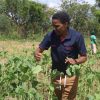
Blamed for ‘Causing’ Droughts: Zimbabwe’s LGBTQI Community Faces Climate Crisis Head-on
Takudzwa Saruwaka is hoeing weeds in a cowpea field in eastern Zimbabwe one morning in February, trying to beat torrential rains threatening from the gray clouds above.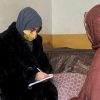
Fatima’s Story: The Struggles of Afghan Women Under Taliban Rule
Fatima Mohammadi was a manager in a government office in Afghanistan’s Parwan province before the Taliban came to power. But having been forced out of her job she is back home unemployed.
World’s Largest Religious Gathering Becomes Trans-Inclusive Despite Controversies
Despite a blazing sun and growing heat, Pavitra Nandagiri sits on a cot smiling. Clad in a saffron robe and headgear with her forehead painted with turmeric and vermillion, Nandagiri is a Mahamandaleshwar—one of the highest-ranking monks of the Kinnar Akhada (Transgender Arena) at the Maha Kumbh, the world’s largest religious gathering currently underway in northern India.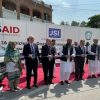
Afghan Refugees, Among Others, Feel the Impact of USAID Funding Freeze
“I was shocked when told by a security guard that the clinic has been closed down. I, along with my relatives, used to visit the clinic for free checkups,” Jamila Begum, 22, an Afghan woman, told IPS.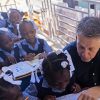
Sexual Violence and Displacement: Disproportionate Threats to Children in Haiti
As ongoing gang violence and unrest bring down the living conditions in Haiti, humanitarian groups sound the alarm on human rights violations and the increasing challenges they dace in providing relief efforts.
Legal Amendments in Iraq Threaten Rights of Women and Girls
Efforts to end child marriage in Iraq are facing a serious threat, with the Iraqi Council of Representatives’ approval of amendments to Iraq’s Personal Status Law raising grave concerns that it risks permitting child marriage for girls.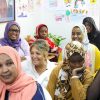
Gender Inequality in Science Limits Progress Towards Solving Complex Global Challenges
Today is the International Day of Women and Girls in Science and a time to take stock of progress, successes, and setbacks towards open and gender-inclusive science. Gender equality remains elusive in science, as only one in three scientists is a woman. Not only do these inequalities hold women back, but they also limit scientific progress.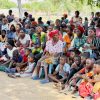
Namibia’s Drought Crisis: Building Resilience for Women and Girls
Communities in the Kavango West region of northern Namibia have firsthand experience of the severe impacts of climate change. The dry, cracked soil and emaciated livestock provide a constant reminder of the lack of access to water in this part of the country.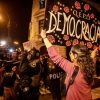
What is Not Good for Democracy in Peru is Not Good for Women
"We are facing a deeply conservative government that is opening the doors to all kinds of setbacks. We have a failed state with a democracy that is no longer a democracy," said Gina Vargas, a Peruvian feminist internationally recognized for her contributions to women's rights.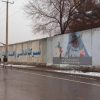
Online Education: A Lifeline for Afghan Girls Amid Taliban Restrictions
Since the Taliban regained power in Afghanistan in 2021, girls and women have been systematically banned from education, making Afghanistan the only country in the world that denies schooling to girls over the age of 12. The situation continues to deteriorate, with even primary school enrollment for girls in decline, according to UNESCO.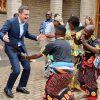
Tanzanians with HIV Left in Crisis as USAID Funding Ends
At 9 a.m. on Monday, Mariam Msemwa clutched her clinic card tightly as she stood in line at Bagamoyo District Hospital’s HIV Clinic in Tanzania’s coastal region. The 19-year-old had been here many times before, picking up monthly doses of antiretroviral (ARV) drugs that kept her alive. But today was different.When she reached the counter, the nurse flatly told her. “There’s no more free medication, ” she said. “You’ll have to buy it yourself.”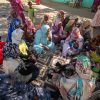
Ending FGM Requires Strengthening Partnerships and Advocacy Efforts
February 6 is the International Day of Zero Tolerance for Female Genital Mutilation (FGM). A practice deemed a gross violation of human rights, tragically the practice persists across multiple countries in Africa, the Middle East, and Asia. Over 230 million women and girls alive today have been subjected to this gruesome practice, and experts warn that at least 27 million more could endure this by 2030.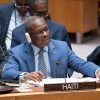
Haitian Government Faces Criticism for its Response to Gang Attack in Kenscoff
The humanitarian situation in Haiti continues to deteriorate as armed gangs expand their control in Port-Au-Prince and escalate acts of violence throughout the nation. Due to heightened insecurity, civilian displacement has reached new peaks, with hunger, disease, and the economic crisis having grown worse. With access to basic services diminished, approximately 5.5 million Haitians are dependent on humanitarian aid for survival. However, relief efforts have been severely hampered due to safety risks, restricted mobility and the vast scale of needs.
‘Reconciliation Will Require Robust Transitional Justice and Accountability Mechanisms’
CIVICUS discusses the ongoing conflict in Ethiopia’s Amhara region with Hone Mandefro, advocacy director at the Amhara Association of America, and Henok Ashagray, PhD candidate and project officer at the Centre for Human Rights at the University of Pretoria.
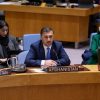
Afghanistan’s Humanitarian Crisis Expected to Worsen in 2025
The humanitarian crisis in Afghanistan has deteriorated significantly since the 2021 Taliban Offensive, an insurgency that resulted in the Taliban’s reclamation of power and the fall of the nation’s republic. In 2024, the Taliban issued further restrictions on human rights in Afghanistan, particularly for women and girls. These restrictions caused the country to enter a state of economic emergency. This, compounded with heightened insecurity and limited access to basic services, has left over 23 million people in dire need of humanitarian assistance.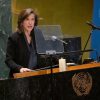
Antisemitism On The Rise Among Younger Generations
The United Nations (UN) held the annual Holocaust Memorial Ceremony on January 27 with the theme "Holocaust Remembrance for Dignity and Human Rights". This year - 2025 - marks the 80 year anniversary of the end of World War II and the liberation of Nazi concentration camps that resulted in the deaths of over 6 million Jews. This event included testimonies from Holocaust survivors, underscoring the importance of understanding and remembrance. With Holocaust denial and attacks on Jews on the rise, it is important to take meaningful steps as a society to combat racism and antisemitism.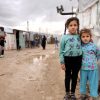
Report Exposes Silent Global Emergency as More Crises-Affected Children Need Urgent Education Support
A report released today on the International Day of Education sounds alarm as the number of school-aged children in crisis worldwide requiring urgent support to access quality education reaches a staggering 234 million—an estimated increase of 35 million over the past three years fueled by intensifying armed conflict, forced displacements, more frequent and severe weather and climatic events, and other crises.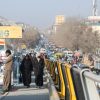
Taliban’s Decrees Worsen Crisis for Afghan Women, Banning All NGO Work
Afghan women are enduring perhaps their most challenging time. Since the Taliban regained power four years ago, restrictions on women and girls have escalated, beginning with bans on education and paid employment.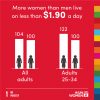
A World Where Rich Get Richer, Poor Get Poorer — and Billionaires Rise
Perhaps one of the UN's most ambitious and longstanding projects – the launching of 17 Sustainable Development Goals (SDGs)-- is aimed, among other things, at helping developing nations eradicate extreme poverty by 2030. But that elusive goal has made little or no significant progress.
Education Cannot Wait Interviews Adenike Oladosu, ECW Global Climate Champion and BBC 100 Women 2024
Adenike Oladosu is a leading Nigerian ecofeminist, climate justice leader and researcher. She was appointed as an ECW Global Climate Champion on World Environment Day in June 2024. In December of last year, Adenike was honored by #BBC100Women, selected as one of the BBC’s 100 most influential and inspiring women from around the world. She was also a finalist for the Pritzker Emerging Environmental Genius Award.
« Previous Page — Next Page »





Women make up half the world's population, but don't nearly share half of the world's wealth, well-being and opportunity. Two-thirds of the world poor are women, disproportionally exposing women to precarious living conditions, disease and unmitigated natural disasters. The media, meanwhile, remains a male-dominated sector in much of the world, contributing to women's voices lacking a crucial amplifier to put their concerns on political agendas and unleash the development potential of their ingenuity. Rather than then stereotypical victims of local and global forces, women are also organizer, innovators, conservators and community builders. These are some of their stories.

The Week with IPS

NEXT STOP - SDGs
Tracking global progress towards a sustainable world
Tracking global progress towards a sustainable world
