Languages
Saturday, October 10, 2026



News and Views from the Global South
Gender
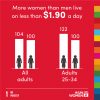
A World Where Rich Get Richer, Poor Get Poorer — and Billionaires Rise
Perhaps one of the UN's most ambitious and longstanding projects – the launching of 17 Sustainable Development Goals (SDGs)-- is aimed, among other things, at helping developing nations eradicate extreme poverty by 2030. But that elusive goal has made little or no significant progress.
Education Cannot Wait Interviews Adenike Oladosu, ECW Global Climate Champion and BBC 100 Women 2024
Adenike Oladosu is a leading Nigerian ecofeminist, climate justice leader and researcher. She was appointed as an ECW Global Climate Champion on World Environment Day in June 2024. In December of last year, Adenike was honored by #BBC100Women, selected as one of the BBC’s 100 most influential and inspiring women from around the world. She was also a finalist for the Pritzker Emerging Environmental Genius Award.

The Reckless and Dangerous Misogyny of Zuckerberg and Musk
In anticipation of Donald Trump’s inauguration his gold-studded Florida estate, Mar-a-Lago, is at the heart of political power games, where influential businessmen like Mark Zuckerberg and Elon Musk are positioning themselves as key players in his orbit. Apparently unfazed by legal controversies and scandals, Trump is preparing for his return in collusion with already powerful men, who in their pursuit of personal gain and political influence reflect a disturbing trend of billionaire oligarchy merging with politics. A worrying development that might have significant consequences for the future of free speech and women’s rights.
Malala: ‘Honest Conversations on Girls’ Education Start by Exposing the Worst Violations’
“She was at her brilliant best, speaking fearlessly and boldly about the treatment of women by the Afghan Taliban, robbing an entire generation of girls their future, and how they want to erase them from society,” said educationist and one of the speakers, Baela Raza Jamil, referring to the speech by Nobel Laureate and education activist Malala Yousafzai.
Colombia’s Historic Child Marriage Ban
Colombia has just marked a historic milestone in the global campaign against child marriage, with the Senate passing one of Latin America and the Caribbean’s most comprehensive bans on child marriage and early unions. In a country where one in five girls under 18 and one in 10 under 14 are married or live in marriage-like conditions, the new law raises the minimum age to 18 with no exceptions, eliminating a 137-year-old Civil Code provision that allowed children over 14 to marry with parental consent. This achievement aligns with goal 5 of the Sustainable Development Goals (SDGs), which has a target of eliminating harmful practices like child marriage by 2030. The new law now awaits the signature of President Gustavo Petro to come into effect.
Is Bangladesh’s Currency Reprint Pressing Delete on Bangabandhu’s Legacy?
History seems to be chasing Bangladesh even while the interim government is grappling with real issues of administering a country thrown into chaos. In July last year, this south Asian country faced an upheaval when a students’ movement drove out Prime Minister Sheikh Hasina from office.
Why Russia’s Ban on Child-Free ‘Propaganda’ Impacts Human Rights
“A lot of people are very scared,” says Zalina Marshenkulova. “This is obviously another tool of repression. The state is waging war on the remnants of free-thinking people in Russia and trying to suppress all dissent and freedom,” the Russian feminist activist tells IPS. The warning from Marshenkulova, who left Russia soon after the country’s full-scale invasion of Ukraine in 2022 and now lives in Germany, comes just days after new legislation came into force in her home country banning "child-free propaganda.”
Education Cannot Wait Interviews UN Special Rapporteur on the Situation of Human Rights in Afghanistan Richard Bennett
Richard Bennett was appointed as the Special Rapporteur on the situation of human rights in Afghanistan in April 2022. He has served in Afghanistan on several occasions in different capacities, including as the Chief of the Human Rights Service with the United Nations Assistance Mission in Afghanistan. He has previously played a role in the promotion and protection of human rights in Afghanistan and supported the United Nations on a number of human rights issues, such as protection of civilians, transitional justice, child rights, rule of law, rights of people with disabilities, protection of human rights defenders and a range of economic, social and cultural rights.

South Korea’s Democracy Defended
Democracy is alive and well in South Korea. When President Yoon Suk Yeol tried to impose martial law, the public and parliamentarians united to defend it. Now Yoon must face justice for his power grab.
We Can and Must Do Our Best
As 2024 comes to a close, I dare to say that this has been an especially gruesome year for millions upon millions of young children, their parents and their teachers. The world has witnessed one horrific crisis of cruelty, dispossession and human suffering after another.
Afghan Women Vow To Resist Taliban Oppression Until Freedom Is Achieved
Three years after the Taliban regained control of Afghanistan, women continue to face oppressive laws and systemic marginalization.
Mahrang Baloch—Feted Worldwide, Persecuted at Home
"This recognition by a media outlet highlights the painful stories of abductions, torture, and the genocide of the Baloch people," said 31-year-old political activist Mahrang Baloch, speaking with IPS over the phone from Quetta, Balochistan, in reference to her inclusion on the BBC’s annual list of 100 most inspiring and influential women from around the world for 2024.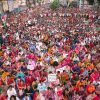
To What Extent is Bangladesh’s Hindu Population Under Attack?
Bangladesh has been in the midst of a deepening political crisis and a significant social divide since August 5 when the former Prime Minister Sheikh Hasina fled the country following a mass uprising led by students. Diplomatic relations between India and Bangladesh have since soured and given way to a considerable amount of disinformation, especially surrounding the persecution of the Hindu population.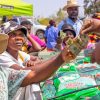
In Zimbabwe, Women Are Leading the Battle Against Climate Change
When Susan Chinyengetere started to focus on farming in her home village in south-eastern Zimbabwe, she wondered if she could earn a living and raise her children. With climate catastrophes ravaging the country, her hesitation on rain-fed agriculture worsened. But two years later, the 32-year-old mother of two from Mafaure village in Masvingo, about 295 km from the capital Harare, is now a champion in farming.
South Africa’s G20 Presidency: A Call for Transformative Leadership in a Fractured World
South Africa’s G20 Presidency begun in December, with only 12% of SDG targets on track and significant backsliding on more than 30%. As we write this today, there is an urgent need for a paradigm shift and practical solutions for a progressive, people-centred, and development-driven agenda in a fractured global landscape that needs collective healing.
UNCCD COP16 Raises Hopes for Ambitious Global Land Action
While many delegates at the 16th meeting of the Conference of the Parties to the UN Convention to Combat Desertification (UNCCD COP16) hope that this could be the convention’s own Paris moment—referring to the historic Paris agreement inked by UNFCCC signatories—however, this hedges heavily on the UN parties’ seriousness to combat drought, desertification and land degradation.
Heightened Insecurity in Sudan Threatens Nationwide Collapse
As the Sudanese Civil War continues to ravage the people of Sudan, conditions for internally displaced persons grow more dire every day. The situation in Sudan is currently the biggest displacement crisis in the world. Famine, violence, and gender-based violence are rampant. Described as “an invisible crisis” by the United Nations (UN) new emergency relief chief, Tom Fletcher, many believe that the humanitarian response has been largely ineffective in tackling the urgent and growing scale of needs.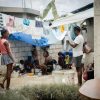
UN ECOSOC Special Meeting Highlights the Urgent Scale of Needs in Haiti
As a result of the ongoing hostilities from gang violence in Haiti, children continue to bear the brunt of the humanitarian crisis. Armed gangs have committed various human rights violations, many of which compound issues surrounding food insecurity, displacement, and social instability for millions of children in Haiti. Children have also lost their access to education and continue to be recruited into gangs. It is crucial for the international community to prioritize the multifaceted crisis facing Haitian children in order to avoid losing an entire generation to violence.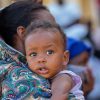
Sudanese Women & Human Rights Defenders Call for Solidarity to Stop the Bloodshed
On 15 April 2023, the outbreak of war between the Sudanese army and the Rapid Support Forces (RSF) drastically altered the face of Sudanese society. The fighting left thousands of dead, wounded, displaced people and refugees.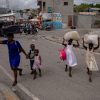
Humanitarian Situation in Haiti Deteriorates as Gender-Based Violence Soars
As gangs continuously seize more territory in the Haitian capital, Port-Au-Prince, the humanitarian crisis deepens. Gang violence in Haiti has considerably escalated following the deployment of the Multinational Security Support (MSS) mission and the appointment of the new Prime Minister, Alix Didier Fils-Aimé. Attacks on civilians continue to increase in brutality as the severely underfunded MSS mission and lackluster police efforts do little to combat gang activity. Girls and women have been disproportionately affected by rampant gender-based violence.
Human Rights Protection Crucial to Meeting the 2030 AIDS Public Health Goals
Gaps in realising human rights could stop AIDS being ended as a public health threat by 2030, UNAIDS has warned in a report to mark World AIDS Day.« Previous Page — Next Page »





Women make up half the world's population, but don't nearly share half of the world's wealth, well-being and opportunity. Two-thirds of the world poor are women, disproportionally exposing women to precarious living conditions, disease and unmitigated natural disasters. The media, meanwhile, remains a male-dominated sector in much of the world, contributing to women's voices lacking a crucial amplifier to put their concerns on political agendas and unleash the development potential of their ingenuity. Rather than then stereotypical victims of local and global forces, women are also organizer, innovators, conservators and community builders. These are some of their stories.

The Week with IPS

NEXT STOP - SDGs
Tracking global progress towards a sustainable world
Tracking global progress towards a sustainable world
