Languages
Friday, October 9, 2026



News and Views from the Global South
Gender
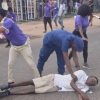
Epilepsy Patients in Africa Fight Stigma and Neglect
When Angela Asemota’s son began having seizures at six years old in 1996, people gossiped that he was possessed by evil spirits, leading her to seek healing from native healers and religious clerics. He underwent several traditional rituals and drank various concoctions, but the seizures persisted. It was not until his fourth year in secondary school in 2004 that she took him to a hospital, where he was diagnosed with epilepsy and began taking medication.
When Ethnic Violence Turns Women Against Women
For Kikim*, it was the ides of May, instead of March, that was, in one sense, her undoing. She was looking forward to welcoming her baby, her first. But life took an unexpected turn, and things changed within a split second.
Funding Disruptions Are a Systemic Failure – Philanthropy Must Do What’s Right and Support Local Leadership
The slashing of US aid funding by Donald Trump and Elon Musk, and cuts or planned cuts in international support by several European states, threaten to cut off the oxygen supply to a civil society already in a critical condition. At CIVICUS, the global civil society alliance, activists and grassroots groups have shared with us time and again that shifting and volatile donor priorities are one of the top funding challenges they face, alongside limited resources for strategy and restricted funding.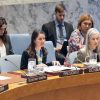
Women and Girls in Afghanistan Bear the Brunt of the Country’s Crisis
Since the Taliban’s return to power in Afghanistan nearly four years ago, human rights have begun diminishing for over 14 million women. Heightened gender inequality has exacerbated the pre-existing humanitarian crisis in Afghanistan, which has been marked by conflict, displacement, climate change, food insecurity, and economic instability. In 2025, widespread cuts in humanitarian funding look to further strain the crisis.
Surges in Violence in Haiti Push Basic Services to the Brink of Collapse
In 2025, the humanitarian crisis in Haiti has grown increasingly dire amid the ongoing gang wars. With rates of displacement, child recruitment, food insecurity, physical violence, and sexual violence having skyrocketed in the past year alone, the national police have found it difficult to keep gang activity under control.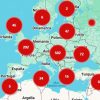
Women in the World: Making the Invisible Visible with Crowdsourced Data
Despite a push in the past ten years for more female representation and #MeToo movements highlighting the abuse that women have faced for centuries, women’s struggles continue to remain invisible—dismissed, denied, and buried under patriarchal bureaucracy.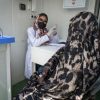
Society’s Self-Sabotage: How Discrimination Cripples Nations
One look at the headlines recently and anyone would know that cuts to foreign aid are jeopardizing hard-won progress on a range of issues. AIDS is one of them.
Addressing the Scars of Abuse: A Global Call to Protect Girls and Secure Their Futures
In March 2000, 15-year-old Binta Manneh was eager to test her skills at an out-of-town interschool sports competition. That night, as she stepped out to buy biscuits from a nearby shop, she encountered paramilitary officers – men sworn to protect the nation.
International Women’s Day, 2025
Rule Breakers: The Compelling True Story of Afghan Girls Who Risked All to Learn
Like the Afghan robotics team, Education Cannot Wait (ECW), the global fund for education in emergencies and protracted crises in the United Nations, is breaking the 'rules' and continuing to educate young women in that country despite an edict from the Taliban denying girls a secondary school education.

International Women’s Day, 2025
The Quest for a Female UN Secretary-General: Assessing the Probability
The United Nations has chosen “For ALL Women and Girls: Rights. Equality. Empowerment.” as the theme for International Women’s Day on March 8, 2025. This theme emphasizes the importance of equal rights, power, and opportunities for all women and girls, urging action to create a feminist future where no one is left behind.
Our Silence on Female Genital Mutilation in Sierra Leone Will Not Protect Us
Over 200 million women and girls around the world have undergone female genital mutilation (FGM). This is the partial or total removal of the external female genitalia for non-medical reasons.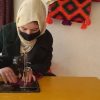
Stitching Hope: Two Afghan Women Rebuild Their Lives with Needle and Thread
Zainab and Mursal, two young Afghan women, had their education cut short by the Taliban. But instead of surrendering to despair, they picked up a needle and thread—transforming their skills into a thriving sewing business that now provides income and inspiration to other Afghan women.
International Women’s Day, 2025
In Zanzibar, Women Turn the Tide with Sponge Farming
In the early morning, as the tide pulls away, Zulfa Abdallah ties her scarf tightly around her head. She adjusts her goggles, places a snorkel across her forehead, and wades into the chest-deep waters off Jambiani village in Zanzibar. The Indian Ocean is her livelihood now, its waves offering a lifeline to women like her who confront challenges of poverty and climate change. 
International Women’s Day, 2025
It’s time for a Feminist Woman Secretary General at the UN
In 2025, the United Nations will celebrate 80 years of shaping global policies, fostering peace, and driving international development. Yet, in those eight decades, not a single woman has held the position of Secretary-General.

International Women’s Day 2025: For All Women and Girls

In 2025, our world remains deeply unequal. Women earn, on average, 20% less than men globally.

Anti-LGBTQI Legislation in Europe Curbs Speech Freedom, Democracy—Report
LGBTQI communities across Europe and Central Asia are being ‘weaponized’ by governments as part of a wider attack on fundamental human rights and freedoms, rights activists have warned.
International Women’s Day, 2025
New Report Finds Sexist Laws Persist Worldwide
A new global report analyzing sex discrimination in laws reveals that while some commendable gains have been achieved in strengthening legal protections for women and girls over the past five years, progress remains slow, uneven, and increasingly under threat from a growing backlash against women’s rights.

The Gates to Paradise Are Closing
In 2020, a historic announcement emerged from the Global Trafficking in Persons Report, an annual assessment that evaluates human exploitation in 129 countries. For the first time, the world witnessed a 13% decrease in the number of victims. For those of us who fight against this heinous crime, it felt as if a door to paradise had opened—an Eden where no human being is for sale.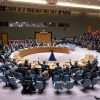
U.S. Passes on UN Ukraine Resolution amid the Humanitarian Crisis
From late 2024 to early 2025, the humanitarian situation in Ukraine has taken a turn for the worst, with poverty, violence, displacement, and damage to critical infrastructures having grown in intensity. Following the 2022 invasion of Ukraine by Russia, tensions have grown among member states of the United Nations (UN) on how to resolve the Russo-Ukrainian War.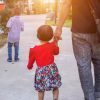
Governments Are Having A Hissy Fit Over It
Yeah, governments are having a hissy fit over it. And their hissy fit is not over the usual concerns of governments such as defense, the economy, trade, inflation, unemployment, crime, or terrorism.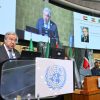
Humanitarian Groups Face Challenges in Reaching the Sudanese Displaced Population
In the final quarter of 2024 ,there has been an escalation in the Sudanese civil war, with armed clashes between the Rapid Support Forces (RSF) and the Sudanese Armed Forces (SAF) having grown in brutality. Heightened insecurity has pushed millions of people into displacement, hunger, and poverty. Additionally, the continued hostilities have made it difficult for humanitarian organizations to scale their responses up.« Previous Page — Next Page »





Women make up half the world's population, but don't nearly share half of the world's wealth, well-being and opportunity. Two-thirds of the world poor are women, disproportionally exposing women to precarious living conditions, disease and unmitigated natural disasters. The media, meanwhile, remains a male-dominated sector in much of the world, contributing to women's voices lacking a crucial amplifier to put their concerns on political agendas and unleash the development potential of their ingenuity. Rather than then stereotypical victims of local and global forces, women are also organizer, innovators, conservators and community builders. These are some of their stories.

The Week with IPS

NEXT STOP - SDGs
Tracking global progress towards a sustainable world
Tracking global progress towards a sustainable world
