Languages
Friday, October 9, 2026



News and Views from the Global South
Gender
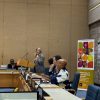
CGIAR Gender Accelerator: A Tool to Advance Gender Equality Research in Agri-Food Systems
To advance the participation of women, the youth, and minority communities in the agricultural sector, measures must be taken to recognize and break down the barriers that hold them back. Experts in the agricultural sector agree that even as they constitute a significant percentage of the agricultural workforce, women face persistent challenges. The picture that emerges is a lack of due recognition of their presence and their challenges, such as limited access to resources and knowledge.
Rohingya Refugees Are Not Safe in Bangladesh or Myanmar
On April 4, it was confirmed by Myanmar authorities that there were approximately 180,000 Rohingya refugees residing in Bangladesh that are eligible to return. Following numerous cuts in funding as a result of President Donald Trump’s reduction of USAID, as well as the increasingly volatile humanitarian crisis in Myanmar, it is uncertain if repatriation will best serve Rohingya refugee communities.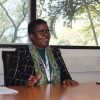
‘With Science, We Can Feed the World of 9.7 Billion by 2050′
Animal scientist Lindiwe Majele Sibanda became what her grandmother earnestly prayed for when she was growing up on a farm in southern Zimbabwe.
CGIAR Gender Impact Platform Needs a ‘Bold Approach’ in Agriculture Research
Women farmers face structural issues that prevent them from realizing their full potential, from societal perceptions that dictate their limitations to poor land. However, CGIAR's Gender Impact Platform Director, Nicoline de Haan, argues that leaning into a "victim" narrative does not serve them, especially when women are demonstrably more involved in agriculture.
Taliban View Even Women’s Cosmetics as a Threat to Their Rule
Women in Afghanistan have borne the brunt of the Taliban’s extremist Islamist rule. Four years on, there appears to be no end in sight.
Digital Democracy at a Crossroads. Key Takeaways from RigthsCon2025
In an increasingly digital world, democratic practices are evolving to encompass new forms of participation. Digital democracy – the use of technology to enhance civic action, movement building and access to information – has become a crucial force in shaping local and global political landscapes.
CGIAR Science Week Seeks Solutions for a Food-Secure, Climate Resilient Future
CGIAR and the Kenyan Agricultural and Livestock Research Organization (KALRO) are bringing together the world’s leading scientists and decision-makers in agriculture, climate, and health for the first CGIAR Science Week. This gathering will be a key moment to advance research and innovation, inspire action, and establish critical partnerships that can secure investment in sustainable food systems for people and the planet.
Challenging the Taliban’s Violations of Afghan Women’s Rights
The Taliban’s egregious violations of women's rights in Afghanistan, especially banning women from education and even from speaking in public, are beyond the pale. Imposing economic sanctions alone, however, has not changed in any significant way the Taliban’s treatment of women.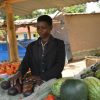
Trapped by Tradition: The Widows of Ukerewe and the Ritual They Cannot Escape
The night after her husband was laid to rest, 24-year-old Vivian Magesa sat in the dimly lit brick-walled house, surrounded by women from her late husband’s family. She had spent the past few days in mourning, wrapped in a white shroud, her head shaved as custom dictated. But as the hushed voices of her in-laws filled the room, Magesa realized her grief was far from over.
Putting People First: Why SRHR Must Be Central to Health and Development Agendas
As global leaders prepare to convene for the Commission on Population and Development (CPD) in New York, April 7-11, the world finds itself at a critical crossroads. We can either recommit to human dignity, equality, and justice—or risk unraveling decades of progress in global health.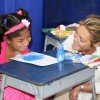
Global Disability Summit Galvanizes Education Support for Crisis-Impacted Children with Disabilities
Of the nearly 234 million children and adolescents of school age affected by crises, 85 million are already out of school. At least 20 percent of them—or 17 million—are children living with disabilities.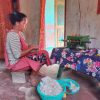
Solar-Powered Spinning Machines Help Indian Women Save Time and Earn More
As light enters through the small window of a modestly constructed tin-roofed house, Philim Makri sits on a chair deftly spinning cocoons of eri silk with the help of a solar-powered spinning machine in Warmawsaw village in Ri Bhoi district of Meghalaya in northeast India.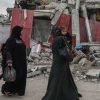
Collapse of Gaza Ceasefire and its Devastating Impact on Women and Girls
The end of the tenuous ceasefire in Gaza is having disastrous consequences for women and girls. From 18 to 25 March—in just those 8 days, 830 people were killed—174 women, 322 children, with 1,787 more injured.
How to Turn the Tide: Resisting the Global Assault on Gender Rights
This year’s session of the United Nations Commission on the Status of Women (CSW69), the world’s leading forum for advancing gender equality, confronted unprecedented challenges. With Saudi Arabia in the chair and anti-rights voices growing increasingly influential in the forum, the struggle to hold onto international commitments on gender equality intensified dramatically. On 8 March, International Women’s Day mobilisations also took on added urgency, with demonstrations from Istanbul to Buenos Aires focusing on resisting the multiple manifestations of gender rights regression being felt in communities worldwide.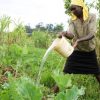
Empowering Women in Agriculture: Breaking Barriers for a Thriving Future
On March the 8th, the world celebrated International Women’s Day. This year’s theme was “For ALL Women and Girls: Rights. Equality. Empowerment” and called for actions that aim to unlock power and opportunities for women around the world by leaders across governments, corporate and private sector, academic communities, and civil societies.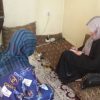
Young Women in Afghanistan Driven to Suicide Amid Widespread Frustration
Azar Shaimaa sits in grief, her voice trembling with sorrow as she recounts the devastating loss of her daughter, Benazir. A bright ninth-grade student, Benazir took her own life. Just three years earlier, Shaimaa lost her husband in a car accident.
‘What’s Next?’ Women-led Movements Fear for the Future
Women rights advocates who gathered at UN Headquarters for the world’s biggest meeting (10 -21 March) on gender equality have been sharing their concerns about the growing backlash against feminism, and how major funding cuts from donor countries could threaten programmes aimed at improving the lives of women and girls.
The Toll of Mental Health in Conflict Areas
Over the past two decades, conversations surrounding mental wellness have entered the cultural consciousness in the western world. Despite this, these topics receive far less media exposure in the Global South, particularly in areas that have been entrenched in warfare, where the onset of harmful mental health conditions are prevalent.
Award Winning Women Goat Herders in Chile Confront Climate Change
Women goat herders in the municipality of Ovalle, in northern Chile, are confronting climate change by defending their heritage through improvements in the quality and variety of their products, which has led some to win international awards for their cheeses.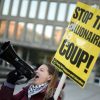
Civil Society: The Last Line of Defence in a World of Cascading Crises
In a world of overlapping crises, from brutal conflicts and democratic regression to climate breakdown and astronomic levels of economic inequality, one vital force stands as a shield and solution: civil society. This is the sobering but ultimately hopeful message of CIVICUS’s 14th annual State of Civil Society Report, which provides a wide-ranging civil society perspective on the state of the world as it stands in early 2025.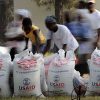
New Survey: US Funding Freeze Triggers Global Crisis in Human Rights and Democracy
A new survey carried out by the EU System for an Enabling Environment (EU SEE) network exposes the impact of the US funding freeze on civil society organisations (CSOs) in over 50 countries. With 67% of surveyed organisations directly impacted and 40% of them losing between 25-50% of their budgets, the abrupt halt in funding is disrupting critical human rights, democracy, gender equality and health programs, leaving vulnerable communities without essential support.« Previous Page — Next Page »





Women make up half the world's population, but don't nearly share half of the world's wealth, well-being and opportunity. Two-thirds of the world poor are women, disproportionally exposing women to precarious living conditions, disease and unmitigated natural disasters. The media, meanwhile, remains a male-dominated sector in much of the world, contributing to women's voices lacking a crucial amplifier to put their concerns on political agendas and unleash the development potential of their ingenuity. Rather than then stereotypical victims of local and global forces, women are also organizer, innovators, conservators and community builders. These are some of their stories.

The Week with IPS

NEXT STOP - SDGs
Tracking global progress towards a sustainable world
Tracking global progress towards a sustainable world
