Languages
Thursday, October 1, 2026



News and Views from the Global South
Gender

Living with nature, the climate lesson from Brazil’s caatinga
“The work of collecting seeds saved me from depression,” caused by her daughter's suicide at the age of 29, said Maria do Desterro Soares, 64, who lives in the poor rural community of Jatobá in northeastern Brazil.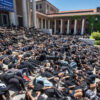
The Fight Against Femicide: Victories and Setbacks in 2025
Hours before world leaders gathered in Johannesburg for the 2025 G20 summit in November, hundreds of South African women wearing black lay down in a city park for 15 minutes — one for each woman who loses her life every day to gender-based violence in the country. The striking visual protest was organised by a civil society organisation, Women for Change, which also gathered over a million signatures demanding the government declare gender-based violence (GBV) a national disaster. Hours later, the government acquiesced.
The Bitter Sweet Future of Cocoa Showcased During COP30, Belém
Izete dos Santos Costa, also known as Dona Nena among locals in Combu Island, welcomed hundreds of people from around the world during the recent climate conference in Belém. Her team showcased local crafts and chocolate-making processes in the land of the Amazon rainforest—far from the deafening air conditioner sounds at the Parque da Cidade, where the COP30 negotiations were ongoing.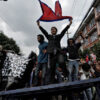
A Grim Year for Democracy and Civic Freedoms – but in Gen Z There Is Hope
2025 has been a terrible year for democracy. Just over 7 per cent of the world’s population now live in places where the rights to organise, protest and speak out are generally respected, according to the CIVICUS Monitor, a civil society research partnership that measures civic freedoms around the world. This is a sharp drop from over 14 per cent this time last year.
‘From the Moment They Enter Libya, Migrants Risk Being Arbitrarily Arrested, Tortured and Killed’
CIVICUS discusses migrants’ rights in Libya with Sarra Zidi, political scientist and researcher for HuMENA, an international civil society organisation (CSO) that advances democracy, human rights and social justice across the Middle East and North Africa.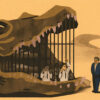
The World’s Right-Handed and Left-Handed Torturers
Jeanne Kirkpatrick, a former U.S. ambassador to the United Nations, once made a highly debatable distinction between "friendly" right-wing "authoritarian" regimes (which were mostly U.S. and Western allies) and "unfriendly" left-wing "totalitarian" dictatorships (which the U.S. abhorred).
Downward Spiral of Bangladesh Politics and Economy
Who Should be Blamed ?
Bangladesh in recent years started drawing global attention for its success in emerging out of poverty through economic growth and agricultural development. From early 2000 until 2023, while population growth continued to decline from 1.2 in 2013 to 1.03 in 2023, this growth has been the powerful driver of poverty reduction since 2000. Indeed, agriculture accounted for 90 percent of the reduction in poverty between 2005 and 2010 (World Bank).

Escalating Food Insecurity in Asia-Pacific Undermines Health, Economic Growth, and Stability
2025 marked a notable year of progress in reducing global hunger; yet climate pressures, economic instability, and ongoing conflicts continue to push agri-food systems to their limits, undermining food availability. In a new report, UN agencies raise the alarm on how these factors are particularly pronounced in the Asia-Pacific region, which accounts for 40 percent of the world’s undernourished.
Namibia Leads the Way: Honouring 25 years of Women, Peace and Security
Last November, the streets of Windhoek came alive with the sound of drums and brass as a marching band led a procession of women from Namibia’s Defence and security forces.
How Pacific Wisdom Is Shaping Global Climate Action
On the Pacific Islands, where the ocean horizon is both a lifeline and a warning, communities have long interpreted environmental change through traditional knowledge, lived experiences, stories, and practice. Their observations echo those across the Pacific region, where traditional knowledge remains central to understanding shifting environments and responsible stewardship.
Killer Robots: The Terrifying Rise of Algorithmic Warfare
Machines with no conscience are making split-second decisions about who lives and who dies. This isn’t dystopian fiction; it’s today’s reality. In Gaza, algorithms have generated kill lists of up to 37,000 targets.
As Attacks on Women Defenders Intensify, so Must Our Support
A global crackdown on civic freedoms is intensifying – and women are on the frontlines of the attack. CIVICUS’s 2025 People Power Under Attack report analyses the extent to which freedoms of association, expression and peaceful assembly are being respected or violated. The report reveals that people in 83 countries now live in conditions where their freedoms are routinely denied, compared to 67 in 2020. In 2020, 13 per cent of the world’s population lived in countries where civic freedoms were broadly respected; now it’s more like 7 per cent. Among the most documented violations in 2025 were detention of human rights defenders, journalists and protesters, and women human rights defenders (WHRDs) were among the most affected.
Sindh People’s Housing Redefines Post-Disaster Adaptation Success
By any comparison, the statistics for Sindh People's Housing for Flood Affectees (SPHF) are phenomenal. In 2022, photographs from the region showed people treading carefully through waist-deep water with their few belongings grasped firmly above their heads in an attempt to escape the flooding caused by 784 percent more than average monsoon rains.
From Law to Lives Saved: How the Maternal Newborn and Child Health Bill Can Deliver Universal Health Coverage
For women in labour across Kenya, reaching a health facility, finding skilled health workers, and affording care can be a matter of life and death. These challenges are not rare, but daily realities for many families.
In Taliban-Ruled Afghanistan, a Young Woman Works in Disguise to Feed Her Family
Shabnam, a 26-year-old law graduate, manages her life and work by disguising herself as a boy. In the middle of a crowded market with the clatter of street sellers and the smell of nearby restaurants, a small, nondescript shop blends into the chaos. Inside, rusty shelves line the walls, empty soda cans hanging on the wall add a touch of color, and an old table covered with a worn-out cloth sits in the corner. To most passersby, the shopkeeper looks like a young man.
How Community Radio Is Powering Tanzania’s Climate Resilience
At dawn in the mangrove-choked Rufiji estuary, paddles from wooden canoes slice through still waters as a soft voice drifts across the tide.
Farmers Earn While Reviving Native Forests Through a Blockchain-Powered App
For years, Morris Onyango had been trying to reforest his degraded land on the shores of River Nzoia, in Siaya county, 430 kilometers from Kenya’s Capital, Nairobi. But every time he planted trees on his farm, his efforts bore little fruit, as floodwaters would not only wash away his tree seedlings but also fertile topsoil on his land.
What Daily Life Looks Like for Afghan Women Now
I am an educated Afghan woman and a former government employee. I have long been active in women’s rights struggles, education, and community development. For me, living in Afghanistan is fraught with dangers and difficulties. In a context where women are denied the right to study, work, or participate in public life, my previous roles in government institutions and international organizations, and my advocacy for women's rights, place me at particular risk.
Authorities Urged to Take Lawful Measures to Stop Mass Abductions in Nigeria
On the morning of 17 November 2025, darkness cloaked Maga town in the Danko/Wasagu Local Government Area, Kebbi State, until gunfire shattered the silence. It was around 4 am when armed attackers stormed the Government Girls Comprehensive Secondary School, firing into the air to terrify residents before heading to the staff quarters. There, they killed two, including Hassan Yakubu, the school’s Chief Security Officer and then abducted 26 female students.
COP30 Was Diplomacy in Action as Cooperation Deepens—Says Climate Talks Observer
As observers at the Conference of Parties closely monitored proceedings in Belém, many, such as Yamide Dagnet, approached the UN Climate Summit as an implementation COP. They are advocating for tangible signals to ignite crucial climate action before the climate crisis reaches irreversible levels.
The Rising Threat of Digital Abuse: Women’s Vulnerability in the Age of AI and Online Harassment
As the digital landscape continues to expand and integrate into various aspects of daily life, humanitarian experts have raised concerns about the associated risks, particularly as artificial intelligence (AI), online anonymity, and the absence of effective monitoring frameworks heighten the potential for abuse and harassment. Women and girls are disproportionately affected by digital abuse, facing heightened risks, with nearly half of them worldwide lacking effective legal protections.« Previous Page — Next Page »


Women make up half the world's population, but don't nearly share half of the world's wealth, well-being and opportunity. Two-thirds of the world poor are women, disproportionally exposing women to precarious living conditions, disease and unmitigated natural disasters. The media, meanwhile, remains a male-dominated sector in much of the world, contributing to women's voices lacking a crucial amplifier to put their concerns on political agendas and unleash the development potential of their ingenuity. Rather than then stereotypical victims of local and global forces, women are also organizer, innovators, conservators and community builders. These are some of their stories.

The Week with IPS

NEXT STOP - SDGs
Tracking global progress towards a sustainable world
Tracking global progress towards a sustainable world
