Languages
Sunday, October 25, 2026



News and Views from the Global South
Women's Health

Ending Bullying and Humiliation over Menstruation as Girls and Boys in Conservative Eswatini are Educated about Reproductive Health
When 14-year-old Nomcebo Mkhaliphi first noticed the blood discharged from her vagina, she was shocked. Confused, she turned to her older sisters for advice. “My sisters told me that they were experiencing the same every month and that they used fabric, toilet paper and newspapers as sanitary wear,” recalls the now 45-year-old Mkhaliphi. She had to follow suit and use these materials because she had no money to buy sanitary pads.
Women Activists Escalate Demand for “Bodily Autonomy” as 19 Nations Dissent
The United States and 18 other UN member states have come under fire for denying a woman’s legitimate right to “bodily autonomy”—the right to self-governance over one’s own body without coercion or external pressure.
In the Elusive Grip of an Abusive Partner: A Migrant’s Story
To live in a home with family, to have a safe environment, food and basic human necessities, are some of the essentials that most people expect to have without giving it all much thought. When a child is born, parents or caregivers are likely to provide these things. These expectations get renewed whenever someone gets married and moves to a new home, a different neighborhood, or a city. We can hardly find someone who will say that they were not expecting happiness and safety when stepping into a new relationship, or starting a new chapter of life. But these expectations of a better life turn disastrous for millions of people when they step into another country as a dependent.
India and Japan’s MPs Act Quickly to Implement Sexual and Reproductive Health Plans after ICPD25
Parliamentarians from India and Japan have hit the ground running by acting soon after the recent Nairobi Summit on International Conference on Population Development (ICPD25).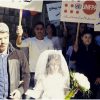
Child Marriages Unlikely to End by UN’s 2030 Deadline
“Right now, I don’t want to get married. I have a long life and a dream in front of me”, a 14-year-old young girl from Bangladesh told her parents as she was just not ready to get married.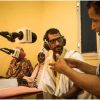
In Mauritania, Imams take to Radio Waves to say Child Marriage is Against Islam
"I refused to marry off my daughter for a simple, good reason: I want my daughter to be empowered,” said Lemeima mint El Hadrami, 49. "I don't want her to go through the same difficulties I did when I was young." El Hadrami was married when she was only 13.
Q&A: Initiative Starts Mental Health Sessions for Bangladeshi Garment Workers
Nearly seven years ago, garment workers in Bangladesh were victims of one of the gravest man-made disasters in history -- a factory collapse that left more than 1,100 workers dead, and rendered thousands with injuries -- in many cases lifelong ones. For many of the workers from Rana Plaza, the trauma remains real even to this day.
Address Malnutrition, Not Just Food Security
Malnutrition remains a formidable challenge in most societies, with less than a tenth of countries in the world not experiencing at least one major malnutrition problem. In relatively more food secure countries, where almost everyone has enough to eat, and few live in fear of a sudden loss of access to food, micronutrient deficiencies and diet-related non-communicable diseases (NCDs) often still loom large.
Sasakawa Vows to Continue Support for Fighting Leprosy in Bangladesh
Chairman of The Nippon Foundation, Yohei Sasakawa, has assured Bangladesh of continuing support for the Zero Leprosy Initiative announced by the country's Prime Minister, Sheikh Hasina, aimed at eliminating leprosy by 2030.
Bangladesh Can Be Leprosy-Free Before 2030 Prime Minister Tells National Zero Leprosy Conference
Leprosy is not a curse but should be detected and treated early, Bangladeshi Prime Minister, Sheikh Hasina, has told delegates at a gathering in her country's capital to discuss the elimination of the disease.
Children Risk Early Marriage: Climate Change One of the Factors
Filomena (15), a fisherman’s daughter from a village in Nampula Province, Mozambique was married to a 21-year-old from the same village.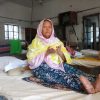
Building a Leprosy Free Bangladesh
Despite having remarkable success in leprosy control in the last decades, the Bangladesh government is now moving forward with a vision to build a leprosy- free country.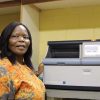
Care for Economic Development, Then Care for Food Nutrition, Food Researcher Tells Africa’s Politicians
More than 2 billion people in the world are suffering from malnutrition. This is the result of diets lacking essential micronutrients such as vitamins, iron and zinc, which are vital for the body to function, according to the Food and Agriculture Organization (FAO).
Catalysing Change for Gender Equality
Great strides have been taken to empower women and girls in the Asia-Pacific region since the Fourth World Conference on Women in Beijing adopted an ambitious global agenda to achieve gender equality twenty-five years ago. Gender parity has been achieved in primary education. Maternal mortality has been halved. Today, the region’s governments are committed to overcoming the persistent challenges of discrimination, gender-based violence and women’s unequal access to resources and decision-making.
I am Generation Equality: Child Marriage Survivor & Activist
-- I am Generation Equality because… I didn’t want other girls to go through the same struggles I experienced. I got married when I was 14 years old. I had no idea what marriage was.
Empower Young People to Sustain Our Planet, and Let Peace and Prosperity Thrive
Q: At ICPD25 we heard that women and girls are still waiting for the unmet promises to be met? DO you think this time around there is a commitment to ensure that these promises are met? The Nairobi Summit is about the Future of Humanity and Human Prosperity.
Art Helping Women to Highlight Gender-based Violence at ICPD25
While women find it hard to talk about their painful experiences, some have found a way of expressing themselves through art. Women, trained as artists, from Nairobi’s informal settlements Kibera and Kangemi, have produced a beautiful quilt that tells stories about their daily challenges.
This Time Around ICPD25 Commitments Will Be Met Says UNFPA …
 The United Nations Population Fund, UNFPA Ethiopia country representative, Bettina Maas speaks to IPS at the ICPD25 Nairobi Summit and she says she is optimistic that this time around that the three critical commitments; bringing preventable maternal deaths, gender based violence and harmful practices, as well as unmet need for family planning to zero will be realized.

Young People at ICPD25: ‘ We Have the Right to Sexual and Reproductive Rights’
Every day in developing countries it is estimated that 20,000 girls under the age of 18 give birth. This amounts to 7.3 million births a year.
ICPD25: Lessons From the East
The Japan Parliamentary Federation for Population represented by Mr Teruhiko Mashiko and its secretariat, the Asian Population and Development Association (APDA) has made a clear and concrete commitment to endorse the ICPD25 agenda. Mashiko tells IPS that Japan, as should every country driven by the well-being of its population, should create the best possible conditions to achieve the ICPD25 agenda.
Women with Disabilities Speak out Against Exclusion at ICPD25
One in five women globally lives with a disability even as they have same needs and interests as women without disabilities, their access to sexual and reproductive health services and rights remains severely limited.« Previous Page — Next Page »





Worldwide, women’s health is a serious issue. The result of a wide diversity of factors, most notably insufficient access to education, women’s health issues must be addressed. Without access to proper schooling, many girls grow up without the necessary understanding of reproductive health. Due to this, reproductive issues and sexually transmitted infections plague women in developing countries. Women struggle to battle infections such as HIV. The lack of relevant services, coupled with the lack of women’s rights pertaining to their own health, are some of the serious issues that these stories seek to explain.

The Week with IPS

NEXT STOP - SDGs
Tracking global progress towards a sustainable world
Tracking global progress towards a sustainable world
