Languages
Monday, June 29, 2026



News and Views from the Global South
Women's Health
SRI LANKA: Parliamentarian Breaks Silence on Domestic Violence
She became famous playing the role of ‘Pabha’, a poor young girl in love with a rich man in a long running hit television series here. But these days, Upeksha Suwarnamali is better known for her real-life role: A victim of domestic violence turned champion of abused women.DOMINICAN REPUBLIC: Managing Mental Illness on a Few Pesos a Month
Cristina, 41, was able to support the last two of her five children despite the fact that she could neither read nor write. Raised by a step-grandfather, she started working as a house cleaner when she was 14 and had the misfortune to have children by two alcoholic and abusive men.
Integrating HIV Care with Broader Maternal and Child Health
From the outside, little has changed at the Maternal and Child Healthcare Clinic: pregnant women and breastfeeding mothers wait patiently on wooden benches. A chorus of infant call-and-response betrays the less long-suffering approach of their children to the wait.
PAKISTAN: Unsung Heroines Bring Healthcare to Villages
At eight in the morning 30-year-old Sultana Solangi steps out of her house ready for her day’s work. Wearing a black gown that shows only her eyes, she is shod in comfortable slippers and lugs a large black bag.MALAWI: Uncertainty Over Role for Traditional Birth Attendants
When the ban on traditional birth attendants was lifted last year, pregnant women quickly appeared at Dorothy Chirwa's door in Malombe village in Mangochi, a district on the southern shores of Lake Malawi. Chirwa was among the thousands of TBAs banned from providing women with care in 2007.
PAKISTAN: Deaths of ‘Unwanted’ Babies On The Rise
The graves at a cemetery in Moach Goth have no epitaphs, no verses from the Koran, not even the names of the deceased. The only inscription on the small wooden signs that serve as headstones is a number and the date of burial. The latest one is Number 72,315.
Q&A: Needing Surgery Shouldn’t Be a Death Sentence
Surgery saves the lives of millions of people around the world, but only a tiny percentage of them live in low- and middle-income countries (LMICs), where a shortage of skills, supplies and infrastructure can turn easily treatable accidents and illnesses into lifelong disabilities and even death.Q&A: ‘Women Are Shackled During Childbirth’
Female Palestinian prisoners detained in Israel are often denied legal representation and medical care while being housed in squalid conditions that can include sharing cells with rodents.
Q&A: Rural Women Need Concrete Actions
Burundi will put U.N. Resolution 1325 on Women, Peace and Security into practice with a National Action Plan (NAP) that is ready to be signed within the coming months.Pregnancies Don’t Wait for Emergencies to End
When disaster strikes, the initial humanitarian response tends to focus on basic commodities like food and shelter. But as the crisis or conflict drags on, other critical needs often go unmet – such as prenatal care for pregnant women, and emergency contraception for victims of sexual assault.Vicious Cycle of Maternal Mortality
Addressing the National Convention of the Medical Committee for Human Rights in Chicago, Illinois in 1966, Dr. Martin Luther King Jr. stated unequivocally that, "Of all the forms of inequality in the world, injustice in health care is the most shocking and inhumane."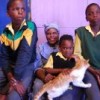
No Quiet Old Age for South Africa’s Grannies
Grannies are indispensable in South Africa. They may have been hoping for a restful old age, but the AIDS epidemic has seen them taking on motherhood for a second time, caring for grandchildren whose parents have died of the disease.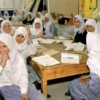
U.N. Task Force Pushes for Investment in Teen Girls
Risk of sexual violence, limited access to education, and health issues such as HIV/AIDS and forced female genital mutilation/cutting are just a few of the obstacles adolescent girls face in developing countries, yet these girls are the key to the future and the eradication of poverty, stress experts at the U.N. Commission on the Status of Women (CSW).CHINA: Men Becoming More Suicide-Prone
While new research indicates that China’s overall suicide rate has been in decline for the last two decades, some segments of the population – including urban males and the elderly – are increasingly likely to take their own lives, the result of breakneck social change in the world’s most populous country.U.S.: Women’s Health in Crosshairs of Republican Congress
Republicans in the U.S. House of Representatives are seeking to eliminate the federal family planning programme and cut funding from Planned Parenthood, one of the country's leading providers of reproductive health care to low-income women.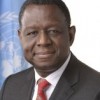
Q&A: Meeting a World of Seven Billion with Optimism
Before the end of 2011 there will be more humans on earth than in all of the planet's 4.5-billion-year history. As the world steels itself to support its seven billion-strong population, Dr. Babatunde Osotimehin, the new executive director of the United Nations Population Fund (UNFPA), greets the impending challenges with gusto.MALAWI: Women’s Voices to the Fore in New Development Policy
As Malawi works on its second development blueprint, the Malawi Development and Growth Strategy (MDGS II), the country’s women are hoping health and education will be prioritised and given proper attention in implementation.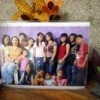
PHILIPPINES: ‘Wanted, Full-Time Mothers’
It’s definitely not your typical job advertisement. "Wanted: Mothers; must be mature, strong and stable, self-confident, humorous and know how to cook; must have a positive and cheerful attitude towards life; must be willing to work as a full-time mother for the long term."MIDEAST: Hamas Guards Women’s Health – for the Wrong Reasons
When the Hamas government of Gaza imposed restrictions on shisha (water pipe) smoking several months ago, it wasn’t for health reasons – even though the habit is pervasive in the densely populated strip of land. Rather, the ban targeted only women – and it is being widely ignored despite the firm grip of the conservative Islamic government.EAST EUROPE: Midwives Struggle to Deliver Home Births
Women’s rights in Eastern Europe have been put into the spotlight as a Hungarian midwife faces five years in prison for assisting with home births.
INDIA: Alcoholism Grips Progressive Kerala
The scene outside a temple in Kannur district in Kerala recently was something unusual in modern India. Sitting on one side of a balance scale hanging in front of the Kannadipara Muthappan Temple was a woman, and on the other side, a bucket of coconut wine.« Previous Page — Next Page »


Worldwide, women’s health is a serious issue. The result of a wide diversity of factors, most notably insufficient access to education, women’s health issues must be addressed. Without access to proper schooling, many girls grow up without the necessary understanding of reproductive health. Due to this, reproductive issues and sexually transmitted infections plague women in developing countries. Women struggle to battle infections such as HIV. The lack of relevant services, coupled with the lack of women’s rights pertaining to their own health, are some of the serious issues that these stories seek to explain.

The Week with IPS

NEXT STOP - SDGs
Tracking global progress towards a sustainable world
Tracking global progress towards a sustainable world
