Languages
Monday, June 29, 2026



News and Views from the Global South
Women's Health
HEALTH-US: AIDS Plan Stronger But Still Flawed, Groups Say
HIV/AIDS activists Wednesday hailed President George W. Bush's reauthorisation of the President's Emergency Plan for AIDS Relief (PEPFAR) to 48 billion dollars for fiscal years 2009 to 2013 as a major step in the global fight against AIDS, tuberculosis and malaria.
CULTURE-SOUTH AFRICA: Made in Khayelitsha, Sold in New York
Entering the Monkeybiz shop, one is confronted with hundreds of brightly coloured beaded animals, dolls, place mats and pictures. You find yourself smiling involuntarily.
HEALTH-SWAZILAND: AIDS Creating a Society in Distress
In a narrow and still winter-brown valley, little more than a crevice between rocky mountains, Gogo Ndlovu looks after her five young orphaned grandchildren.
Q&A: "Reproductive Rights Can Overcome the Conservative Wave"
This year marks four decades of international recognition of people's right to decide how many children they want to have and when, and for that reason there is a great deal to celebrate, says Brazilian expert Carmen Barroso, of the International Planned Parenthood Federation.
POPULATION-INDIA: Emergency Contraception Pill The Answer?
With unintended pregnancies and unsafe abortions continuing to be a serious problem in India, some doctors have begun advocating use of the emergency contraceptive (EC) pill as a possible solution, though conditions in India are regarded far from conducive.POPULATION: UN Predicts 12 Billion if Family Planning Falters
The United Nations commemorated World Population Day Friday in the shadow of a staggering array of grim statistics: an estimated 200 million women worldwide want to delay or avoid pregnancy but are not using safe and effective family planning.POPULATION-PAKISTAN: Illegality Inducing Unsafe Abortions
For thousands of Pakistani women, the World Population Day message of ‘Family planning is a right, let’s make it real’’ must sound hollow when they must resort to unsafe, illegal abortions while a debate on whether termination of pregnancy is Islamic or not rages on.
Q&A: Family Planning In Its Infancy in South Sudan
With few roads and almost no health and education infrastructure for the estimated 10 million people of South Sudan - an April census has yet to release any results - health care workers have an enormous task ahead of them.POPULATION-INDIA: One-Child Ideal Catching On
Ponni, 27, lay quiet on a missionary hospital bed in this small town, groggy from the anaesthetic administered to her for a caesarean delivery a couple of hours earlier.
HEALTH-SOUTH SUDAN: Welcome New Attention to Maternal Care
A vast pregnancy has swollen the tiny woman walking South Sudan's shining new maternity ward clutching two pieces of paper stapled together. She looks no more than 16, wide-eyed with recent pain.POPULATION-MIDEAST: Israel Fears the Womb More Than the Bomb
Israeli Prime Minister Ehud Olmert has laid it out in the starkest possible terms for his fellow Israelis. If they do not relinquish control of the occupied territories, he has warned them, Israel will ultimately cease to exist as a Jewish and democratic state.
POPULATION-MIDEAST: Time Bomb Ticking Away in Gaza
Crowded into a tiny strip of territory of 360 square kilometres, plagued by poverty, malnutrition and unemployment, Gaza's 1.5 million people face a demographic time bomb as the fragile infrastructure struggles to cope with a soaring birth rate.
HEALTH-MALAWI: Water Woes in Model Hospital
Gladys Mawera's face is contorted with pain -– both she and her newborn baby survived a complicated birth three days ago - but she has not been able to take the painkillers and antibiotics prescribed to her by the medical personnel at the Chiradzulu District Hospital in southern Malawi. The hospital has been without water for five days.RIGHTS: Poll Finds Scant Support for Criminalising Abortion
A new poll reveals that three-quarters of respondents in 18 geographically and culturally diverse countries reject the use of criminal penalties to discourage abortions.EL SALVADOR: Lawmakers Against Therapeutic Abortion
The Salvadoran parliament has given its support to a "Libro de la vida" (Book of Life), which calls abortion "an abominable crime," precipitating a storm of criticism from women’s organisations that consider this blanket endorsement an evasion of serious debate on the issue.HEALTH: Cultural Double Standards Undercut HIV/AIDS Fight
The United Nations says religion and culture continue to have a significant impact - both good and bad - on the spread and prevention of HIV/AIDS worldwide.
BOLIVIA: Domestics to Gain Healthcare Coverage
Domestic workers in Bolivia, most of whom are young indigenous women from the highlands region, are about to gain access to healthcare coverage.ECONOMY-AFRICA: HIV/AIDS Reduces Children’s Education Chances
Children who live in communities with an HIV prevalence rate of 10 percent or more have half a year of schooling less than children in other communities.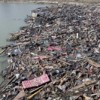
BURMA: One Million Survivors Not Yet Reached – U.N.
U.N. officials are giving the impression that the world body is making headway in helping the millions of survivors in Burma’s cyclone-hit Irrawaddy Delta.AFRICA: Women Say Regional AIDS Plan Falls Short
Despite the admirable progress made by some African countries in preventing and treating HIV/AIDS since 2000, 14 million Africans have died of AIDS in that time span, and an additional 17 million have been infected, says a new report on HIV/AIDS on the continent.COLOMBIA: Therapeutic Abortion – A Right in Name Only?
A woman in Pasto, the capital of the western Colombian province of Nariño, found out that the baby she was expecting was severely deformed. But when she went to the provincial university hospital for an abortion, the chief obstetrician gynaecologist told her that "If your son is born deformed, take him to a circus."« Previous Page — Next Page »


Worldwide, women’s health is a serious issue. The result of a wide diversity of factors, most notably insufficient access to education, women’s health issues must be addressed. Without access to proper schooling, many girls grow up without the necessary understanding of reproductive health. Due to this, reproductive issues and sexually transmitted infections plague women in developing countries. Women struggle to battle infections such as HIV. The lack of relevant services, coupled with the lack of women’s rights pertaining to their own health, are some of the serious issues that these stories seek to explain.

The Week with IPS

NEXT STOP - SDGs
Tracking global progress towards a sustainable world
Tracking global progress towards a sustainable world
