Languages
Friday, November 20, 2026



News and Views from the Global South
Global Geopolitics
Alleged Weapons Transfer Threatens Mideast Status Quo
This week, Israeli President Shimon Peres accused Syria of arming Lebanon's Hezbollah with long-range Scud missiles, possibly altering the current political and military dynamics of the region and affecting U.S. interests.Emerging Powers Cooking Up New International Order
Since the emergence of the Non-Aligned Movement, there has been no louder and more compelling call for a rethinking of the international economic system as the one issued this week in Brazil by the leaders of the main emerging powers.U.N. Bhutto Probe Charges Cover-Up by Musharraf Govt
Who killed Benazir Bhutto, the popular Pakistani leader and first female head of state in the Muslim world - al Qaeda or the Taliban or the country's military leadership, which has enjoyed the backing of the United States for the past several decades?CLIMATE CHANGE-BOLIVIA: In Defence of Pachamama
Through their ancestral knowledge and traditions, indigenous peoples will make a unique and invaluable contribution to the World People’s Conference on Climate Change and the Rights of Mother Earth, which begins Monday, Apr. 19 in the central Bolivian city of Cochabamba.
Is the U.S. Going Soft on Israeli, Indian & Pakistani Nukes?
When a much-ballyhooed two-day nuclear security summit ended in Washington early this week, there were several lingering questions that remained unanswered - even by the host of the high-powered 47-nation gathering, U.S President Barack Obama.WORLD-ECONOMY: New Directions or Just New Directors?
The business and political leadership of the world's strongest emerging economies meet this week in Brazil. Are these gatherings of the champions of a new and fairer global economy, or of new pretenders to the old throne?DEVELOPMENT: Emerging Powers Eager to Get Down to Business
Behind every initiative to form an association of nations, there are "strong economic and commercial interests," said Brazilian Foreign Minister Celso Amorim.HEALTH: Maternal Deaths Drop, but Progress Still “Slow”
One day closer to an ever-approaching deadline to achieve the Millennium Development Goals (MDGs), U.N. Secretary-General Ban Ki-moon announced a Joint Action Plan to improve reproductive, maternal and newborn health on Wednesday, flanked by international leaders and development experts.Zoellick Sees End of “Third World”
The 2009 global financial crisis marked the definitive end of longstanding paradigms of the global economy and development, such as the "Third World" and "North-South", according to World Bank President Robert Zoellick.DEVELOPMENT: Farmers on Fringe of Intl Agriculture Policy?
How's this for short-sighted: A billion people go hungry every day, food prices have climbed 30 to 40 percent, climate change is reducing agricultural production - and for the past two decades, the world has slashed investments in publicly-funded agriculture until it is a pittance in most countries.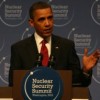
POLITICS: Nuclear Security Summit Boosts Disarmament Agenda
On the second and last day of the largest gathering of world leaders ever in Washington, U.S. President Barack Obama connected the commitments made here on securing vulnerable nuclear materials to the broader goal of a "nuclear-free world".HEALTH: Empowering Women to Slash Mother and Child Deaths
In developed countries, child and maternal mortality is a health problem that has largely been solved.
AFRICA: Land Grabs Continue as Elites Resist Regulation
A year after the purchases of vast swathes of farm land in Africa first drew public attention, transactions remain as opaque as ever.DISARMAMENT: NGOs Praise U.S. Leadership on Nukes
One of the largest gatherings of world leaders ever on U.S. soil began Monday with representatives of 47 countries gathering here for the Nuclear Security Summit.DISARMAMENT: U.N. Chief Doubts Mideast Nuke-Free Zone
Against the backdrop of a major summit meeting of world leaders on nuclear non-proliferation hosted by the United States, Secretary-General Ban Ki-moon expressed strong doubts about the longstanding proposal to create a nuclear-free zone in the militarily-volatile Middle East.DISARMAMENT: Developing World Lags in Arms Manufacture
The world's developing nations are still far behind Western industrial countries in the latest Top 20 rankings in one of the most lethal industries: arms manufacture.MIDEAST: ‘Poetic Justice’ in Jerusalem
President Barack Obama has made plain he means to deconstruct Israel’s 43-year-old grip on East Jerusalem. But, for all Washington’s pressure, Israel seeks to tighten its hold on the occupied part of the city.SOUTH-EAST ASIA: Leaders Take Softly, Softly Approach to Burma
South-east Asian leaders did not push Burma’s junta too hard at their just- finished annual summit, hoping that a more subtle approach would nudge it to make sure the elections planned for later this year are credible.SOUTH AFRICA: Coal Plant Won’t Promote Development, Say Groups
As the World Bank approved a controversial three-billion-dollar loan for a coal-fired power plant in South Africa Thursday, both the details and the broader impacts of the loan continue to be criticised by community and environmental groups.DEVELOPMENT: Fragile Nations Speak Up To Donors
An international dialogue meeting in East Timor Saturday saw fragile states make giant steps in showing developed nations how aid can be more effectively channelled to achieve their key development goals.POLITICS: World Leaders to Meet on Nuclear Security
On Apr. 12 and 13, U.S. President Barack Obama will host over 40 world leaders in Washington to develop a strategy to secure nuclear materials and prevent nuclear terrorism, following up on his announcements this week that that the U.S. would significantly modify its nuclear strategy and reduce the number of nuclear warheads in its stockpile by one-third.« Previous Page — Next Page »


Is the world dominated by three great empires -- the U.S.A, China and the European Union? How much power do the great behemoths of the south -- India, Brazil, and South Africa -- wield? And where does Russia fit in that equation? Are we in the middle of a new Cold War? What are the implications of the armed conflict with Georgia? What about the new axis: Venezuela-Russia? And what role does Turkey play? What about issues like Climate Change and other global forces like the food crisis and the high energy prices? How is all this reshaping the world's forces? IPS looks for some answers.

The Week with IPS

NEXT STOP - SDGs
Tracking global progress towards a sustainable world
Tracking global progress towards a sustainable world
