Languages
Monday, November 23, 2026



News and Views from the Global South
Global Geopolitics
Q&A: Sanitation Crisis Runs Deep in Africa, Asia
As part of the International Year of Sanitation (IYS), the United Nations launched an aggressive campaign last year to fend off what it called a "silent global crisis": the woeful lack of adequate sanitation in the world's poorest countries.POLITICS: Doomsday Clock May Finally Stop Ticking
The Barack Obama administration’s apparent resolve to take U.S. foreign policy in a new direction is creating ripples of hope for an enhanced U.N. agenda on nuclear nonproliferation and disarmament.ENVIRONMENT: Ministers Say Yes to Mercury Treaty
Six thousand tonnes of mercury enter the environment every year, posing a threat to human and animal health. Environment ministers meeting in Kenya have agreed to negotiate a treaty to reduce the supply and use of mercury worldwide.US-RUSSIA: Kinder, Gentler Tone, Same Policy Tradeoffs
The relationship between the U.S. and Russia, which reached a nadir this past August during the war in Georgia, appears to have experienced a slight thaw during the first month of the Barack Obama administration.
Q&A: Fighting "the Dark Side of Globalised Society" *
Spanish Judge Baltasar Garzón, known for prosecuting alleged tyrants, terrorists and perpetrators of corruption, believes that progress toward a global justice system began in 1996, with the trials in Madrid of Argentine and Chilean torturers, and especially with the arrest of Augusto Pinochet in October 1998.US-AFGHANISTAN: Obama Nixed Full Surge After Quizzing Brass
President Barack Obama decided to approve only 17,000 of the 30,000 troops requested by Gen. David McKiernan, the top commander of U.S. and NATO troops in Afghanistan, and Gen. David Petraeus, the CENTCOM commander, after McKiernan was unable to tell him how they would be used, according to a White House source.BIODIVERSITY: Frigid Polar Regions Teeming With Life
Earth's two ice-covered polar oceans may be the most inhospitable places on the planet, but more than 12,000 species of animals have been found there, according to new research released at the annual meeting of the American Association for the Advancement of Science here.POLITICS: The U.S. Is Back in Geneva
United States diplomats are back in force at the U.N., after having distanced themselves from the world body for several years. This week they contributed to successful mediation between Georgia and Russia, although they did not help resolve a stalemate on gay rights.POLITICS: Afghanistan Still World’s Opium Capital
Despite the heavy military presence of the United States and other Western powers, Afghanistan remains the world's largest illicit producer of opium, according to a new study released by experts who monitor the worldwide trade in narcotics on behalf of the United Nations.
DEVELOPMENT: Think of the Women Farmers
The new president of the International Fund for Agricultural Development takes over at a time when women farmers are becoming a growing force - without a growing voice.INDIA/PAKISTAN: Signs of a Thaw
A week after Islamabad admitted that the plot to carry out the Nov. 26-29 attacks on Mumbai was partially planned in Pakistan, and that Pakistani nationals were among the assailants, there are tentative signs that the strained relations between the two neighbours may be thawing.
ENVIRONMENT: Food Crisis Under the Spotlight
Worldwide demand for food is expected to grow steadily over the next 40 years, but 25 percent of the world's food production may be lost to 'environmental breakdowns' by 2050 unless urgent action is taken.RIGHTS-BURMA: Junta Declares War on Lawyers, Jails Them
To be a lawyer in military-ruled Burma is to court danger, invite arrest and risk being jailed in the country’s notorious prisons.
DEVELOPMENT: U.N. Seeks a Green Revolution in Food
The food crisis that spilled over from last year could take a turn for the worse in the next decade if there are no explicit answers to a rash of growing new problems, including declining agricultural production, a faltering distribution network and a deteriorating environment worldwide.INDIA/PAKISTAN: New Beginning Uncertain – Top Analysts
Almost three months after the terrorist attacks on India's commercial hub of Mumbai, which soured relations between India and Pakistan, the prospect for renewed cooperation between the nuclear-armed neighbours looks dim, two eminent analysts from the region conceded at a policy dialogue here.CHINA: Clinton Trip Raises Hopes and Fears
United States Secretary of State Hillary Clinton's upcoming maiden trip to China this week has raised both expectations and apprehensions in Beijing.
PAKISTAN/INDIA: Taliban As Common Enemy
Since being elected to office five months ago, Pakistan President Asif Ali Zardari has often declared that Pakistan's single biggest challenge stems from ‘religious' militants.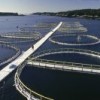
DEVELOPMENT: Aquaculture Awaits Its Heyday
With wild fish catches in sharp decline, aquaculture, which now accounts for nearly half of all seafood consumed, is expected to double production over the next two decades.BOOKS: Was Bush Doctrine Just a Little Bit of History Repeating?
Was the foreign policy of George W. Bush an aberration in U.S. history, a turn away from the traditional guiding principles of U.S. foreign policy towards messianic ambitions of permanent supremacy and universal democracy?ECONOMY-CHINA: Consumption Coupons Sans Protectionism?
Under pressure to address trade imbalances by boosting domestic demand, China has approved the handing out of consumption coupons. The measure, touted as China’s antidote to economic recession, is free of protectionist overtones like the contentious "buy American" in the U.S. economic stimulus bill.
RIGHTS: ‘Fight Terror But Follow Due Process’
Pakistani lawyer and human rights activist Hina Jilani is a member of the Eminent Jurists Panel on Terrorism, Counter-terrorism and Human Rights, convened by the International Commission of Jurists (www.icj.org) to investigate counter-terrorism practices and human rights standards.« Previous Page — Next Page »


Is the world dominated by three great empires -- the U.S.A, China and the European Union? How much power do the great behemoths of the south -- India, Brazil, and South Africa -- wield? And where does Russia fit in that equation? Are we in the middle of a new Cold War? What are the implications of the armed conflict with Georgia? What about the new axis: Venezuela-Russia? And what role does Turkey play? What about issues like Climate Change and other global forces like the food crisis and the high energy prices? How is all this reshaping the world's forces? IPS looks for some answers.

The Week with IPS

NEXT STOP - SDGs
Tracking global progress towards a sustainable world
