Languages
Wednesday, November 25, 2026



News and Views from the Global South
Global Geopolitics
TRADE-AFRICA: ''Focus Should Be on Domestic Needs, Not Exports''
African states should address the needs of local markets and of their regions before looking at what can be exported globally, and not the other way round as is currently the case.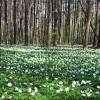
CLIMATE CHANGE: Forests, the Great Green Hope?
Expanding European forests absorbed 126 million tonnes of carbon dioxide from 1990 to 2005 - equivalent to 11 percent of European Union emissions from human activities - while a U.N. target to plant one billion trees mainly in Africa has been surpassed.
CLIMATE CHANGE-JAPAN: Looking to Play a Key Role in Bali
Japan expects to play a key role at the 11-day conference which begins Monday on the Indonesian resort island of Bali, under the aegis of the United Nations Framework Convention on Climate Change(UNFCC).DEATH PENALTY-SINGAPORE: Stand at UN Leaves Many Angered
Singapore’s strong pro-death penalty stand during the November U.N. General Assembly vote on a draft resolution calling for an end to the death penalty has disappointed many and left Singaporeans asking why the city-state is willing to risk international condemnation to pursue the death penalty so publicly as a solution to crime.EGYPT: Political Fatwas Draw Fire
Egypt's ruling party often accuses its Islamist opponents of exploiting religion to achieve political ends. But in the wake of several controversial fatwas - religious edicts - issued by the grand imam of the influential Al-Azhar Islamic establishment, critics are now accusing the state of playing the religion card.ELECTIONS-RUSSIA: Putin Warns Against Interference
On the eve of the parliamentary elections here, the United States, UK and European Union are questioning the legitimacy of Russia’s democratic institutions. Russian President Vladimir Putin has responded by issuing strict warnings against external interference in domestic political affairs.CLIMATE CHANGE: Latin America Wants Rich Nations to Foot the Bill
Latin American governments will call for greater commitments from industrialised countries to curb climate change and to provide financial support for developing countries to deal with its effects.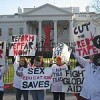
WORLD AIDS DAY: Ideology Trumping Health, U.S. Activists Say
On the eve of World AIDS Day Saturday, the U.S. Park Police arrested 40 demonstrators outside the White House as they chanted for sweeping changes to the George W. Bush administration's domestic and global AIDS policies.WORLD AIDS DAY: Community Action Is Key to Prevention
The United Nations presented the call for nominations for the Red Ribbon Award 2008 to honour community leadership and action against HIV/AIDS in the Mexican capital Friday.
Q&A: ‘Death Penalty Serves Interests of Despotic Regimes’
Syria strongly opposed the recently passed U.N. resolution calling for an immediate moratorium on executions and end to capital punishment. But Nedal Naeiseh - Syrian writer and journalist - believes the regime is close to the day when it will join the growing number of abolitionist nations.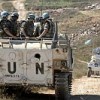
LEBANON: Peacekeepers Tread Lightly in a Wounded Land
"We have to put boots on the ground, but at the same time we want to conquer hearts and minds," exclaims Lt. Col. Nicola Tereano, the young, charismatic base commander for the Italian peacekeepers in Zibqin, south Lebanon.CZECH REPUBLIC: US Radar Provokes PR War
The Czech government has begun an 890,000-dollar information campaign supporting the U.S. plan to set up a radar station in the Czech Republic. Opponents of the plan - led by the Social Democrats - want some of that money to fund alternative information campaigns so as to create an actual debate on the issue and prepare the population for the possibility of a referendum.RIGHTS: UN Spotlights “Massive and Systematic” Abuse of Women
Millions of women across the world are beaten, killed, bought and sold by men, yet the gruesome violence and cruel treatment they face every day rarely makes headlines in the global media.RIGHTS-DRC: Civilians Face Horrific Sexual Violence
Humanitarian workers and U.N. experts say that extreme sexual violence is being used systematically as a weapon of war and terror in the Democratic Republic of Congo (DRC), as the international community sits by and watches.WORLD AIDS DAY: Catholics Snub Vatican’s Condom Ban
As millions of people plan to show solidarity with the struggle against HIV/AIDS on Saturday, a new multi-nation poll released in Washington by the group Catholics for Choice shows that a majority of Catholics around the world believe that - contrary to the edicts coming from Rome - "good Catholics can use condoms".TRADE: Blood Diamonds No Longer Congo-Brazzaville’s Best Friend
The announcement that the Republic of the Congo, or Congo-Brazzaville, has been readmitted to the Kimberley Process, which aims to stem the flow of conflict diamonds, marks a breakthrough.
Q&A: ‘Emissions Trading Can Raise Billions To Combat Climate Change’
Developed countries have a "moral duty" to help the world's poorest countries combat the consequences of climate change to which they have contributed the least, says German Development Cooperation Minister Heidemarie Wieczorek-Zeul.ENVIRONMENT-AUSTRALIA: Ratifying Kyoto – No Easy Job for New Gov't
While Australia’s prime minister-elect, Kevin Rudd, can expect plaudits when he attends next week’s United Nation’s Climate Change conference in Bali, for his pledge to ratify the Kyoto Protocol, the ratification process may not be as easy as first anticipated.HELSINKI PROCESS: Farewell to a Unique Forum for Dialogue
The Helsinki Process on Globalisation and Democracy was launched five years ago by Finland and Tanzania with the aim of addressing international divisions, to achieve an inclusive globalisation process based on human and environmental security.DEVELOPMENT: Faced with Clashes, It's Good to Talk
With clashing civilisations, as with clashing people, there's one strategy that works: talk your way out of it. Just how is, of course, the more difficult question.IRAQ: A Tenuous 'Peace' in Al-Anbar
A semblance of calm belies an undercurrent of violence, detentions and fear across Iraq’s volatile al-Anbar province.« Previous Page — Next Page »


Is the world dominated by three great empires -- the U.S.A, China and the European Union? How much power do the great behemoths of the south -- India, Brazil, and South Africa -- wield? And where does Russia fit in that equation? Are we in the middle of a new Cold War? What are the implications of the armed conflict with Georgia? What about the new axis: Venezuela-Russia? And what role does Turkey play? What about issues like Climate Change and other global forces like the food crisis and the high energy prices? How is all this reshaping the world's forces? IPS looks for some answers.

The Week with IPS

NEXT STOP - SDGs
Tracking global progress towards a sustainable world
