Languages
Thursday, October 8, 2026



News and Views from the Global South
Global Governance

Turkey Keeps Bombing Civilians in Syria’s Northeast
The Ramsys, a farming couple from northeast Syria, never thought they'd spend almost all their savings on solar panels. “We’ve paid 1,700 USD. We simply couldn't cope with darkness and being disconnected from the outside world,” Najma Ramsy tells IPS from her residence in Keshka, a small Kurdish village 70 km east of Qamishli.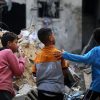
Bearing Witness: No Safety for Children in Gaza
Nothing could prepare me for my recently concluded mission into the Gaza Strip, where children face catastrophic conditions. In my twenty years with UNICEF, traveling from one humanitarian crisis to the next – from famines to floods and war zones to refugee camps – I’ve simply never seen such devastation and despair as is happening in Gaza.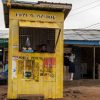
Africa’s Debt Crisis Needs a Bold New Approach– & a Way Forward
It hasn’t been easy for African states to finance their developmental and environmental policy objectives over the past few years. Recent events suggest that the situation may be improving. For the first time in two years, three African states have been able to access international financial markets, albeit at high interest rates. Kenya, for example, is now paying over 10% compared to about 7% in 2014.
Hapless New Year for Global South
As dire economic predictions for 2023 did not materialise, pundits began 2024 far more optimistically. But policy ghosts from the last half-century will likely undermine such wishful thinking.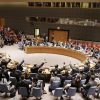
Abusive Use of Veto Power Against Global Public Opinion — Why?
With its current cash crisis, UN's leadership is finding itself in a helpless situation both politically and financially. The UN’s credibility has reached rock bottom.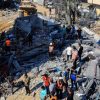
UN’s Credibility at Stake—as Russia and Israel Continue to Remain Defiant
The two devastating military conflicts—Russia vs Ukraine and Israel vs Hamas—have exposed once again the stark reality that the United Nations, created 79 years ago to maintain international peace and security, has failed in its political mission – while its credibility is at stake. Russia is accused of violating the UN charter by invading a sovereign nation state and causing hundreds and thousands of deaths over two years --- with no signs of a peaceful settlement.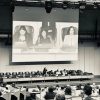
Western States Scramble to Explain Themselves, as UN experts call for Arms Transfers to Israel to “Cease Immediately”
There are moments when international treaties, long forgotten by the general public, suddenly spring back to life. Moments when glimpses of reality shine through the thick-laden bureaucracies of the United Nations and catch the attention of the world outside.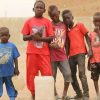
Children’s Futures at a Crossroads
At the start of 2024, we stand at a critical juncture: Geopolitical tensions are escalating, economic integration is unravelling, and multilateral cooperation is faltering. This global fragmentation threatens to undermine decades of progress made for children worldwide.
INTERVIEW: AI Expert Warns of ‘Digital Colonization’ in Africa
Artificial intelligence (AI) is ripe to help resolve certain major problems in Africa, from farming to the health sector, but Senegalese expert Seydina Moussa Ndiaye is warning of a new “colonization” of the continent by this new technology if foreign companies continue to feed on African data without involving local actors.
Making Chile’s Economy More Dynamic, Greener, and Inclusive
Chile’s economy is at a crossroads. Strong policies have successfully brought down high inflation and reduced the large current account deficit that emerged during the pandemic. Increases in social benefits have provided some relief in response to discontent over inequality.
Imperialism, Globalisation and Its Discontents*
Imperialism continues to dominate the world. Globalisation is losing to some of its anti-theses, but imperialism still rules, increasingly by law, albeit in changing even contradictory ways.
South Africa vs Israel: ICJ Declines SA’s New Application But Says Israel Duty Bound to Protect Civilians
The International Court of Justice has declined the South African government's urgent application for further measures to prevent an "unprecedented military offensive against Rafah,” but reiterated that Israel is bound to protect civilians in the country. South Africa argued in an urgent application that this military offensive “announced by the State of Israel, has already led to and will result in further large-scale killing, harm, and destruction in serious and irreparable breach both of the Genocide Convention" and of the Court's Order of January 26, 2024.
World Social Forum Activists Unravel Roots of Israel’s Occupation of Gaza
Romi Ghimire has a busy life running a non-profit organization dedicated to Nepal’s rural people, but she also feels driven to do something about Gaza. “There are a lot of issues happening in the world, but right now the genocide in Gaza is the most urgent one,” she said inside the Palestine tent at the World Social Forum (WSF) in Kathmandu on Saturday.
UN’s Financial Troubles Jeopardize Critical Human Rights Work
A cash crunch and hiring freeze at the United Nations threaten to hinder UN human rights investigations in places like Sudan, Ukraine, and Syria.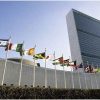
UN’s Cash Crisis May Force Hiring Freeze, Limit Official Travel & Curtail Expenses System-Wide
The United Nations is heading towards a severe cash crisis forcing the world body “to implement aggressive cash conservation measures to avert a default in meeting the legal obligations of the Organization”. Secretary-General Antonio Guterres has drawn attention to “the unfortunate deteriorating financial situation of our regular budget operations”.
World Social Forum Insists: Another World is Possible!
These are the worst of times, but they can become the best of times, said speaker Dr. Walden Bello, seeking to inspire thousands of progressives who gathered for the World Social Forum (WSF) in Kathmandu on Thursday with the planet under clouds of armed conflict and assaults on democracy.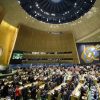
UN Tax Convention is Historic Opportunity at Risk of Failing
In late November, the UN General Assembly passed a landmark resolution signaling a start on working on a UN framework convention on taxation.
Israeli-Palestinian Conflict: Religion & Demographics
Together religious identity and demographics play an important role in the decades-long conflict between Israelis and the Palestinians. If the Palestinians, who are largely Muslim and Christian, had been Jewish, they would have been allowed to live in their homes on their lands and be entitled to be Israeli citizens.
Start-ups Powering up Africa’s Solar Energy Ecosystem
Often referred to as the “Sun continent,” Africa receives more hours of bright sunlight than any other continent. But even with 60 per cent of the world’s solar resources, Africa has only one per cent of solar generation capacity, according to the International Energy Agency (IEA).
North Ignores ‘Perfect Storm’ in Global South
A gathering ‘perfect storm’ – due to various developments, several quite deliberate – now threatens much devastation in the global South, likely to most hurt the poorest and most vulnerable.
World Social Forum Seeks to Reemerge as an Influential Gathering of Diversity
The World Social Forum (WSF) is today "more necessary than ever," according to Oded Grajew, promoter and co-founder of the global civil society meeting - a festival of diversity that has not yet succeeded in fomenting or designing the "other possible world" that it predicted when it was created and adopted that motto.« Previous Page — Next Page »





The Week with IPS

NEXT STOP - SDGs
Tracking global progress towards a sustainable world
Tracking global progress towards a sustainable world
