Languages
Wednesday, October 7, 2026



News and Views from the Global South
Global Governance
From Memory to Policy
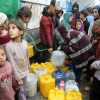
A bloodbath is taking place in the Middle East, and yet, the world is embroiled in absurd debates. One is tempted to say, paraphrasing Marx: here the tragedy, there the farce. The German-speaking world – and Germany in particular – takes a decidedly pro-Israeli stance, while in other societies, an equally dubious anti-Israeli position prevails.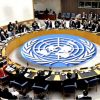
Africa’s Absence as Permanent Member a “Flagrant Injustice,” says UN Chief
As the UN continues its never-ending saga on the reform of the Security Council (UNSC), one of the political anomalies that keeps cropping up is the absence of Africa, among the five permanent members (P5)—a privilege bestowed only on the US, UK, France, China and the Russian Federation.
Revolutionist Returnees: Fulfilling Dreams, Finding Freedom
In 1977, a record-breaking mini-series carved its place in the milestone of US history. Based on Alex Haley’s Pulitzer Prize-winning novel, Roots: The Saga of an American Family, the small-screen adaptation exposed the atrocities of the transatlantic slave trade and its impact on generations thereafter.
Embodying the Spirit of the Dragon
The Year of the Dragon is upon us. UN Secretary-General António Guterres said in his message for this Lunar New Year, “The dragon symbolizes energy, wisdom, protection and good luck. We need these qualities to rise to today’s global challenges.”
Drought Narrows the Panama Canal, Delays Shipping
At the bar that Sandra manages in Panama City's central financial district, the variety offered on the menu has shrunk due to delays in ship traffic through the Panama Canal, one of the world's major shipping routes.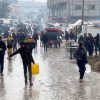
White House Still Denies Mideast Turmoil Linked to Gaza
The Biden administration continues to deny any connections between the war in Gaza and the ongoing conflicts involving U.S. forces in Iraq, Syria, and Yemen.
Girls Just Want to Have Funds!
In the bustling financial hub of Singapore, Rhea See, an early-stage fund manager, leads an accelerator platform dedicated to empowering women in technology.
Unlocking India’s Potential with AI
India is on the brink of a transformation that could change its economic and social future. Before the end of this decade, more Indians will use AI every day than in any other country in the world. What’s more, people in advanced economies will be surprised by the ways the country will use AI.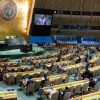
Is the Reform of the UN Security Council a Good Try in a Lost Cause?
The myriads of proposals for the reform of the much-maligned Security Council have been kicked around the United Nations for more than two decades—with no significant progress. Speaking at the General Assembly’s (GA) annual debate, GA President Dennis Francis told delegates last November that without structural reform, the Council’s performance and legitimacy will inevitably continue to suffer.
Genocide Convention @75: A Call for its Application as a ‘Living Force in World Society’
It was a notion which haunted him well before the Second World War – from the history books his mother would read him, to the following of the 1921 trial of young Armenian Soghomon Teilerian.
Poverty and Inequality Mark Rural Life in Latin America
Rural life in Latin America and the Caribbean continues to be marked by poverty and inequality compared to the towns and cities where the vast majority of the population lives. A new focus on rural life in the region could help reveal and address the challenges and neglect faced by people in the countryside.
Onerous Debt Making Poorest Poorer
Contractionary economic trends since 2008 and ‘geopolitical’ conflicts subverting international cooperation have worsened world conditions, especially in the poorest countries, mainly in Africa, leaving their poor worse off.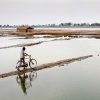
How Asia Can Unlock $800 Billion of Climate Financing
Countries in the Asia-Pacific region face a shortfall of at least $800 billion in climate financing. With public finances depleted by the pandemic, policymakers must unlock the vast potential of private capital to join the fight more effectively against global warming.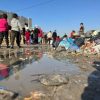
Funding for UN Palestinian Relief Agency is Threatened While Investigations Continue
The consequences of the investigation into the 12 United Nations Relief and Works Agency for Palestine Refugees in the Near East (UNRWA) staffers allegedly linked to the October 7 Hamas attack in Israel have led to major donor countries pulling their support from the UN agency. However, the agency has appealed to the governments to continue the aid in the face of the humanitarian crisis in Gaza.
Building a More Resilient Work Force to Meet Challenges of Tomorrow
Quadrupling in size since 1950, the working age population in Asia and the Pacific now accounts for 67.2 per cent of the total population in the region and is set to peak at 3.3 billion by the mid-2030s.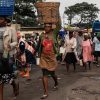
How to Ease Rising External Debt-Service Pressures in Low-Income Countries
As 2024 starts, the good news is that there haven’t been any notable requests by a low-income country for comprehensive debt relief since Ghana’s, more than a year ago. Despite this, vulnerabilities remain, with high debt servicing costs a growing challenge for low-income countries.
ICJ Orders Israel to Take All Measures to Prevent Genocide in Gaza
The International Court of Justice today told Israel to take all measures within its power to prevent a genocide in the Gaza Strip. Judge Joan E. Donoghue, the court's president, read the order directing the State of Israel to abide by temporary measures to stop the humanitarian crisis facing the Palestinian population in Gaza from worsening.
International Court of Justice Set to Deliver Order in Genocide Case
The International Court of Justice will deliver it's order for provisional measures submitted by South Africa in the case of South Africa versus Israel today.
Ban or Restrict? Quandary Facing Governments as Vaping Entices Teens Worldwide
A hot debate on electronic smoking devices is expected to engage governments, scheduled to meet in Panama from 5-10 February for the tenth session of the Conference of Parties (COP) to the WHO Framework Convention on Tobacco Control (WHO FCTC).
Rights Coalition Calls for Israel Arms Embargo to End Gaza Carnage
A coalition of 16 leading human rights organizations issued a joint statement Wednesday calling on all nations to immediately stop sending weapons to both Israel and and Palestinian militants, warning that continued arms transfers risk exacerbating what's already one of the worst humanitarian crises in modern history.
Learning for a Lasting Peace
Education is the bedrock of peace, the foundation of strong societies, and the building block for a better world. This year, as we celebrate the Sixth International Day of Education under the theme of ‘learning for a lasting peace’, we call on world leaders to end wars and armed conflicts and focus on our common humanity to embrace the vast potential learning offers in uniting our world.« Previous Page — Next Page »





The Week with IPS

NEXT STOP - SDGs
Tracking global progress towards a sustainable world
Tracking global progress towards a sustainable world
