Languages
Wednesday, October 28, 2026



News and Views from the Global South
Global Governance
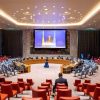
When Big Powers Clash, the UN’s Most Powerful Body Disappears
At the height of the Cold War back in the 1960s, a Peruvian diplomat, Dr. Victor Andres Belaunde, characterized the United Nations as a politically wobbly institution that survives only at the will-- and pleasure-- of the five big powers.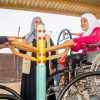
Persons With Disabilities Among Worst Affected by Coronavirus
The 13th session of the Conference of States Parties (COSP) that was initially supposed to be held in New York back in June recently wrapped up with the final session coinciding with the International Day of People with Disabilities, whose theme, this year was on the issue of building back better inclusively.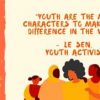
Lost in Translation? Understanding Relevance of Women, Peace & Security in Arms Control & Disarmament
“What does the Women, Peace and Security Agenda have to do with arms control and disarmament?”. Under varying formulations, this question keeps coming up whenever someone refers to the Women, Peace and Security (WPS) Agenda as a basis for ensuring that women’s voices and their specific security needs were taken into account in multilateral arms control discussions.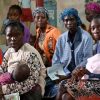
How the Rich Get Richer
Wealth begets wealth. This simple concept of privilege has added to growing discontent with inequality that has escalated under the shadow of the COVID-19 pandemic.
US Presidential Election Part 3: President Trump’s Legacy of Mismanagement of the Pandemic
Covid-19 is on track to be the deadliest and one of the most catastrophic epidemics since the 1918-1919 flu pandemic, which infected about 500 million people or one-third of the world’s population at the time. The number of deaths was estimated somewhere between 17 and 50 million, and possibly as high as 100 million worldwide.
Pandemic, ‘Great Reset’ and Resistance
According to the Center for Systems Science at Johns Hopkins University, as of November 29th, there have been 62,150,421 COVID-19 cases, including 1,450,338 deaths.
UN Special Session on COVID-19 Must Recognize Right to Health & Access to Vaccines
The holding of this Special Session (the 37th in the history of the UN) is of considerable importance. It is a unique opportunity to define and implement joint actions at the global level to fight the pandemic in order to ensure the right to life and health for all the inhabitants of the Earth. As the President of the UN General Assembly wrote in his letter of convocation: "Let us not forget that none of us are safe until we are all safe".
G20 Puts More into Fossil Than Green Energy in Covid-19 Recovery Packages
As the world’s leading economies direct trillions of dollars towards Covid-19 recovery packages, a significant proportion is going to fossil fuel industries without climate stipulations, according to the 2020 edition of the Climate Transparency Report – which has assessed the climate performance of G20 countries.
Q&A: Mro Indigenous Community Plea for Halt of Construction of 5-Star Hotel
The construction of a five-star hotel in the Chittagong Hill Tracts, Bangladesh, could lead to the forced eviction of the Mro indigenous community from their ancestral lands and destroy “the social, economic, traditional and cultural fabric of the community”, warns Amnesty International.But local activist Reng Young Mro told IPS that the international community must rally behind the Mro indigenous community to halt the construction.
Not all 74 million Trump Voters Can be Racists
Donald Trump will have to leave the White House in January. Although there will be a few skirmishes in the US courts in the coming weeks to sort out whether some votes were legitimate or not, the outcome won’t change.
How UN Helped Benin Become World’s Fastest Place to Start a Business via a Mobile Phone
Until recently, Benin was best known for its cotton exports and its vibrant clothing designs. Since this year it is also the fastest place in the world to start a company. By providing a full online service, the government helped entrepreneurs create businesses and jobs during the pandemic. A third of Benin’s new entrepreneurs are women.
A Potential Weapon Kills Over 1.5 Million Worldwide –Without a Single Shot Being Fired
The world’s major military powers exercise their dominance largely because of their massive weapons arsenals, including sophisticated fighter planes, drones, ballistic missiles, warships, battle tanks, heavy artillery—and nuclear weapons of mass destruction (WMDs).
Tobacco Industry Capitalizes on Pandemic to Increase Influence in Low- and Middle-Income Countries
While the COVID-19 pandemic has elevated public health to a top priority in every country in the world, it has left many poorly resourced governments receptive to any and all aid that can provide immediate assistance to help their people.
Youth Demand a ‘Fair Share’ from World Leaders Ahead of G20 Summit
Heads of youth movements and student unions are challenging the world’s richest nations to correct an ‘incredibly unequal’ global response to COVID-19, by considering the plight of the world’s most vulnerable children and young people.
The Importance of Investing in Volunteerism
The International Volunteer Day will approach soon and the 5th of December will become a day to celebrate the actions of millions of volunteers from all over the world, in the south as well in the north of the world.
The Unprecedented US Presidential Election and its Consequences
American democracy has survived a dangerous virus, and it has even come off the ventilator, but whether it will be restored to full health or will suffer for a long time (like a long Covid) from the negative effects of the virus of personality cult, chauvinism, populism, racism, militarism and, yes let’s say it, fascism, remains to be seen.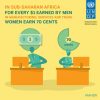
African Employers for Gender Equality
Africa has over 700 companies with an annual revenue of more than $500 million, including 400 with revenue above $1 billion. The ability of these companies to thrive rests on building and retaining talented women and men.
On the Back of the Pandemic, the Militarisation of Latin America is Gathering Momentum, Analysts Warn
During the Covid-19 pandemic, armed forces in Latin America have been taking on essential tasks: manufacturing protective equipment, delivering food and treating civilians in hospitals. In at least a dozen countries, soldiers have been deployed to enforce containment measures, often using brute force, on populations made up of largely poor informal workers.
Our Development Priorities Have Shifted to the Immediate Task of Saving Lives & Livelihoods.
We have come to the point in the agenda where we must take a ‘deep-dive’ in reviewing the lessons learnt so far in our response to the COVID-19 pandemic, in order to chart a way for the future. But the future, by its very definition, must be relative. Flexibility and change will define policy making and the scope of action needed for development.
COVID-19 Compounding Inequalities
The United Nations’ renamed World Social Report 2020 (WSR 2020) argued that income inequality is rising in most developed countries, and some middle-income countries, including China, the world’s fastest growing economy in recent decades. Inequality dimensions While overall inter-country inequalities may have declined owing to the rapid growth of economies like China, India and East Asia, national inequalities have been growing for much of the world’s population, generating resentment.
The Silence of the International Community on Western Sahara
For my entire life, I have been forgotten. I am a Sahrawi refugee, born and raised in the Algerian desert, where my people have remained displaced for 45 years, awaiting the moment when we can finally return to our homeland, Western Sahara.« Previous Page — Next Page »





The Week with IPS

NEXT STOP - SDGs
Tracking global progress towards a sustainable world
Tracking global progress towards a sustainable world
