
Friday, October 9, 2026



News and Views from the Global South
IPS UN: Inside the Glasshouse
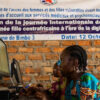
Online Abuse is Real Violence — and Africa’s Women and Girls are Paying the Price
New estimates show that violence against women and girls remains one of the most pervasive human rights violations in the world – and that one of its fastest-growing frontiers is the digital space.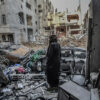
Lost Opportunities to Halt Rising Military Spending
The United Nations issued a year end Fact Sheet: Rising global military expenditures, starkly illuminating that last year’s record high of $2.7 trillion in military expenditures, caused a cascade of devastating consequences to human well-being, the environment, possibilities for avoiding climate collapse, as well as blows to employment, ending hunger and poverty, providing health care, education, and other ills, due to a lack of adequate funding support.
When Democracy Freezes, Autocrats Rise
Consider our political systems not merely as battlegrounds of passions, ideologies and economic interests, but as systematically functioning arrangements of interactions, akin to game theory. In recent decades, we have witnessed the dissolution of large homogeneous groups into numerous subgroups — a patchwork of minorities.
Skyrocketing Military Spending Undermines Development Aid to World’s Poor
The statistics are staggering: while military spending keeps skyrocketing, Official Development Assistance (ODA)-- from the rich to some of the world's poorer nations-- has been declining drastically.
UN Restructuring May Result in Over 2,600 Staff Reductions in the Secretariat and 15 Percent in Budgetary Cuts
The UN Staff Union is on edge -- hoping for the best and expecting the worse -- as the General Assembly will vote on a proposed programme budget for 2026 by December 31.
Better Economic Measurement Is About Wiser Use, Not Just More Data
We live in a galaxy of data. From satellites and smartwatches to social media and swipes at a register, we have ways to measure the economy to an extent that would have seemed like science fiction just a generation ago. New data sources and techniques are challenging not only how we see the economy, but how we make sense of it.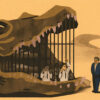
The World’s Right-Handed and Left-Handed Torturers
Jeanne Kirkpatrick, a former U.S. ambassador to the United Nations, once made a highly debatable distinction between "friendly" right-wing "authoritarian" regimes (which were mostly U.S. and Western allies) and "unfriendly" left-wing "totalitarian" dictatorships (which the U.S. abhorred).
Central Asia–Japan Leaders’ Summit in Tokyo Backs Trans-Caspian Corridor; Tokayev Warns Nuclear Risks Are Rising
Leaders of Japan and the five Central Asian states met in Tokyo on Dec. 20 and adopted the “Tokyo Declaration,” launching a new leaders-level format under the “Central Asia plus Japan Dialogue” (CA+JAD). The declaration places at the core of cooperation two priorities: strengthening supply-chain resilience for critical minerals, and supporting the Trans-Caspian Corridor (the Trans-Caspian International Transport Route), which links Central Asia with Europe without transiting Russia.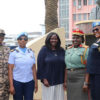
Namibia Leads the Way: Honouring 25 years of Women, Peace and Security
Last November, the streets of Windhoek came alive with the sound of drums and brass as a marching band led a procession of women from Namibia’s Defence and security forces.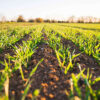
How the Environment Affects Us
Today, society is rightly concerned about the rising prevalence of autism among children worldwide; affecting up to 1% of children, it has a profound impact on families. Neuroinflammation and environmental origins are increasingly implicated. But what causes them?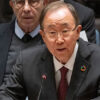
Is the UN Ready for a Non-Renewable 7-YearTerm for the Secretary-General?
A long-standing proposal going back to 1996—to establish a single non-renewable seven-year term for the Secretary-General of the United Nations—has been resurrected by former UN Secretary-General Ban Ki-moon.
My Niece Was Killed Amid Mexico’s Land Conflicts. The World Must Hold Corporations Accountable
My niece Roxana Valentín Cárdenas was 21 years old when she was killed. She was a Purépecha Indigenous woman from San Andrés Tziróndaro, a community on the shores of Lake Pátzcuaro in the Mexican state of Michoacán.
Asia and the Pacific Preparing for a New Era of Disaster Risks
Cyclones Ditwah and Senyar are indications of a shifting disaster riskscape, not anomalies. Both storms broke historical patterns: Ditwah tracked unusually south along Sri Lanka’s coast before looping into the Bay of Bengal, dumping over 375 mm of rain in 24 hours and triggering landslides.
Asylum Seekers: Offshore, Off Course
The debate on reforming the European asylum system has gained significant momentum following the agreement reached by EU interior ministers last week. Alongside questions of solidarity and distribution, the possibility of establishing ‘return hubs’ outside the EU was at the heart of the meeting.
Trump Reboots US National Security Strategy, Foreign Policy
The new US National Security Strategy (NSS) repositions the superpower’s role in the world. Hence, foreign policy will be mainly driven by considerations of ‘making America great again’ (MAGA).
UNDP’s Digital Rights Dashboard: A Conversation Starter on Human Rights in the Digital Age
Within a generation, digital systems have changed much of how we learn, work and participate in civic life, especially in more connected regions. This shift is unfolding at different speeds in developing countries, but the direction of travel is unmistakable.
Funding for Human Rights Organizations – including at the Grassroots Level – have Been Slashed Worldwide
Human rights are underfunded, undermined and under attack. And yet. Powerful. Undeterred. Mobilizing. This year no doubt has been a difficult one. And one full of dangerous contradictions. Funding for human rights has been slashed, while anti-rights movements are increasingly well-funded.
A New UN Secretary-General Needs the Blessings of the US–or Get Vetoed
When there was widespread speculation that a UN Under-Secretary-General (USG), a product of two prestigious universities—Oxford and Cambridge—was planning to run for the post of Secretary-General back in the 1980s, I pointedly asked him to confirm or deny the rumor during an interview in the UN delegate’s lounge.
The Daunting Tasks Ahead for the New UN Secretary-General
The election of the next Secretary-General of the United Nations comes at a highly inopportune moment in 2026, when the UN is being bypassed, and multilateralism—with the UN at its core—is under increasing challenge from some of the world’s most powerful states and leaders.
Sri Lanka & the Global Climate Emergency: The Lessons of Cyclone Ditwah
Tropical Cyclone Ditwah, which made landfall in Sri Lanka on 28 November 2025, is considered the country’s worst natural disaster since the deadly 2004 tsunami. It intensified the northeast monsoon, bringing torrential rainfall, massive flooding, and 215 severe landslides across seven districts.
Africa’s Industrial Future is Within Reach: What we Need now is Intentional Investment
Africa enters 2025 at a pivotal moment in its development. The ambition to transform the continent’s economies through sustainable industrialization, regional integration, and innovation is clearer than ever, and is picking up pace. The foundations are being laid. Industrial strategies are expanding, regional integration is progressing, infrastructure projects are advancing, and a young, dynamic private sector powers local economies.« Previous Page — Next Page »





It was dubbed "The Glass House" by U.S. ambassador James Wadsworth in 1966. Half a century later, the United Nations has gradually expanded its role as agent of peace and protector of the world's vulnerable populations, while simultaneously facing internal pressures to become more inclusive, increase transparency and maintain legitimacy in the post-Cold War political and economic order. Highlighting the local impacts of global policies on economic development, environment, health and human rights, IPS's coverage goes beyond the edicts of the Security Council to illuminate the power struggles, successes and shortcomings of the 193-member institution as it grapples with crises like climate change, armed conflict, poverty and HIV/AIDS.

The Week with IPS
