
Thursday, October 29, 2026



News and Views from the Global South
IPS UN: Inside the Glasshouse

How Artificial Intelligence Will Affect Asia’s Economies
Asia-Pacific’s economies are likely to experience labor market shifts because of artificial intelligence (AI), with advanced economies being affected more. About half of all jobs in the region’s advanced economies are exposed to AI, compared to only about a quarter in emerging market and developing economies.
Let the Kite Fly High
The global plastics negotiation process, launched in 2022 under a resolution by the UN Environment Assembly, represents an unprecedented effort to combat the escalating plastic pollution crisis.
Rethinking Africa’s Debt: Debunking Myths and Identifying Sustainable Solutions
To achieve the Sustainable Development Goals (SDGs) and Agenda 2063 aspirations, Africa requires an additional $1.3 - 1.6 trillion in financing.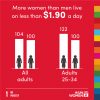
A World Where Rich Get Richer, Poor Get Poorer — and Billionaires Rise
Perhaps one of the UN's most ambitious and longstanding projects – the launching of 17 Sustainable Development Goals (SDGs)-- is aimed, among other things, at helping developing nations eradicate extreme poverty by 2030. But that elusive goal has made little or no significant progress.
Journalists Behind Bars: China, Israel & Myanmar the Worst Offenders in 2024
The year 2024 has been one of the most devastating for journalists covering conflicts worldwide-- with 361 behind bars, the second highest since the global record of 370 imprisoned back in 2023.
UN Claims to Strengthen Battle Against Racism in Workplace—Amid Reservations
As the United Nations plans to commemorate its 80th anniversary later this year, it is “reflecting on the steps taken to advance implementation of the Secretary-General’s Strategic Action Plan for addressing racism in the UN Secretariat. The UN’s Anti-Racism Office, which was created in 2023, has hosted several online events that reached over 13,500 participants and generated 2,000 comments, and welcomed 2,700 visitors to its iSeek page (accessible only by staffers)—possibly a reflection of the rising complaints and concerns of UN staffers.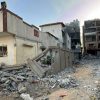
How US Media Hide Truths About the Gaza War
A few days before the end of 2024, the independent magazine +972 reported that “Israeli army forces stormed the Kamal Adwan Hospital compound in Beit Lahiya, culminating a nearly week-long siege of the last functioning hospital in northern Gaza.”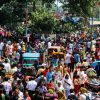
The Challenges Facing the World’s Fifth Largest Economy
India has surged forward as the world's fifth-largest economy and has now surpassed China to claim the title of the most populous nation. However, this rapid ascent is not without its challenges; rising unemployment and inflation loom large, threatening demographic dividend and its ambitious goal of sustaining a 7 to 8% GDP growth.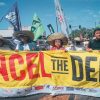
Developing Countries are Being Choked by Debt: This Could be the Year of Breaking Free
The debt disaster is back. Indeed, the aid agency Cafod reports that developing countries today face “the most acute debt crisis in history”.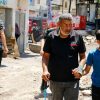
Genocidal President, Genocidal Politics
When news broke over the weekend that President Biden just approved an $8 billion deal for shipping weapons to Israel, a nameless official vowed that “we will continue to provide the capabilities necessary for Israel's defense.” Following the reports last month from Amnesty International and Human Rights Watch concluding that Israeli actions in Gaza are genocide, Biden’s decision was a new low for his presidency.
Carter’s Virtue Trumps Mendacity
The fireplace in the State Dining Room of the White House that says, “May none but honest and wise men ever rule under this roof.” President John Adams wrote that in a letter to his wife Abigail in 1800.
Remembering Jimmy Carter: a UN Perspective
Former American President Jimmy Carter was a man of peace and principles. He presided over a tumultuous period in American history from 1977 to 1981, working hard to restore trust in government after the Watergate scandal and the divisive era of the Vietnam War. He brokered a landmark peace deal between Israel and Egypt and negotiated a historic treaty to hand over the Panama Canal to Panama.
US & Western Allies Provide a Hefty 260 Billion Dollars in Military Aid to Ukraine
The United States and Western allies have jointly provided a staggering $260 billion in aid, mostly weapons and military assistance, to Ukraine as the long-drawn-out conflict continues following Russia’s invasion in February 2022. Speaking to reporters at NATO headquarters in Brussels early December, US Secretary of State Antony Blinken said: “All told, the United States has provided $102 billion in assistance to Ukraine, and our allies and partners, $158 billion”.
UN Commits to Supporting Syria in Political Transition, Adapting Humanitarian Support
In overthrowing Bashar al-Assad and his regime, Syria reaches the process of re-affirming its sovereignty, a process that the United Nations chief asserts must be led by the Syrian people.
Why is It So Hard to Change? Insights from the 2024 Human Development Report on Chile
As many middle-income countries in the world, Chile finds itself at a critical juncture. The country has made significant progress over the past decades in terms of economic growth and poverty reduction, yet many structural challenges remain.
The Land of Immigrants to Deport Thousands of Refugees & Asylum Seekers
The United States, long described as a country built largely by immigrants, is planning to clamp down on migrants, refugees and asylum seekers entering the country—which averaged about 2.4 million in 2022-2023, according to the US Congressional Budget Office. The incoming Trump administration is calling for “mass deportations” of mostly illegal aliens and undocumented workers.
Why Funders Must Step Up Financing for Development in 2025
As the global community races to close the staggering $4.2 trillion financing gap needed to achieve the Sustainable Development Goals (SDGs), the Fourth International Conference on Financing for Development (FfD4) emerges as a crucial juncture.
Bridging the Gap in Africa’s Surgical Care Crisis
For decades, preventable deaths, lifelong disabilities, and disfigurements presented devastating consequences for over 90% of the population in Africa, where surgical care remains largely out of reach.
The Fall of The Assad Regime: The Rebels’ Prospect for Success or Failure
The fall of the Assad regime is a historic watershed event that will have significant regional and international ramifications. The question is, will the rebels fulfill their promise to be inclusive and lift the Syrian people out of their misery, and what can the US and Israel do to help shape the trajectory of the new regime?
Nobel Peace Prize Forum Breaks Down Nuclear Risks and Solutions
The existential threat that nuclear weapons present remains as pertinent as ever, even when they have not been deployed in war for nearly 80 years. As some countries seek out nuclear weapons or to upgrade and modernize their existing warheads, global voices in nuclear politics and disarmament warn of the potential risk of a new nuclear arms race amid the weakening of nuclear treaties that prohibit the proliferation and use of nuclear arms.
Breaking Latin America’s Cycle of Low Growth and Violence
Violent crime and insecurity have a disproportionate impact on Latin America and the Caribbean, with severe consequences for socioeconomic development.« Previous Page — Next Page »





It was dubbed "The Glass House" by U.S. ambassador James Wadsworth in 1966. Half a century later, the United Nations has gradually expanded its role as agent of peace and protector of the world's vulnerable populations, while simultaneously facing internal pressures to become more inclusive, increase transparency and maintain legitimacy in the post-Cold War political and economic order. Highlighting the local impacts of global policies on economic development, environment, health and human rights, IPS's coverage goes beyond the edicts of the Security Council to illuminate the power struggles, successes and shortcomings of the 193-member institution as it grapples with crises like climate change, armed conflict, poverty and HIV/AIDS.

The Week with IPS
