
Sunday, November 22, 2026



News and Views from the Global South
IPS UN: Inside the Glasshouse
Shielded by U.S. Umbrella, Israel Joins Rich Man’s Club
With tongue firmly entrenched in his cheek, an Arab diplomat recounts an Israeli cabinet meeting interrupted by an aide rushing in with the latest statistics on the state of the economy.IRAN: Rights Group Condemns Secret Executions
Iran's nuclear ambitions and the bloody disturbances following its elections last year have so dominated media reporting on the country that many equally critical issues have been virtually forgotten.Iraqi Christians Cling to Their Faith in Jordanian Exile
As the 2003 United States-led invasion of Iraq began, the country’s Christians started streaming across the border into neighbouring Jordan. Today most of them continue to live here in abject poverty with no hope of ever returning to the land of their ancestors.Treaty Aimed at Banning Nukes Remains Grounded
The world's anti-war activists, including parliamentarians, civil society groups and diplomats, have succeeded in creating international treaties to ban a wide array of deadly weapons: anti-personnel landmines, blinding laser weapons, cluster munitions, dum-dum bullets and chemical and biological weapons.UNESCO Catches Heat Over Prize Named for “Dictator”
Human rights groups are expressing outrage over a decision to proceed with the UNESCO-Obiang Nguema Mbasogo International Prize for Research in the Life Sciences, named after and funded by the controversial president of oil-rich Equatorial Guinea.Small Islands Sit Tight and Vow to Fight Climate Change
If nothing is done to slow the pace of climate change, many small island developing states (SIDS) will be at risk of being wiped out, both economically and literally.Talk of a Nuclear Deal Gains Steam in Iran
President Mahmoud Ahmadinejad's return to Tehran after attending the Nuclear Non-Proliferation Treaty (NPT) review meeting at U.N. headquarters has been received with the usual bombast by the conservative and hard-line media in Iran, which declared him victorious and an indispensable global leader.Success of “The Pill” Overshadowed by Family Planning Gaps
The birth control pill, currently used by an estimated 100 million women worldwide, commemorated its 50th anniversary last week - but remains controversial in some quarters.Human Rights Council Candidates Run Unopposed
When the U.N. General Assembly meets later this week to elect 14 new members for the Geneva-based Human Rights Council (HRC), the election results will be highly predictable for one reason: all candidates are running unopposed as nominees of their respective geographical regions.U.S. Business Groups Fault Rush to Sanctions on Iran
The U.S. Congress is moving forward with a bill to sanction companies that do business in Iran despite the White House's efforts to build international support for U.N. sanctions against the Islamic Republic.Nuclear Power Nearly as Dangerous as Weapons, Critics Say
The quest for nuclear disarmament is likely to fail if governments and corporations continue to promote nuclear technologies as a solution to the world's energy needs, say independent experts.ENVIRONMENT: Small Islands Urge Action at UN Oceans Meet
Faced with rising sea levels, dying coral reefs and decreasing fish stocks, small island developing states (SIDS) are feeling the effects of ocean decline, and they want wealthier countries to do more to ensure the survival of the world’s seas and other waterways.
Q&A: “I Feel Duty-Bound to Push for a Nuclear-Free World”
Emerging from a U.N. conference addressing the role that the world's mayors can play on nuclear issues, Hiroshima's Mayor Tadatoshi Akiba continues to call for a rapid end to nuclear weapons.Will Mideast Tug-Of-War Wreck Anti-Nuke Meet?
When the last review conference on the Nuclear Non-Proliferation Treaty (NPT) ended inconclusively - after four long weeks of protracted negotiations - the meeting was described as having accomplished "very little" with no substantive agreement.
ENVIRONMENT: Oil Spill Gives Urgency to UN Oceans Meet
The disastrous oil spill in the Gulf of Mexico has given increased urgency to the fifth Global Oceans Conference taking place here at the United Nations Educational, Scientific and Cultural Organisation (UNESCO).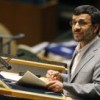
Israel, Iran Targeted at Nuke Non-Proliferation Meet
A month-long Review Conference on the Nuclear Non-Proliferation Treaty (NPT) began Monday with a predictable target: Israel.NPT Meet Draws Thousands of Anti-Nukes Activists
Japanese women in kimonos carrying signs urging "No More Hiroshima", an 80-year-old grandmother, and 18 mayors from around the world were just some of the almost 15,000 people who marched in New York City Sunday to rally for the abolition of nuclear weapons.
Hezbollah Rocket Inventories Worry Israel, U.S.
Recent warnings by the United States that Hezbollah (Party of God) possesses more rockets than most governments has once again placed the party’s arsenal under the spotlight.Indigenous Forum Closes on Note of Hope, and Caution
Friday marked the last day of the two-week Ninth Session of the United Nations Permanent Forum on Indigenous Issues, with attendees expressing optimism but also concern about the ongoing encroachment of industrial and development projects into native lands.Security Council Faulted for Gender Hypocrisy
Ten years after a United Nations Security Council resolution aimed at re-evaluating women's roles in U.N.-brokered peacekeeping efforts, women are still underrepresented in the peacekeeping process.Poor Communities Struggle to Attend U.N. Indigenous Meet
"You will never suffer from fatal diseases like cancer and ulcer if you drink mare's milk," says Anna Postnikova, who is currently attending a major U.N. meeting on indigenous issues.« Previous Page — Next Page »


It was dubbed "The Glass House" by U.S. ambassador James Wadsworth in 1966. Half a century later, the United Nations has gradually expanded its role as agent of peace and protector of the world's vulnerable populations, while simultaneously facing internal pressures to become more inclusive, increase transparency and maintain legitimacy in the post-Cold War political and economic order. Highlighting the local impacts of global policies on economic development, environment, health and human rights, IPS's coverage goes beyond the edicts of the Security Council to illuminate the power struggles, successes and shortcomings of the 193-member institution as it grapples with crises like climate change, armed conflict, poverty and HIV/AIDS.

The Week with IPS
