Languages
Sunday, October 4, 2026



News and Views from the Global South
Headlines
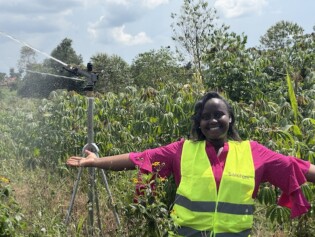
Renewables, Farmer Aggregation Offer Solutions to Africa’s Post-Harvest Losses
Post-harvest losses, particularly in rural areas, threaten the gains Africa is making in agricultural production and export capacity.
For Pakistan Rising Fistula Cases Make SDG 3 Goal Elusive
“You’re living a life drained of joy,” is how Shehnaz Sher Ali describes her “perpetually wet and stinky” existence. “I wouldn’t wish it on my worst enemy,” says the 35-year-old, who travelled by bus for more than 12 hours with her husband from their village in Rahim Yar Khan, Punjab, changing diapers whenever possible to keep the smell from reaching the fellow passengers.
SUDAN: ‘It’s Shocking to Be Forced into Silence Simply Because You Are a Refugee’
CIVICUS discusses life as a refugee with an exiled Sudanese civil society activist who has asked to remain anonymous for security reasons.
The Ingenuity Trap
In the 21st century, getting a pencil into Gaza became international news. In January, after more than two years of restrictions, UNICEF finally brought in learning kits with pencils and exercise books. Textbooks stayed out. By then, the UN had recorded damage to 97.5 per cent of Gaza's schools.
If We Can Start an Epoch, We Can Start a Farming Revolution
In November 1952, the United States detonated the world's first thermonuclear device at Enewetak Atoll in the Marshall Islands. The test, code-named Ivy Mike, erased the island of Elugelab and scattered a signature of plutonium across the planet that remains in lake beds, ice sheets and ocean sediments today.
Caring for Carers: Addressing Workplace Violence Against Nurses in Malaysia
Nurses are often called the backbone of the health system. We praise their compassion, commitment and resilience. On Nurses’ Day we thank them. During emergencies and crises, we call them heroes. But there is a harder question Malaysia, like most countries around the world, needs to ask more seriously: what happens when the people who care for everyone else are not safe, supported or respected at work?
Afghanistan’s Drought Deepens, and Women Bear the Heaviest Burden
Drought has depleted wells, withered fruit trees, and reduced crop yields across Afghanistan. The heaviest burden of the water shortage falls on women in their daily lives, as they must fetch water from increasingly distant sources and use every single drop with extreme care.
How to Protect Coastal Communities From Tide-Related Loss and Damage in Bangladesh
Villagers rush to the vulnerable spot of the embankment—early warning of the rising tide has alerted them. Together, they save the village from tidal flooding by repairing the vulnerable embankment, which is at risk from the impact of low pressure in July this year. The message is clear: early warnings of the rising tide save lives and property.
“The Price of a Narrow Metric: Why Vulnerability Must Count”
From a distance, an island nation can appear to possess everything: pristine waters, a thriving tourism industry and a strong cultural identity. Its income figures may suggest prosperity.
A Stronger Future for Coffee Starts Where It Is Grown
Imagine your morning coffee. You smell the aroma as steam rises from the cup. It wisps and swirls, thins, then disappears. You lift the cup to your mouth. The first pure joy of the day.
UNGA81: UN Leaders Calls for Faster Action on Pandemic Preparedness
The United Nations High-level Meeting on Pandemic Prevention, Preparedness and Response (PPPR) on September 25 called for faster and more sustained investment in pandemic preparedness. Speakers emphasized that future outbreaks will require coordinated action across governments, health systems, and communities.
New Ocean Report Warns of Rising Seas, Ocean Heat and Acidification
Fatuma Makame learned to farm seaweed in the shallow water where her parents worked. These days, she grows it farther from shore.
BRICS: Growing Ambition, Zero Accountability
At the 18th BRICS Summit, held on 12 and 13 September in New Delhi, India’s Prime Minister Narendra Modi brought together presidents Xi Jinping of China, Vladimir Putin of Russia and Masoud Pezeshkian of Iran, along with Abu Dhabi’s Crown Prince, Sheikh Khaled bin Mohamed bin Zayed, representing the United Arab Emirates (UAE). Around the table sat longstanding rivals such as India and China and, in the case of Iran, Saudi Arabia and the UAE, states on opposite sides of an ongoing war. That the summit produced a joint declaration every member could sign was a modest multilateralist success.
What Faith Can Teach Agriculture
Years ago, standing in a small farmer's field in Haiti, I began to suspect that we had agriculture backward. The development world saw a man in need of rescue. I saw a farmer who might help rescue the rest of us.
Strategic Blindness at UNGA 81: “Super Intelligence” and “Killer Robots” Take Center Stage as Women’s Rights Take a Back Seat
“Artificial intelligence (AI) must be shaped by humanity, with humanity, and for all humanity... Life-and-death decisions must never be surrendered to machines. Killer robots must have no place in our future.”
Fragmented Policies Hold Back Agroecology Adoption in Africa’s Congo Basin
Agricultural, land, forestry, environmental and trade policies in the Congo Basin remain compartmentalised at country levels, leaving proven agroecological models trapped at pilot stages due to a lack of advisory services, organic inputs, market outlets and sustainable financing.
Overshoot of Paris Agreement and the Looming Super El Niño Drive Urgent Calls for Global Climate Action at UNGA 81
The United Nations 2026 Climate Summit addressed critical strategies to mitigate the compounding impacts of the climate crisis and accelerate progress toward the Sustainable Development Goals (SDGs).
India Still Needs to Address Harmful Dark Skin Stereotypes
As a young girl, Sarada Murlidharan cringed at the thought of going to school. It was not the studies but the taunts of 'being black' or having dark skin, where fair skin was considered preferential, that made her unhappy.
Pension Peril Among Populations
Dozens of government-funded pension programs providing benefits to hundreds of millions of men and women face growing fiscal strain and long-term sustainability challenges. These pressures are largely driven by rapid demographic transitions, including ageing populations, declining fertility, rising life expectancy, and shrinking workforces.
Rohingya Camps: Children in Frontline of Food Rationing Crisis
For Mohammed Dullah, recent cuts in UN food rations for Rohingya and other refugees in Bangladesh are not just spreading hunger but also forcing them to save on basic needs such as schooling and healthcare for his children.
The Global Leaders Network Pushes to Protect Women’s and Children’s Health
In the wake of the largest decline in global health financing on record, the Global Leaders Network (GLN) for Women’s, Children’s and Adolescent Health convened a high-level meeting on September 22 to sustain political momentum for women and children's health financing. The event, Financing for Women’s, Children’s and Adolescent’s Health in a Time of Austerity, was co-hosted by the Governments of South Africa, Spain, and Tanzania, in addition to the Partnership for Maternal, Newborn, and Child Health (PMMCH).Next Page »


