
Wednesday, September 16, 2026



News and Views from the Global South
IPS UN: Inside the Glasshouse

The UN Security Council is in Desperate Need of Comprehensive Reforms
Any fair analysis of the United Nations strongly suggests that the UN of today is not the same UN that was established in 1945. The United Nations Security Council in particular, which was intended to maintain international peace and security, has sadly outlived its usefulness in its current makeup.
UN System, Too Complex & Fragmented, is in Urgent Need of Reform
Few deny the huge role the United Nation plays in global multilateral system especially in the area of poverty eradication, sustainability and climate change. As enabler of the Agenda 2030, the UN system has the ability, stemming from its extraordinary convening powers, to bring around the table global leaders and key stakeholders for the most consequential decisions humanity must take.
“Gun Control” at the Pentagon? Don’t Even Think About It
New outcries for gun control have followed the horrible tragedies of mass shootings in Uvalde and Buffalo. “Evil came to that elementary school classroom in Texas, to that grocery store in New York, to far too many places where innocents have died,” President Biden declared over the weekend during a university commencement address.
A Global Food Crisis: Shortage Amidst Plenty
India is being asked by the US government and the IMF to reconsider its decision to suspend wheat exports. Their cited concern is that export restrictions will exacerbate food shortages amidst Russia's invasion of Ukraine. But the argument does not stand ground technically or morally.
Child Labour: No Quick End to Children Trapped in Tobacco Production
Despite World Day Against Child Labour launched in 2002 by the International Labour Organization (ILO), little has changed over the past two decades for the millions of children who remain trapped.
No Climate Transition Without Securing Land Rights
The landmark land tenure decision by parties to the UN Convention to Combat Desertification (UNCCD) in 2019 offers a blueprint for upcoming climate negotiations in Sharm El Sheikh in November.
New Tactical Nuclear Weapons? Just Say No
Russian President Vladimir Putin’s brutal war on Ukraine, along with his implied threats of nuclear weapons use against any who would interfere, has raised the specter of nuclear conflict.
‘This is not about Russia, this is about Multilateralism’
Q: Liechtenstein has just initiated a resolution at the United Nations that mandates a meeting of the General Assembly whenever a veto is cast in the Security Council. What’s behind this initiative?

A Move to Undermine the Anachronistic Veto Powers in the Security Council Gains Traction
The five permanent members (P5) of the UN Security Council (UNSC) – UK, US, France, China and Russia – have exercised their veto powers primarily to protect their own national interests or the interests of their close political and military allies.
China’s Entry into the Muslim World
The retrenchment of American power in the Middle East and the larger Muslim world, coupled with the war in Ukraine, has provided a geopolitical breather for China. Beijing is effectively deploying this to make strategic inroads into the region, given this vacuum and focus on Europe.
UN Should Aspire to Turn Sports into a Tool for Social Change
The International Day of Sport for Development and Peace, which will be commemorated on April 6, is a day that celebrates the positive effects that sports can have on the society.
A Battle Between a UN Chief & US Envoy Ends in a Decisive Blow with an American Veto
When Madeleine Albright was nominated to be the first female US Secretary of State back in 1997, some apparently questioned whether “a woman could go toe-to-toe with world leaders”. “Madeleine quickly quashed those misguided doubts,” says Secretary of State Antony Blinken in a tribute to Albright, who passed away last week at the age of 84. “There was simply no doubt that, in any room, she was as tough as anyone and often tougher. That said, it wasn’t always easy.”
As Yemen Continues to be Devastated in an eight-year-old Conflict, a UN Pledging Conference Attracts only one Arab Donor
When North and South Yemen merged into a single country ushering in the Republic of Yemen back in May 1990, a British newspaper remarked with a tinge of sarcasm: “Two poor countries have now become one poor country.” Described as the poorest in an oil-blessed Middle East, Yemen continues to be categorized by the United Nations as one of the 46 least developed countries (LDCs), “poorest of the world’s poor” depending heavily on humanitarian aid while battling for economic survival.
Don’t Risk our Multi-Billion Dollar Pension Fund in Wall Street, Warn UN Staffers
The United Nations Joint Staff Pension Fund (UNJSPF), which is expected to provide retirement, death, disability and related benefits for staff, upon cessation of their services-- has a staggering portfolio amounting to over $81.5 billion ranking far, far ahead of the UN’s annual budget of $3.1 billion and its average peacekeeping budget of over $6.4 billion.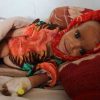
Why We Must Remember Afghanistan
While all eyes are on Ukraine, Afghanistan’s humanitarian crisis has been forgotten. But only with international aid can Afghans build a future.
UN Re-Surfaces After Long Pandemic Lay-off
After several on-again and off-again pandemic lockdowns, the United Nations is planning to return to normal beginning this week. A circular from Secretary-General Antonio Guterres on March 11 says “based on the new guidelines, we are now able to institute associated changes in our workplace, returning to full operational capability while still prioritizing the health and safety of personnel, and balancing the operational needs of the Organization”.
International Women’s Day, 2022
To Overcome Africa’s Development Crisis, Invest in Strengthening Girls’ Power
It was on a visit to Lesotho that I first heard the derogatory term Mmutla – nocturnal hare. It is a word used in some southern districts to insult adolescent girls who have been forced into sexual exploitation and transactional sexual relations for survival.
International Women’s Day, 2022
Raising up Women as Light in Dark Times
When I was a young girl, a friend and I spent our summers building a treehouse. We built it because our older brothers were building one and wouldn’t allow us to help them. So, we asked our parents to support us through the procurement of basic tools, collected scrap wood from the local hardware store, chose a tree, and then spent day after day puzzling beams and boards together into structure in which only people of our small size could fit.

Changing a System that Exploits Nature and Women, for a Sustainable Future
"Pachamama (Mother Earth) is upset with all the damage we are doing to her," says Hilda Roca, an indigenous Peruvian farmer from Cusipata, in the Andes highlands of the department of Cuzco, referring to climate change and the havoc it is wreaking on her life and her environment.
International Women’s Day, 2022
To be Just, the Energy Transition Must Include & Empower Women
Access to clean energy improves women’s lives in a myriad of ways. It supports access to education and quality healthcare, opens new economic opportunities, and reduces unpaid domestic labour and gender-based violence. Yet too often, the sector as a whole – from industry to policymaking – still fails to include women as energy users, decision-makers and agents of change of the energy transition.

International Women’s Day, 2022
Gender Blind Spots in the Water Sector
UN Women estimates 150 million women and girls are emerging from poverty by 2030, thanks largely to comprehensive education, labor, and social protection strategies and reforms implemented by governments around the world.
« Previous Page — Next Page »


It was dubbed "The Glass House" by U.S. ambassador James Wadsworth in 1966. Half a century later, the United Nations has gradually expanded its role as agent of peace and protector of the world's vulnerable populations, while simultaneously facing internal pressures to become more inclusive, increase transparency and maintain legitimacy in the post-Cold War political and economic order. Highlighting the local impacts of global policies on economic development, environment, health and human rights, IPS's coverage goes beyond the edicts of the Security Council to illuminate the power struggles, successes and shortcomings of the 193-member institution as it grapples with crises like climate change, armed conflict, poverty and HIV/AIDS.

The Week with IPS
