
Sunday, October 11, 2026



News and Views from the Global South
IPS UN: Inside the Glasshouse
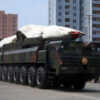
The Middle East War Triggers a Move to Boost North Korea’s Nuclear Arsenal
The ongoing military conflicts in the Middle East—involving the US, Israel, Palestine, Iran and Lebanon—have indirectly bolstered North Korea’s plans to expand its nuclear arsenal.
Africa’s Future Depends on Innovation, Data, and Frontier Technologies
Across the continent, GDP has risen on the back of more workers, more capital and a commodity super-cycle, rather than through genuine gains in productivity and innovation. Too little labour has moved out of subsistence agriculture into higher-productivity manufacturing and modern services.
Wars Impose Lasting Economic Costs, While More Defense Spending Means Hard Choices
War is again defining the global landscape. After decades of relative calm following the Cold War, the number of active conflicts has surged in recent years to levels not seen since the end of the Second World War.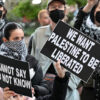
The Five Enablers of the Israeli-Palestinian Conflict
Every powerful actor in the Israeli-Palestinian conflict professes to seek peace. The US and EU repeat the two-state mantra, the Arab states invoke Palestinian rights, AIPAC proclaims its defense of Israel’s security, and Israeli opposition parties promise “responsible” leadership and stability.
The Day the General Assembly Moved to Geneva– to Provide a Platform to a PLO Leader…
The United Nations faces two crucial elections later this year: the election of a new Secretary General, with no confirmed date for polling, and the election of a new President (PGA), scheduled for June 2, for the upcoming 81st session of the General Assembly.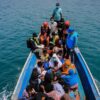
Why the Rohingya Refugees in Bangladesh Need Work, Not Just Rations
While global attention right now is on escalating geopolitical tensions involving the United States, Israel, and Iran, another crisis continues quietly in Bangladesh.
Trump Rips off Velvet Glove from Mailed Fist
Trump 2.0 has been marked by the blatantly aggressive exercise of power to secure US interests as defined by him. While many recent trends even predate his first term, his reduced use of ‘soft power’ has exposed his bullying, extortionary use of US power.
Unexpected Ally Stepping Up Against Sexual Assault in Kenyan Slums: Landlord
Trigger warning: This article discusses child rape. Their quiet latent power comes from being ever-present eyes and ears on the ground. As they move around their compounds, collecting rent and checking on anywhere from 10 to 20 houses occupied by as many as 200 people, they see and hear things.
Nations pledge $3.9bn to Global Environment Facility as Race to Meet 2030 Goals Tightens
With just four years left to meet a series of global environmental targets, governments are committing to shore up one of the world’s main environmental funds, the Global Environment Facility (GEF), with a $3.9 billion pledge.
Humanitarian Response in Lebanon ‘Under Significant Strain’ after Wednesday Airstrikes
On April 8, Israeli military forces launched the deadliest series of airstrikes on Lebanon since hostilities escalated in early March, resulting in the deaths of at least 254 civilians. This latest incident threatens to further complicate humanitarian efforts in Lebanon that are already under immense pressure.
The Race Is On: Who Will Be the Next UN Secretary General?
Let the race begin! April 1st was the deadline for candidates to be nominated for Secretary-General. Was it a coincidence that the deadline was April Fool’s Day? Judging by the quality of the official candidates, we suspect so.
Japan and Kazakhstan Draw Closer as Iran Crisis Reshapes Energy and Security Priorities
As tensions surrounding Iran deepen and uncertainty spreads across global energy markets, Japan is once again confronting a structural weakness: its heavy dependence on Middle Eastern oil.
Tackling Political Exclusion is Central to Saving Democracy
Urgent steps need to be taken to rebuild the relationship between citizens and state to stem the decline of democracy globally. Experts point to inequality and political exclusion as two of the biggest drivers for democratic backsliding, with the exclusion of citizens from a role in policy and decision-making spaces leading to ‘hollow citizenship’.
US Aims at Heavy Staff & Budgetary Cuts, Seeks to Launch Cost-Saving Artificial Intelligence at UN meetings
The US has spelled out in detail its own concept of what a restructured United Nations should look like: after drastic reductions in staff, cutting down its budget, avoiding duplication in mandates, slashing peacekeeping operations worldwide and deploying artificial intelligence (AI) for translations and interpretations in six languages.
Iran War: What African Countries Can do to Get Through the Crisis and Emerge in a Better Place
By Easter 2026 it was still not clear when – or how – the war initiated by Israel and the US against Iran would end. But what was already clear was that it would harm Africa in a number of ways.
UN80: UN General Assembly Adopts Resolution on Mandate Review
UN Member States made progress toward the UN80 initiative by adopting a resolution that would implement a mandate review, which is set to pave the way to strengthen the process of mandate creation and implementation.
MC14 Exposed US Heavy Hand at the WTO; Developing Countries Need Each Other
The WTO's 14th Ministerial Conference (MC14), which took place from 26 to 30 March 2026 in Cameroon, was reported as a collapse resulting from the stand-off between Brazil and the United States on the extension of the e-commerce moratorium. This is one screen shot of a bigger unfolding story where the US is attempting to enforce its will on the organization, while some are resisting.
Escalation in Middle East Reverses more than a Year of Economic Growth in the Region
New estimates by the United Nations Development Programme (UNDP) suggest the military escalation in the Middle East, now into its fifth week, may cost economies in the region from 3.7 to 6.0 percent of their collective Gross Domestic Product (GDP).
An Ominous Reckoning for the Gulf States
Trump’s Iran war has left the Gulf shattered: US bases turned into targets, economies battered, and the “oasis” myth destroyed. Gulf rulers now confront a harsh reckoning over their reliance on Washington and the uncertain search for a new, fragile security order.
The United Nations Needs a Secretary-General of Courage, Not Convenience
The United Nations was not founded to be comfortable; it was founded to be necessary. Created in the aftermath of catastrophe, its purpose was clear: to maintain international peace and security, to uphold international law, to defend human rights and to promote human dignity and development.
The “Extremely Dangerous and Unpredictable” situation in Middle East and Beyond
More than three weeks after the United States and Israel launched strikes on Iran, the conflict is spreading and intensifying in the region and beyond, with civilians bearing the brunt. Families across the region marked Eid and Nowruz under fire, in fear and uncertainty, and facing further hardship.« Previous Page — Next Page »





It was dubbed "The Glass House" by U.S. ambassador James Wadsworth in 1966. Half a century later, the United Nations has gradually expanded its role as agent of peace and protector of the world's vulnerable populations, while simultaneously facing internal pressures to become more inclusive, increase transparency and maintain legitimacy in the post-Cold War political and economic order. Highlighting the local impacts of global policies on economic development, environment, health and human rights, IPS's coverage goes beyond the edicts of the Security Council to illuminate the power struggles, successes and shortcomings of the 193-member institution as it grapples with crises like climate change, armed conflict, poverty and HIV/AIDS.

The Week with IPS
