
Wednesday, October 28, 2026



News and Views from the Global South
IPS UN: Inside the Glasshouse
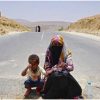
Coronavirus Worsens Yemen’s Long Tale of Woe
In every room in Yemen’s Al-Saba’een hospital, patients in critical condition waited on chairs, and still others laid on the bare ground. I saw women and girls sharing beds in pairs, and children laying close together being treated.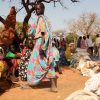
What does U.N. Secretary General’s Call for Ceasefire Mean for Countries in Conflict?
Conflict experts are concerned the the global ceasefire called for by the United Nations amid the coronavirus outbreak may not work and could lead to a rise in violence.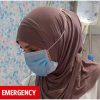
White Supremacists, Yellow Peril & “Chinese Virus” Add to a Volatile Political Mix
When US President Donald Trump repeatedly characterized the fast-spreading COVID-19 as a “Chinese virus” last week, it prompted some white supremacists to resurrect an age old ethnic slur against Chinese and East Asians: the “Yellow Peril” which, in a bygone era, was touted as a xenophobic threat to the Western world.
Could the Coronavirus Be a Biological Weapon in the Not-Too-Distant Future?
The devastating spread of the deadly coronavirus across every continent-- with the exception of Antarctica-- has triggered a conspiracy theory on social media: what if the virus was really a biological weapon?
Coronavirus & Water Pandemics: Doing the Math
As the COVID-19 coronavirus pandemic spreads, guidance on how wash your hands and other measures intensifies. These recommendations are important, but they are hardly of value to the 40% of humanity lacking access to even the most basic hand washing requirements — soap and water 1.
Could the Coronavirus Pandemic have been Avoided if the World Listened to Indigenous Leaders?
Mina Setra remembers the story clearly. As a Dayak Pompakng indigenous person from Indonesia, when visitors from the city who came into her community; brought bottled water with them because they were worried about the water not being suitable for drinking.
Why Rich Countries must Protect Developing Nations from Coronavirus Pandemic
Governments in wealthy, first world countries must not ignore the plight of poorer nations battling the coronavirus or the disease will not be brought under control, global development experts have said.
A Woman Peacebuilder’s Reflections on Beijing+25 & the Generation Equality Forum
Where are the women and youth peacebuilders in the Beijing+25 and the Generation Equality Forum processes? Their absence raises serious questions about the effectivity and coherence of the work of the UN on gender equality since armed conflict is both a cause and a consequence of gender inequality.
The 2020 NPT Review Conference: From the Sublime to the Ridiculous
This year marks the 50th anniversary of the nuclear Non-Proliferation Treaty (NPT) and coincidentally the tenth quinquennial (five yearly) review conference is scheduled to be held at the United Nations in New York from 27 April to 22 May.
UN Reaches 90:90 Gender Parity in Senior Leadership Transforming Organizational Culture
The United Nations claims it has reached one of its primary goals relating to women’s rights in the world body: gender parity at senior levels of management and in the highest echelons of the Organization.
There Can Be No Green Peace Without Gender Equality
Gender inequality - like the climate emergency - is not inevitable, but is kept in place by the poor choices too many cis men make on a daily basis. And it is not just womxn who are hurt and trapped by this patriarchal problem, but girls and non-binary people too, as well as many boys and men.
Q&A: ‘Place Gender Equality at the Heart of our Work’
Ambassador Mona Juul started her role as the Permanent Representative of Norway to the United Nations in January 2019, and is also the president of the United Nations Economic and Social Council (ECOSOC).
Coronavirus Threatens to Wreck Nuclear Review Conference
First, it was the ill-fated annual sessions of the UN Commission on the Status of Women (CSW), scheduled for March 9-20, which was undermined by the spreading coronavirus COVID-19.
It is Time for Action! Uniting for Africa’s Transformation
Twenty-five years ago, thousands of representatives adopted the Beijing Declaration, one of the most progressive universal agreement to advance women’s rights.
Helping Advance Women’s Political Rights in Ecuador
Inclusion of women in political processes is one of the key ingredients of sustainable peace. Although the number of women in political office has increased worldwide over the past 25 years, progress has been slow.
Q&A: Misinformation in the Time of an Uncontainable Virus
Just a month since the World Health Organization declared the Coronavirus a public health emergency, it is now taking steps to contain misinformation being spread about the disease. Globally, there have been more than 82,000 cases of Coronavirus, which has claimed 2,800 lives -- the majority being in China, where the disease has been traced to.
No Country On Track to Ensuring a Better Future for its Children
There is no country that is on the right path to ensure the safety, health and proper environment for their children, an explosive report has claimed.
SDGs Corporate Tracker to Monitor Progress of UN’s Development Agenda
This year marks just ten years ahead of the deadline for completing the UN Sustainable Development Goals (SDGs) by 2030. These universally supported targets were always ambitious in their scope – yet what is clearer now than ever before is that quicker progress is crucial in the decade to come.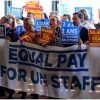
UN Accused of “Hypocrisy” Launching Equal Pay Day While Condoning Wage Discrimination
The United Nations, which has long preached the irrefutable concept of income equality to the outside world, is now accused of condoning wage discrimination in its own backyard.
Fiscal Policies For Women’s Economic Empowerment
Making sure that opportunities to enter the workforce are fair and rewarding for women benefits everyone. Yet, the average female workforce participation rate across countries is still 20 percentage points lower than the male rate, largely because gender gaps in wages and access to opportunities, such as education, stubbornly persist.
U.S. President’s Global Gag Rule is Having Negative Impact on the Health of Malawians: Report
A report released last week has detailed the complex ways in which President Donald Trump’s ‘Global Gag Rule’ (GGR), that blocks U.S. global health assistance to foreign non-governmental facilities providing abortion or abortion-related services, is affecting the population in Malawi, a country already hard hit with numerous climate change disasters.« Previous Page — Next Page »





It was dubbed "The Glass House" by U.S. ambassador James Wadsworth in 1966. Half a century later, the United Nations has gradually expanded its role as agent of peace and protector of the world's vulnerable populations, while simultaneously facing internal pressures to become more inclusive, increase transparency and maintain legitimacy in the post-Cold War political and economic order. Highlighting the local impacts of global policies on economic development, environment, health and human rights, IPS's coverage goes beyond the edicts of the Security Council to illuminate the power struggles, successes and shortcomings of the 193-member institution as it grapples with crises like climate change, armed conflict, poverty and HIV/AIDS.

The Week with IPS
