
Thursday, November 19, 2026



News and Views from the Global South
IPS UN: Inside the Glasshouse
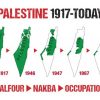
US Mideast Peace Plan: Israelis Offered the Cheese & Palestinians the Holes
The Israeli human rights organization B’Tselem has described the much-ballyhooed US Middle East peace plan as “more like Swiss cheese-- with the cheese being offered to the Israelis and the holes to the Palestinians”.
Urbanization as a Path to Prosperity
Growing up in New York City in the 1970s, Edward Glaeser saw a great metropolis in decline. Crime was soaring. Garbage piled up on sidewalks as striking sanitation workers walked off the job. The city teetered on the edge of bankruptcy.
US-Iran Confrontation & Implications for India
The unease in the relations between the US and Iran have been in the international news for around a month now. Both sides have not shied away from using outright methods of warfare like the use of ballistic missiles and assassinations, along with attempts at economic and diplomatic sanctions.
China Ranked World’s Second Largest Arms Producer Trailing Behind US
Donald Trump, the vociferously unpredictable US president, has long chastised China for seeking “unfair” advantage over trade and tariffs, violating intellectual property rights and “manipulating” the country’s currency to its advantage.
When UN’s Cash Crisis Undermines Human Rights, Are the World’s Torturers the Key Beneficiaries?
The UN’s ongoing cash crisis, which has virtually destabilized the Organization’s day-to-day operations, has also undermined the human rights mandate of the Geneva-based Human Rights Council (HRC).
Experts laud International Court of Justice Order on Myanmar to Halt all Genocidal Conduct
In a groundbreaking and much anticipated ruling delivered on Thursday, the International Court of Justice demanded that Myanmar halt all measures that contribute to the genocide of the Rohingya community.
UN Plans to Launch a “Decade of Action” to Deliver Development Goals by 2030
2020 marks the 75th anniversary of the United Nations. I draw tremendous strength from all that we represent and all that we have achieved together.
Global Inequality Continues to Grow: UNDESA Report
More than 70 percent of the global population is currently living in parts of the world where income inequality has grown, according to a World Social Report 2020 launched by United Nations Department of Economic and Social Affairs (DESA).
UN Chief & Staff Union Predict Another Cash Crisis in 2020—if Member States Don’t Pay Up
UN Secretary-General Antonio Guterres declared last week that the United Nations just “managed to survive its deepest financial crisis in a decade.”
Geneva Staff Battles UN Chief over Unequal Pay & Illegal Salary Cuts
As the United Nations commemorates its 75th anniversary this year, the financially-crippled Organization is also saddled with a rash of administrative problems, plus an ongoing cash crisis, perhaps one of the worst in history.
UN Special Rapporteur Offers Assistance to Indian Supreme Court in Case of Rohingya Deportation
University of California professor E. Tendayi Achiume, who is a United Nations Special Rapporteur, has recently offered her assistance to the Indian Supreme Court in a long hearing about India deporting Rohingya refugees to Myanmar.
Women Activists Escalate Demand for “Bodily Autonomy” as 19 Nations Dissent
The United States and 18 other UN member states have come under fire for denying a woman’s legitimate right to “bodily autonomy”—the right to self-governance over one’s own body without coercion or external pressure.
Human Rights Watch Blasts China for Rights Violations at Home and Abroad
China is currently under heavy scrutiny for its massive human rights violations across different sections, Human Rights Watch (HRW) head Kenneth Roth said on Wednesday.
U.S. Might Pull Troops from West Africa, but Who Will it Affect?
While the United States is busy with foreign operations such as killing Qasem Soleimani, a key figure in Middle East Politics, behind the scenes it is reportedly considering a change that experts worry might be of grave concern: a potential withdrawal of troops from West Africa.
Iran Announces New Nuclear Deal Breach
Iran announced its fifth breach of the 2015 nuclear deal Jan. 5, stating that it “discards the last key component of its operational limitations” put in place by agreement.
Women’s Groups Applaud Gender Action Plan Following COP 25
After nearly two weeks of negotiations at COP 25 climate negotiations in Madrid last month (2-13 December), governments will be adopting a new 5-year Gender Action Plan (GAP) that progressively builds upon the first GAP, and works to address many of the concerns raised by women and gender groups at the Framework Convention on Climate Change (UNFCCC), including calls for greater focus on implementation and scaling up gender-just climate solutions.
How Gender-based Violence Should be Reported in the Media
Sexual and gender-based violence terrorizes women and girls around the world, affecting as many as one in three women. Reporters play an essential role in bringing these cases to light so that authorities can take action and prevent further abuses. Yet reporting on gender-based violence comes with serious risks to survivors.
India’s Citizenship Law Triggered by Rising Right-Wing Ideology
“Fire bullets at the traitors of the country,” chanted mobs of Bharatiya Janata Party, or BJP, supporters wrapped in Indian flags in Delhi last week.
UN Chief Warns of Rising Misogyny, Xenophobia, Discrimination, Racism & Hate Speech
As we prepare to bid farewell to 2019, we must take a clearsighted look at the global situation and the new challenges we face. Our world is undergoing a shift. It is no longer bipolar or unipolar. But it is not yet truly multipolar. Balances of power are changing, creating new and dangerous risks.
Climate Financing Being Undermined by Rich Nations, NGOs Charge
The successful battle against climate change – which has triggered a rash of natural disasters, including floods, droughts and rising sea levels— will be predicated largely on the availability of financing.
South-South Cooperation Offers Solutions to Urgent Climate Challenges
Climate change is the defining challenge of our time, and developing countries are recognized as hotspots for climatic risks. Through solidarity, peer-to-peer learning and collective self-reliance, developing countries are collaborating among themselves to address the threat.« Previous Page — Next Page »


It was dubbed "The Glass House" by U.S. ambassador James Wadsworth in 1966. Half a century later, the United Nations has gradually expanded its role as agent of peace and protector of the world's vulnerable populations, while simultaneously facing internal pressures to become more inclusive, increase transparency and maintain legitimacy in the post-Cold War political and economic order. Highlighting the local impacts of global policies on economic development, environment, health and human rights, IPS's coverage goes beyond the edicts of the Security Council to illuminate the power struggles, successes and shortcomings of the 193-member institution as it grapples with crises like climate change, armed conflict, poverty and HIV/AIDS.

The Week with IPS
