Languages
Saturday, September 26, 2026



News and Views from the Global South
Headlines

ALBANIA: ‘The Public Only Learns about These Development Megaprojects Once Construction Machinery Arrives’
CIVICUS discusses land grabs and environmental damage linked to a luxury coastal resort project with Eva Kushova, Director of Destination Management Organisation Albania, a civil society organisation that supports sustainable tourism in Albanian destinations, seeking to preserve culture and nature while maximising benefits for communities.
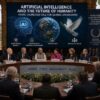
Artificial Intelligence and the Future of Humanity: Nobel Laureates Call for Global Safeguards
"I’m sorry, Dave. I’m afraid I can’t do that.” By bringing the supercomputer HAL 9000 to life in his 1968 film 2001: A Space Odyssey, American director Stanley Kubrick created one of the most powerful symbols of the fear of artificial intelligence (AI) escaping human control.
Global Value Chain Trade Reaches Historic Highs, Despite Push for Reshoring
Despite rising geopolitical tensions, trade restrictions and calls to bring production back to domestic shores, the global economy remains more interconnected than it may appear. Trade through global value chains (GVCs) reached historic levels in 2024, according to a new report from the Organisation for Economic Co-operation and Development (OECD).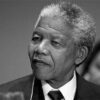
From the General Assembly to Harlem: Mandela’s Call to Action Endures
Sixty-seven minutes. That is how long volunteers spent serving lunch to people experiencing food insecurity at Refettorio Harlem in New York City last week – one for every year Nelson Mandela gave to public service.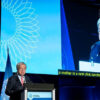
Global AI Governance Cannot Wait As the Digital Divide Widens
Throughout July 2026, various United Nations (UN) bodies and global experts have underscored the need for increased comprehensive artificial intelligence (AI) governance. Although AI yields significant potential gains for global development, persistent structural barriers continue to impede equitable access and deepen the digital divide.
Changing Age Distributions of Populations
In many countries, older adults (aged 65 and above) now outnumber younger individuals (under the age of 18), reflecting a significant demographic transformation known as demographic ageing.
Efficiency Becomes the World’s ‘First Fuel’ as Leaders at IEA Conference Chart Course for Cleaner, More Secure Energy Future
As geopolitical tensions, rising electricity demand and climate pressures reshape the global energy landscape, more than 600 energy ministers, chief executives, financial leaders and policy experts gathered in Montreal, deliberating upon how to deliver at an unprecedented scale.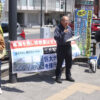
Communities vs. Datacentres
Few things unite Donald Trump’s most ardent supporters with the Democratic Party’s progressive wing, but datacentres are one of them. Across the USA, communities are joining forces across the political divide to oppose developments few want but governments seem determined to impose.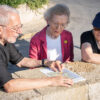
Palestine Must Not Disappear
We have just concluded a visit to the West Bank, Israel, Jordan and Lebanon. From all that we have witnessed and heard, our inescapable conclusion is that the government of Prime Minister Netanyahu, and in particular Ministers Smotrich and Ben-Gvir, aim to make Palestine disappear physically, economically, culturally and politically. Yet other governments either are choosing not to see this or lack the will to take meaningful concerted action.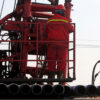
The Oil Market Absorbed the War Shock, but Buffers Are Running Low
The largest disruption to the global oil market in decades should have sent prices soaring. But after spiking at the start of the war in the Middle East, crude prices soon settled in a range of $90 to $100 per barrel, much lower than many had feared. Why didn’t prices climb higher? The answer is that a combination of factors helped cushion the initial blow. But much of that room has now been used up.
SERBIA: ‘We Are Becoming an Electoral Autocracy, a System Where the Government Cannot Lose’
CIVICUS discusses the prospects for elections in Serbia with Rasa Nedeljkov, Programme Director at the Center for Research, Transparency and Accountability, a civil society organisation that monitors electoral processes and the rule of law in Serbia.
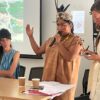
As Gold Prices Soar, Communities Pay the Price in Poisoned Rivers, Vanishing Forests and Organized Crime
The sweltering heat inside a London conference hall did not deter Indigenous leader Jackeline Mendoza Díaz from condemning the sheer destruction of the Peruvian Amazon. Her voice occasionally trembled with emotion but delivered a strong message — painting a picture far removed from the glittering gold bars traded in the world’s financial capitals.
Renewed Hostilities in the Strait of Hormuz Threaten to Compound Global Supply Chain Costs
A continuation of hostilities within the Strait of Hormuz is once again threatening one of the world's most critical supply chain arteries, posing another wave of disruption which could choke the global energy, shipping and commodity markets. With roughly a quarter of global seaborne oil trade transiting through the Strait, alongside significant flows of liquefied natural gas and fertilizers, further constraints on commercial traffic could send new cost pressures cascading through supply chains that have yet to absorb the full effects of the earlier conflict.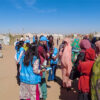
Three years of War in Sudan: A Crisis the World Can’t Ignore
Three years into the war in Sudan, survivors and human rights defenders are struggling to respond to overwhelming needs amid widespread violence, displacement, and limited global attention. As horrific violations and abuses intensify and those documenting them become targets, calls for accountability and sustained international engagement grow more urgent.
Taliban Use Dress Code to Justify Arbitrary Arrests of Women
One morning in June, Halima (name changed), went to the market in Herat, her hometown in western Afghanistan, with her mother. She was wearing a long coat and a surgical mask covering her face. She could not have imagined that just a few minutes later she would be sitting in prison.
Autonomous Weapons: The Wave of the Future in Military Conflicts Worldwide
As the international community continues to weigh the good, the bad and the deadly in artificial intelligence (AI), which is spreading far and wide with apparently no guardrails, the United Nations is taking a closer look at the impact, both positive and negative, of AI.
Full Effects of Strait of Hormuz Disruption May Not Be Felt Until Second Half of 2026
The full economic impact of the disruptions in the Strait of Hormuz may not become clear until the second half of 2026, warns the United Nations Conference on Trade and Development (UNCTAD).
How Farmers Are Learning About Restoring Soils and Scaling Agroecology in Kenya
At Yumbuni Village in Kenya’s Makueni County, farmers from Vihiga and Kakamega counties have travelled over 560 kilometres to join their colleagues in Kathonzweni Ward and see the progress of experiments being carried out on different homemade organic fertilisers and other farm inputs.
WHO: Urgent Action Needed for the Future of Cancer Care
One in five people will be diagnosed with cancer in their lifetime, and when the emotional and physical toll on close family members is factored in, an estimated 92 percent of people globally will be affected by cancer at least once in their lifetime. This staggering statistic is the centerpiece of the World Health Organization (WHO)’s latest global report on cancer.
Pride: Once Again a Protest
On the morning of 28 June, riot police sealed off Taksim Square with iron barriers and enforced bans on all weekend gatherings in Istanbul. Marchers pressed ahead anyway, re-emerging from side streets each time police dispersed them. By the end of the day police had detained at least 50 people, including a journalist. It was Istanbul Pride’s 24th edition, and the 12th year running that the authorities banned it outright.
A License Is Not a Teacher
Ask why so many Indian classrooms struggle, and the answers arrive in the language of audit: Too few trained teachers, too many vacancies, weak colleges of education and low accountability. Each of these is real, and each matters. Yet none of them explains a quiet confession a veteran teacher made to me, years into her career, holding a teacher training degree all the while. “Only this program”, she said, “made me realize what my prior training had left out”. The program she was referring to is a small teaching preparation program in Gurugram, North India called I Am A Teacher, or IAAT.« Previous Page — Next Page »


