Languages
Monday, November 9, 2026



News and Views from the Global South
Headlines

Climate Justice – Is Litigation a Good Way Forward?
For years, the concept of climate justice has been built on the understanding that countries and communities contributing the least to global warming are disproportionately bearing the impacts of climate change.
Improving Healthcare for All
In 2015, almost all heads of government in the world committed to the United Nations’ Sustainable Development Goals (SDGs), including universal health coverage (UHC). This was consistent with the World Health Organization’s commitment to Health for All.
Mandela Day Reminder to Stand Witness to Human Rights Defenders
As human rights increasingly deteriorate, rights defenders are being violently suppressed. Abducted, detained, tortured, and humiliated, many now live one day at a time. They have been told, in no uncertain times, that anything could happen. They are now asking the global community to stand as a witness.
In Northern Syria, Palestinians Fund Settlements in Occupied Kurdish Areas
The video shows an empty house with even the door frames and windows torn out. Graffiti on the wall recalls that the building was once requisitioned by the Sham Legion, an Islamist faction from northern Syria.
Black Sea Grain Initiative ‘Paused’ But Africa Must Live Beyond Foreign Dependence
As Russia paused the renewal of the Black Sea Grain Initiative, the United Nations Secretary-General António Guterres reacted with regret saying the global south would be badly affected.
Seizing the Moment for a More Resilient Asia & the Pacific
The world faces a disaster emergency, yet nowhere is the threat more immediate than in Asia and the Pacific. Ours is a region where climate change-induced disasters are becoming more frequent and intense. Since 1970, two million people have lost their lives to disasters.
Drought-Displaced Afghan Peasants Yearn for Their Rural Life
Baba Jan, 60, a farmer in Badghis Province in Afghanistan has been forced to leave his home, not because of the war but due to the worst drought he has ever experienced. It is the second time this year he has been forced to leave his cherished home and life in the rural area for capital city, Kabul.
The Race Question in America’s Population Census
With preparations for America’s 2030 population census underway and the Census Bureau encouraging additional public input, it’s time to seriously evaluate the continued inclusion of the race question in the U.S. population census.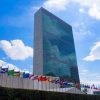
Most UN Agencies Lack Access to Information Policies, Survey Finds
Less than half of United Nations agencies have access to information policies, according to a survey by Eye on Global Transparency. Of 27 UN bodies surveyed, 13 have access policies. So, 14 UN agencies lack access policies. Setting a poor example, the UN Secretariat still lacks an access to information policy.
Guns for Hire? A Season for Mercenaries
Just after a band of mercenaries tried to oust the government in the Maldives back in 1988, I asked a Maldivian diplomat, using a familiar military catch phrase, about the strength of his country's “standing army.” "Standing army?", the diplomat asked with mock surprise, and remarked perhaps half-jokingly, "We don't even have a sitting army."
‘Spending Money on Education is Investing in Humanity’
As the 2030 deadline for achieving the Sustainable Development Goals (SDGs) looms, Education Cannot Wait's director Yasmine Sherif warned, "We are failing the promises we made on everything in the sustainable development goals, but especially on education because, without education, we cannot achieve any of the other sustainable development goals.”
‘Passion Seeds’ Fertilize Brazil’s Semiarid Northeast
Zé Pequeno cried when he learned that the heirloom seeds he had inherited from his father were contaminated by the transgenic corn his neighbor had brought from the south. Fortunately, he was able to salvage the native seeds because he had shared them with other neighbors.
Marginalising Key Populations Impacting Efforts to End HIV/AIDS Epidemic
A report released this week has highlighted how continuing criminalisation and marginalisation of key populations are stymying efforts to end the global HIV/AIDS epidemic.
Impatience as a Virtue
We all know and agree that patience is a virtue. It is indeed. With one exception. In the face of a child’s suffering, impatience is the highest virtue. Or as we say in the spirit of Education Cannot Wait: “We must be unapologetically impatient” in our collective goal to reach 224 million crisis-affected children and adolescents with quality education.
What a World 1.5 degrees Hotter Would Look Like
The dangerous state of global climate has reached a new low as a World Metrological Organisation (WMO) analysis reveals. It confirms a known obvious: human activities continue to worsen conditions that have changed our planet’s climate.
Human Rights Concerns Ahead of Zimbabwe Polls
Zimbabwe holds general elections next month amid growing human rights and press freedom concerns in what analysts say could mar conditions for undisputed poll results.
Twenty-five Years After the Creation of the International Criminal Court
On the night of 17 July 1998, the outcome of the Diplomatic Conference convened to create the International Criminal Court was still uncertain. Hundreds of state representatives and civil society organizations assembled in the FAO headquarters in Rome, holding their breath in anticipation.
Women Recyclers in Bolivia Build Hope, Demand Recognition
They haul many kilos of recyclable materials on their backs but receive little in return. These Bolivian women who help clean up the environment from dawn to dusk are fighting for recognition of their work and social and labor rights.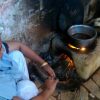
Invisible Women in Energy: Millions of Household Biomass Producers
An estimated 2.4 billion people currently lack access to clean cooking fuels, with the majority relying on biomass (firewood, charcoal, dung) to meet household cooking needs. This is only a slight decrease from 2017, when 2.5 billion people lacked access to clean cooking fuels.
Private and Public Spheres: Sweden and Mugabe
The war in Ukraine continues unabated; young men are sacrificed on battlefields, towns laid waste by aerial attacks, the threat of nuclear disasters is looming. People within an often formerly friendly inclined Europe are now wondering if Vladimir Putin has gone insane. The war in Ukraine is generally called “Putin’s war” and in April 2021 Putin signed a legislation providing him the right to run for two more consecutive terms, thus he could stay in power till 2036.
Supporting Conflict Prevention & Social Cohesion in Mauritania
Deep in the heart of Southeastern Mauritania lies the district and town of Bassikounou, nestled on the border with neighboring Mali, over 1,200 kilometers from the capital city of Nouakchott.« Previous Page — Next Page »





