Languages
Tuesday, November 10, 2026



News and Views from the Global South
Headlines
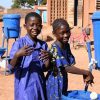
Terrorism & its Impacts on Water Access in the Sahel
Burkina Faso’s interim President Captain Ibrahim Traoré spoke late last year of the conflicts that are now blighting his country and much of his region. He described the situation in Burkina Faso as predictable given the endemic weaknesses in governance that he believes have led to the economic abandonment of many young people, particularly outside of urban areas.
Fighter Planes? Yes. Rubber Bullets? No
When the US was planning to sell fighter planes to a politically-repressive regime in South-east Asia in a bygone era, a spokesman for a human rights organization, responding to a question from a reporter, was quoted as saying there were no plans to oppose the proposed sale because “it is very difficult to link F-16 fighter planes to human rights abuses” If fighter jets are fair game and cannot be used to violate human rights, the same cannot be said of “weapons of mass control” (WMCs), including water cannons, tear gas grenades, pepper spray and rubber bullets—used mostly against civilian demonstrators.
In Latin America, Heat Warnings Can Prevent Deaths
On Mar. 9, more than half of Mexico reported maximum temperatures above 30 degrees Celsius, although spring has not even arrived yet in this Latin American country located in the northern hemisphere.
BP’s Shift ‘Back to Petroleum’ Prods Consideration of a Climate Oil Price Cap
BP, the oil company that previously brought us “Beyond Petroleum” and more recently robust corporate climate goals, has announced a return in emphasis to its traditional business of producing oil. Drawn by the inescapable appeal of oil’s latest high profits, has BP rebranded itself as “Back to Petroleum?”
‘Outright Hatred’ Towards Muslims, Risen to ‘Epidemic Proportions’
Islamophobia is a ‘fear, prejudice and hatred of Muslims that leads to provocation, hostility and intolerance by means of threatening, harassment, abuse, incitement and intimidation of Muslims and non-Muslims, both in the online and offline world.’
Solar Powered Freezer Improving Immunization Coverage in Hard-to-Reach Rural Villages
Up until 2019, nurses in three health facilities located in the semi-arid south-eastern Kenya region of Makueni County struggled to bring critical health services closer to a hard-to-reach population scattered across three remote, far-flung villages.
Parliamentarians Pledge to Act on Grim Realities of Child Marriage, Gender-Based Violence
Child marriage, gender-based violence (GBV), sexuality education, religion, and tradition came under the spotlight during a conference, Arab and Asian Parliamentarians’ Meeting to Follow-Up on ICPD25 Commitments: Addressing Youth Empowerment and Gender-Based Violence, held in Jakarta, Indonesia.
Pandemic Accord Text Falls Short of Expectations
As countries recently gathered in Geneva for the fourth round of negotiations on the WHO proposed pandemic treaty or accord, close examination of the current text by civil society experts has revealed significant gaps.
Salvadoran Government So Far Unscathed by US Legal Case Alleging Secret Pact with Gangs
Despite serious allegations by the US justice system that two officials of the government of Nayib Bukele reached a secret agreement with the MS-13 gang to keep the homicide rate low, the Salvadoran president seems to have escaped unscathed for now, without political costs.
International Women’s Day, 2023: Gender-Responsive Approach to Technology and Innovation Will Ensure Progress
Promoting gender equality in technology and digital spaces is at the core of the UN’s observance of International Women’s Day (IWD) as UN senior officials call on the world to take concrete action against ingrained gender biases.
Vanuatu Twin Cyclones Underscore the Pacific’s Vulnerability to Compounding Climate-Disaster Risks
Two destructive Category 4 tropical cyclones, Judy and Kevin, and an earthquake of 6.5 magnitude impacted over 80 per cent of the Vanuatu population from 1 to 3 March 2023. To address this emergency situation, the UN, along with Pacific member States have deployed personnel on the ground to coordinate humanitarian assistance and prepare post-disaster damage assessment.
Breaking Barriers: Why Free & Public Education Should be Every Woman’s Right
This month, government and civil society organization representatives gathered in New York for the United Nations’ 67th session of the Commission on the Status of Women (CSW) to discuss technology as a tool to facilitate access to education for women and girls.
Next Ebola Outbreak ‘Not a Matter of If, but When’
It is two months since the World Health Organization declared Uganda free of the most recent Sudan ebolavirus, which killed 55 people. Uganda employed public health measures to end the outbreak. In the absence of vaccines and therapeutics, the threat of the next outbreak looms.
The Sami People’s Fight Against Norwegian Windmills
There are 151 wind turbines and more than 130 kilometres of connection routes and power lines on the Fosen peninsula, 530 kilometres north of Oslo. Norwegian judges say that they should not be there, and the owners of those lands since time immemorial do too.
Breaking the Link between ‘Polycrisis’ and Poverty
This year marks the halfway point— eight years in and eight years out— of the UN Sustainable Development Goals to end poverty and reduce inequalities.
The Caribbean’s Role in the Transformation of Agri-Food Systems
The global food security crisis reveals an increase in the undernourishment prevalence, reaching higher than in 2015, when countries first agreed to eradicate hunger by 2030 as one of the SDG targets. In the Caribbean, between 2014 and 2021, hunger increased by 2.3 percentage points, affecting 16.4 percent of its population by 2021. Moreover, the Caribbean is a net importer of almost all the main food groups such as cereals, dairy products, fruits and vegetables (except the Dominican Republic), meat and vegetable oils.
Excluded Afghan Girls Forced to Seek Education in Pakistan
Hundreds of young women and girls are moving to Pakistan to continue their studies after the Taliban’s restrictions on women’s education in Afghanistan.
A Caribbean Writer Fights Gender-Based Violence with Lit, Protests
For the past six years, Jamaican writer and scholar Opal Palmer Adisa has been one of the voices crying out against the prevalence of gender-based violence in the Caribbean and elsewhere. To highlight this human rights issue, she launched “Thursdays in Black” - holding public protests throughout the year and, on Thursdays, making use of social media to spread her message and raise awareness.
International Women’s Day, 2023
World Parliaments Could Take Another 80 Years to Achieve Gender Parity Among Legislators
For the first time in history, says a new report from the Inter-Parliamentary Union (IPU), not a single functioning parliament in the world is “male-only”.
Is the increasing number of women in parliaments a singular achievement for gender empowerment? Or is it the result of mandatory legislative quotas for women’s representation in world’s parliaments?

International Women’s Day, 2023
Women and Girls: Innovation and Higher Education
In September 2020, the Beijing Declaration and Platform for Action for women’s rights celebrated its 25th anniversary. It was, however, a bittersweet commemoration, mixing joy for the progress in gender equality achieved since 1995, and the stark realization about the multidimensional gaps awaiting tackling and the new divides brought by the social consequences of COVID-19.

Parliamentarians Tackle Youth Employment, SRHR in Post-COVID Asia and Pacific
With more than 600 million youth aged between 18 and 24 in the Asia and Pacific region, putting their issues front and center is crucial. Speakers at a recent forum, Youth Empowerment: Education, Employment and Sexual and Reproductive Health and Rights, held in Phnom Penh, Kingdom of Cambodia, agreed that policy development and implementation should be youth-centered.« Previous Page — Next Page »





