Languages
Tuesday, October 13, 2026



News and Views from the Global South
Headlines

‘This Anti-LGBTQI+ Bill Can Still Be Blocked – but Only With Sustained International Pressure’
CIVICUS discusses Kazakhstan’s anti-LGBTQI+ bill with Temirlan Baimash, activist and co-founder of QUEER KZ youth initiative, a Kazakhstani LGBTQI+ organisation.

Sudan’s Crisis: Mass Killings Continue While the World Looks Away
Satellite images show corpses piled high in El Fasher, North Darfur, awaiting mass burial or cremation as the Rapid Support Forces (RSF) militia tries to cover up the scale of its crimes. Up to 150,000 El Fasher residents remain missing from the city, seized by the RSF in November. The lowest estimate is that 60,000 are dead. The Arab militia has ethnically cleansed the city of its non-Arab residents. The slaughter is the latest horrific episode in the war between the RSF and the Sudan Armed Forces, sparked by a power battle between military leaders in April 2023.
Living with nature, the climate lesson from Brazil’s caatinga
“The work of collecting seeds saved me from depression,” caused by her daughter's suicide at the age of 29, said Maria do Desterro Soares, 64, who lives in the poor rural community of Jatobá in northeastern Brazil.
Natural Restoration Recovers Lagoon and Environmental Justice in Brazil: VIDEO
 "We moved from a context of socio-environmental exclusion to one of environmental justice," said Dionê Castro, coordinator of the Sustainable Oceanic Region Program which led Brazil's largest nature-based solutions project.
‘Zambia Has Environmental Laws and Standards on Paper – the Problem Is Their Implementation’
CIVICUS discusses environmental accountability in Zambia with Christian-Geraud Neema, Africa editor at the China Global South Project, an independent journalism initiative that covers and follows China’s activities in global south countries.
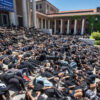
The Fight Against Femicide: Victories and Setbacks in 2025
Hours before world leaders gathered in Johannesburg for the 2025 G20 summit in November, hundreds of South African women wearing black lay down in a city park for 15 minutes — one for each woman who loses her life every day to gender-based violence in the country. The striking visual protest was organised by a civil society organisation, Women for Change, which also gathered over a million signatures demanding the government declare gender-based violence (GBV) a national disaster. Hours later, the government acquiesced.
‘People Reacted to a System of Governance Shaped by Informal Powers and Personal Interests’
CIVICUS discusses Generation Z-led protests in Bulgaria with Zahari Iankov, senior legal expert at the Bulgarian Centre for Not-for-Profit Law, a civil society organisation that advocates for participation and human rights.

The Bitter Sweet Future of Cocoa Showcased During COP30, Belém
Izete dos Santos Costa, also known as Dona Nena among locals in Combu Island, welcomed hundreds of people from around the world during the recent climate conference in Belém. Her team showcased local crafts and chocolate-making processes in the land of the Amazon rainforest—far from the deafening air conditioner sounds at the Parque da Cidade, where the COP30 negotiations were ongoing.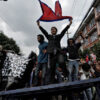
A Grim Year for Democracy and Civic Freedoms – but in Gen Z There Is Hope
2025 has been a terrible year for democracy. Just over 7 per cent of the world’s population now live in places where the rights to organise, protest and speak out are generally respected, according to the CIVICUS Monitor, a civil society research partnership that measures civic freedoms around the world. This is a sharp drop from over 14 per cent this time last year.
In Kenya, Smallholder Farmers Push Back Against Corporate Control of Agriculture
For the past two years, Samuel Ndungu, a smallholder farmer, has been growing organic food and supplying it to the local market in Githunguri, just outside Nairobi.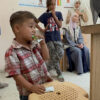
UN Warns Gaza’s Fragile Improvement Could Reverse Without Sustained Aid and Access
Despite notable improvements in the humanitarian conditions in the Gaza Strip following the October 10 ceasefire, progress remains critically fragile. With the enclave having averted famine across multiple regions, the United Nations (UN) and its partners warn that sustained humanitarian access, a steady flow of resources, and the restoration of critical civilian infrastructure are essential in preventing further deterioration, which could have long-lasting consequences for an already deeply traumatized population.
‘From the Moment They Enter Libya, Migrants Risk Being Arbitrarily Arrested, Tortured and Killed’
CIVICUS discusses migrants’ rights in Libya with Sarra Zidi, political scientist and researcher for HuMENA, an international civil society organisation (CSO) that advances democracy, human rights and social justice across the Middle East and North Africa.
Nigeria: Will Nnamdi Kanu’s Life Sentence End the Violent Agitation for Biafra?
On 20 November 2025, a Nigerian court in Abuja sentenced separatist leader Nnamdi Kanu to life imprisonment after finding him guilty of terrorism and several related offenses, bringing an end to a decade-long legal battle.
UN Restructuring May Result in Over 2,600 Staff Reductions in the Secretariat and 15 Percent in Budgetary Cuts
The UN Staff Union is on edge -- hoping for the best and expecting the worse -- as the General Assembly will vote on a proposed programme budget for 2026 by December 31.
Better Economic Measurement Is About Wiser Use, Not Just More Data
We live in a galaxy of data. From satellites and smartwatches to social media and swipes at a register, we have ways to measure the economy to an extent that would have seemed like science fiction just a generation ago. New data sources and techniques are challenging not only how we see the economy, but how we make sense of it.
The World’s Right-Handed and Left-Handed Torturers
Jeanne Kirkpatrick, a former U.S. ambassador to the United Nations, once made a highly debatable distinction between "friendly" right-wing "authoritarian" regimes (which were mostly U.S. and Western allies) and "unfriendly" left-wing "totalitarian" dictatorships (which the U.S. abhorred).
A Global Movement for Nutrition Is Needed Now More than Ever
In my more than 30 years with the United Nations, I’ve seen enormous change, collaboration and progress towards improving human development. But I’ve also seen how history has a way of repeating itself to entrench some of the most intractable global challenges.
Climate Justice Denied by Delays
Opinions have been divided over the annual UN climate conferences. While some see COP30 in Belém, Brazil, as confirming their irrelevance, others see it as a turning point in the struggle for climate justice.
Downward Spiral of Bangladesh Politics and Economy
Who Should be Blamed ?
Bangladesh in recent years started drawing global attention for its success in emerging out of poverty through economic growth and agricultural development. From early 2000 until 2023, while population growth continued to decline from 1.2 in 2013 to 1.03 in 2023, this growth has been the powerful driver of poverty reduction since 2000. Indeed, agriculture accounted for 90 percent of the reduction in poverty between 2005 and 2010 (World Bank).

Central Asia–Japan Leaders’ Summit in Tokyo Backs Trans-Caspian Corridor; Tokayev Warns Nuclear Risks Are Rising
Leaders of Japan and the five Central Asian states met in Tokyo on Dec. 20 and adopted the “Tokyo Declaration,” launching a new leaders-level format under the “Central Asia plus Japan Dialogue” (CA+JAD). The declaration places at the core of cooperation two priorities: strengthening supply-chain resilience for critical minerals, and supporting the Trans-Caspian Corridor (the Trans-Caspian International Transport Route), which links Central Asia with Europe without transiting Russia.
Day Laborers, Trapped in a Complex War Between M25 Rebels and the DRC, Return Home
Fulgence Ndayizeye, a Burundian bicycle taxi driver who used to cross the Congolese-Burundian border every day to support his family, wanted to return home. He and more than 500 other Burundians, including women, men, and children, stranded in Uvira on the border between the DRC and Rwanda, were finally allowed to return to their country on Sunday, December 14, 2025, by M23-Congo River Alliance (AFC) rebels after being stuck in the DRC due to an M23 rebel offensive that had taken the town a few days earlier.« Previous Page — Next Page »





