Languages
Tuesday, October 13, 2026



News and Views from the Global South
Headlines
Our New Colonial Era
We’re living in an age where the world is loudly proclaiming the death of empire, yet reproducing its structures. This is not nostalgia for colonial postcards — it’s a reinvention of foreign policy, international governance and global economic power that resembles colonial logic far more than it does meaningful cooperation.
Importing Empire: Why America’s Legacy of Dehumanization in Foreign Wars Is Now a Reality at Home
Before military aid is appropriated, troops deployed, or bombs dropped, the United States lays the groundwork for its political violence by first stripping adversaries of their humanity. Diplomacy is sidelined, legal restraints are treated as inconveniences, and profit is valued over human life. This machinery of dehumanization, imposed around the world for decades and honed in Gaza the past three years, has now returned home, turned inward against Americans by the elected officials and systems meant to protect them.
Experts Urge Rapid Adaptation as India Braces for ‘Stronger’ Cyclones, Quakes
Despite early warnings reportedly reaching communities before the cyclones (Ditwah and Senyar) struck coastal regions in Sri Lanka and Southeast Asia late in November 2025, over 1,500 people lost their lives and hundreds went missing even as millions were impacted by these disasters, which caused massive destruction. Scientists say that these disasters reflect a changing climate system, which is making cyclones more hazardous than what we considered “typical” in the past.
Excluding Food Systems From Climate Deal Is a Recipe for Disaster
As they ate catered meals, COP30 negotiators had no appetite for fixing broken food systems, a major source of climate pollution, experts warn. Food systems are the complete journey food takes—from the farm to fork—which means its growing, processing, distribution, trade and consumption and even the waste.
US Retreat from Multilateral Institutions Undermines Rule Of Law
The Trump Administration’s sweeping executive order to withdraw the United States from dozens of United Nations bodies and international organizations, as well as a treaty ratified by the United States with the advice and consent of the US Senate, is a targeted assault on multilateralism, international law, and global institutions critical to safeguarding human rights, peace, and climate justice.
United States Withdrawal From Organizations Triggers Global Alarm
President Donald Trump's executive order to stop United States support for 66 international organizations, including 31 United Nations (UN) groups, has faced strong opposition from these organizations, the global community, humanitarian experts, and climate advocates, who are concerned about the negative effects on global cooperation, sustainable development, and international peace and security.
A Year of High Expectations and Frustrations
As many of you know, out of the blue, I have been called in to assist the Interim Government led by Nobel Laureate Professor Muhammad Yunus in stabilising the economy left in ruins by the fallen autocratic-kleptocratic regime that looted the banks, stole public money and robbed small investors in the capital market to siphon off billions of dollars out of the country. I had never served in a government; neither had I ever expected this opportunity. However, my UN experience and political economy understanding have been handy.
Sudan’s War Nears 1,000 Days as Violence and Hunger Reach Unprecedented Levels
As Sudan approaches 1,000 days of civil war, late December and early January saw a brutal escalation of violence, with drone strikes hitting areas at the center of the country’s deepening hunger crisis.
Africa Squeezed Between Import Substitution and Dependency Syndrome
Squeezed between import substitution and dependency syndrome, a condition characterized by a set of associated economic symptoms—that is rules and regulations—majority of African countries are shifting from United States and Europe to an incoherent alternative bilateral partnerships with Russia, China and the Global South.
Consent Ignored, Convictions Rare: Pakistan’s Courts Under Fire
As 2026 dawns, women in Pakistan are left grappling with a stark reality: rape and marital rape continue to be misinterpreted by judges in the country’s highest courts.
Population Inequities in ‘The Appointment in Samarra’
While death is inevitable for everyone, the timing of “The Appointment in Samarra” varies significantly among and within populations. Fortunately, mortality levels of human populations have declined significantly worldwide in recent years, leading to increased survival rates and delayed appointments in Samarra.
Online Abuse is Real Violence — and Africa’s Women and Girls are Paying the Price
New estimates show that violence against women and girls remains one of the most pervasive human rights violations in the world – and that one of its fastest-growing frontiers is the digital space.
Maternal Deaths Spike in War-Torn Ukraine
“It was an emergency caesarean section when the life of the pregnant woman was at risk. We did the operation with just flashlights and no water, and against a backdrop of constant explosions,” says Dr Oleksandr Zhelezniakov, Director of the Obstetrics Department at Kharkiv Regional Clinical Hospital, in eastern Ukraine.
Bombing and Ballots, Myanmar’s Contentious Election
With thousands of civilians killed in years of civil war and over 22,000 political prisoners still behind bars, no one was surprised that early results from Myanmar’s first but tightly controlled elections since the 2021 coup show the military’s proxy party speeding to victory.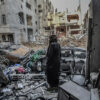
Lost Opportunities to Halt Rising Military Spending
The United Nations issued a year end Fact Sheet: Rising global military expenditures, starkly illuminating that last year’s record high of $2.7 trillion in military expenditures, caused a cascade of devastating consequences to human well-being, the environment, possibilities for avoiding climate collapse, as well as blows to employment, ending hunger and poverty, providing health care, education, and other ills, due to a lack of adequate funding support.
Trump De-dollarisation Accelerant
While US President Donald Trump has blamed the BRICS and foreign investors for de-dollarisation, his rhetoric, actions and policy measures are mainly responsible for the trend’s recent acceleration.
When Democracy Freezes, Autocrats Rise
Consider our political systems not merely as battlegrounds of passions, ideologies and economic interests, but as systematically functioning arrangements of interactions, akin to game theory. In recent decades, we have witnessed the dissolution of large homogeneous groups into numerous subgroups — a patchwork of minorities.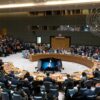
Security Council’s Deep Concern Over United States’ Venezuela Action
United Nations Secretary-General Antonio Guterres expressed deep concern about the immediate future of Venezuela. In a statement read by Under-Secretary-General for Political and Peacebuilding Affairs Rosemary DiCarlo, Guterres told the Security Council’s emergency meeting he was deeply concerned about “possible intensification of the instability in the country, the potential impact on the region, and the precedent it may set for how relations between and among states are conducted.”
Skyrocketing Military Spending Undermines Development Aid to World’s Poor
The statistics are staggering: while military spending keeps skyrocketing, Official Development Assistance (ODA)-- from the rich to some of the world's poorer nations-- has been declining drastically.
‘This Anti-LGBTQI+ Bill Can Still Be Blocked – but Only With Sustained International Pressure’
CIVICUS discusses Kazakhstan’s anti-LGBTQI+ bill with Temirlan Baimash, activist and co-founder of QUEER KZ youth initiative, a Kazakhstani LGBTQI+ organisation.
Sudan’s Crisis: Mass Killings Continue While the World Looks Away
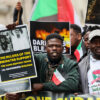
Satellite images show corpses piled high in El Fasher, North Darfur, awaiting mass burial or cremation as the Rapid Support Forces (RSF) militia tries to cover up the scale of its crimes. Up to 150,000 El Fasher residents remain missing from the city, seized by the RSF in November. The lowest estimate is that 60,000 are dead. The Arab militia has ethnically cleansed the city of its non-Arab residents. The slaughter is the latest horrific episode in the war between the RSF and the Sudan Armed Forces, sparked by a power battle between military leaders in April 2023.« Previous Page — Next Page »





