Languages
Saturday, November 7, 2026



News and Views from the Global South
Armed Conflicts

ECW’s New Report Shows Successful Education Funding Model for Crises-Impacted Children
In a world set on fire by climate change and brutal conflict, millions of children in emergencies and protracted crises need educational support. Children in 48 out of 49 African countries are at high or extremely high risk of the impacts of climate change, particularly in the Central African Republic, Chad, Nigeria, Guinea, Somalia, and Guinea Bissau.
Twenty Years on from the UN Bombing in Baghdad, What’s Changed?
Twenty years ago this month, a colleague saved me from a likely gruesome death. He insisted I stay in his Baghdad office of the World Food Programme (WFP) for a hot drink. “You can't leave us without trying the tea I made for you! The best in Iraq.”
Kazakhstan’s Transition: From a Nuclear Test Site to Leader in Disarmament
Exactly 32 years ago, on August 29, 1991, Kazakhstan, then part of the Soviet Union, made a historic decision that would alter its fate. On that day, Kazakhstan permanently closed the Semipalatinsk Nuclear Test Site, defying the central government in Moscow. This marked the start of Kazakhstan's transformation from a nuclear-armed state, possessing the fourth-largest nuclear arsenal at the time, to a non-nuclear-weapon state. Kazakhstan's audacious move to eliminate its nuclear weapons was rooted in a profound commitment to global disarmament, setting an inspiring precedent.
The UN’s Own Relevance Is at Stake at This Year’s General Assembly
This September, world leaders and public policy advocates from around the world will descend on New York for the UN General Assembly. Alongside conversations on peace and security, global development and climate change, progress – or the lack of it – on the Sustainable Development Goals (SDGs) is expected to take centre-stage. A major SDG Summit will be held on 18 and 19 September. The UN hopes that it will serve as a ‘rallying cry to recharge momentum for world leaders to come together to reflect on where we stand and resolve to do more’. But are the world’s leaders in a mood to uphold the UN’s purpose, and can the UN’s leadership rise to the occasion by resolutely addressing destructive behaviours?
What Niger’s Coup Says About US Security Assistance in the Sahel
In what has become an all too familiar phenomenon, U.S.-trained security personnel have been implicated in the July 26th coup that deposed Niger’s democratically elected president, Mohamed Bazoum.
‘Investing’ Key to the Prevention of Military Coups – UN
The United Nations says increased investment in the Sahel region will assist in preventing military coups. This after military officers in Gabon announced a seizure of power from long-time President Ali Bongo Ondimba following the results of a disputed election in Gabon on Wednesday.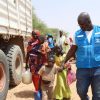
Want to Prevent Atrocities? Think Locally. Act Locally
When I first travelled to the Middle Belt of Nigeria, I listened to harrowing tales of murdered family members, physical injury, sexual violence, displacement, and hopelessness. In the years that have passed, these stories have only continued to stack up.
General Assembly President Calls for a ‘Human-Centered Approach to Disarmament’
The President of the UN General Assembly, Csaba Kőrösi, struggled to find a reason to celebrate the 13th International Day against Nuclear Tests. There have only been five nuclear tests, all conducted by North Korea since the day was declared in 2010. Still, Kőrösi said he sees a world plagued by more distrust, geopolitical competition, and conflict than before.
Digging Africa Deeper into Hunger
Annual Green Revolution Forum ignores widespread failure of its push for industrialized agriculture
As the adage goes, when you find yourself stuck in a hole, stop digging. As African leaders and their philanthropic and bilateral sponsors prepare for another glitzy African Green Revolution Forum, convening September 5-8 in Dar es Salaam, Tanzania, they are instead handing out new shovels to dig the continent deeper into a hunger crisis caused in part by their failing obsession with corporate-led industrialized agriculture.

Debt & Crisis of Survival in Sri Lanka & the World
Sri Lanka has been faced with an unprecedented political and economic crisis since the beginning of 2022. The dominant narrative attributes the crisis to the confluence of the COVID-19 pandemic, the Ukraine conflict, China’s ‘debt trap diplomacy’ and – most importantly – the corruption and mismanagement of the ruling Rajapaksa family.
International Systems Are Key for Ethiopia’s Security and Development Amidst Renewed War
Less than a year since warring parties in Ethiopia signed a peace agreement, the country is on the brink of renewed bloodshed following escalating hostilities between government forces and the Fano militia in the Amhara region.
Sexual Violence Survivors in Tigray Need Urgent Medical, Psychological and Economic Support
The war in Tigray, northern Ethiopian, led to sexual and gender-based violence against women, but when Hilina Berhanu Degefa, researcher, gender policy expert and co-founder of the Yellow Movement AAU, appeared before the UN Security Council Open Debate on Sexual Violence in Conflict last year, and catalogued the problems that the victims of the war faced, it didn’t shock the world.
Moving From Trauma to Healing: Practicing Self-Care in Refugee Camps
A Rohingya woman tells a forum of peer counselors the story of her divorce. A survivor of domestic abuse, she has started a new life alone with her daughter. She has weathered a storm of neighbors telling her she was the problem. Now, she provides the support she didn’t have to other women like her.
Kenya: Cost of Living Protests Met with Police Repression
Protests against the high cost of living in Kenya have been met with police violence. Talks are currently underway between government and opposition – but whatever results will fall short unless it brings accountability for the catalogue of human rights violations committed in response to protests.
Russia Upstages Neo-Colonialist France in West Africa
Going back to the 16th century and continuing through the late 1960s, France was described as the world’s second largest colonial power—just behind the British Empire. As the old saying goes: The sun would never set over the British Empire because God wouldn’t trust an Englishman in the dark. But would that also apply to the French colonial empire?
G20: Cutting Food Loss and Waste is an Opportunity to Improve Food Security
With the ongoing global food crisis—triggered by the COVID pandemic, disasters, supply chain disruptions, and conflict in Ukraine—food security should be at the top of the G20 agenda when countries gather in India in September 2023.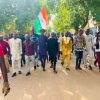
France, Russia, ECOWAS in Battle for Soul of West Africa
On July 26 2023 a man named Colonel-Major Amadou Abdramane, flanked by soldiers with military fatigues, appeared on Niger's national television to announce the execution of a coup. It was the country’s fourth coup since it gained independence from France in 1960.
Putin’s Many Paradoxes & Russia’s Weaponisation of Food
Russia’s special military or colonization operation in Ukraine continues to surprise. These surprises come from a decided absence of strategic thinking by Vladimir Putin and the Kremlin.
Education Cannot Wait Interviews The Rt. Hon. Andrew Mitchell, United Kingdom Minister of State (Development and Africa)
The Rt. Hon. Andrew Mitchell was appointed as a Minister of State in the Foreign, Commonwealth & Development Office (FCDO) on 25 October 2022. He was previously Secretary of State for International Development from May 2010 to September 2012. He was elected Conservative MP for Sutton Coldfield on 7 June 2001.

Ukraine Humanitarian Response Plan Only 30 Percent Funded
Civilian infrastructure is under attack in cities across Ukraine, and the need for long-term aid grows. However, the United Nations’ 2023 Humanitarian Response Plan for Ukraine is only 30 percent funded, the Humanitarian Coordinator for Ukraine, Denise Brown, told journalists.
Should Military Leaders be Barred from Addressing the UN?
A rash of military coups in African countries -- including Burkina Faso, Sudan, Guinea, Mali, and most recently Niger-- has raised a legitimate question: What should be the response of the United Nations, a world body that swears by multi-party democracy, on army take-overs? Condemnation? Yes.« Previous Page — Next Page »





Armed conflicts are a sad constant on daily front pages worldwide. Wars, civil wars, revolts, coups, genocides, ethnic and political violence, and global terrorism capture our attention for the geopolitical landslides, human suffering, food crises and streams of migration that follow in their wake. As in times of natural disaster, man-made crises claim frequent casualties among the poor, women and children. IPS examines emerging and ongoing armed conflicts around the world with an eye on the underlying social and political dynamics, and special focus on the lived experiences of those most affected by armed conflict.

The Week with IPS

NEXT STOP - SDGs
Tracking global progress towards a sustainable world
Tracking global progress towards a sustainable world
