Languages
Sunday, October 4, 2026



News and Views from the Global South
Asia-Pacific

Imagery, Algorithms, and the Ballot: What Takaichi’s Victory Says About Youth Politics in the Digital Age
Sanae Takaichi’s electoral victory in February marks a historic turning point in Japanese politics. As Japan’s first female prime minister and the leader of a commanding parliamentary majority, she represents change in both symbolic and strategic terms. Conventional wisdom long held that younger Japanese voters leaned progressive, were sceptical of assertive security policies, and disengaged from ideological nationalism. Yet a segment of digitally active youth rallied behind a politician associated with constitutional revision, expanded defence capabilities, and a more unapologetic articulation of national identity. This shift cannot be reduced to a simple conservative swing. Rather, Takaichi’s rise reflects a deeper transformation in how democratic politics is constructed in the digital age: the growing power of imagery, digital mobilisation, and algorithm-driven branding in shaping political choice—particularly among younger voters.

How do we Navigate Asia-Pacific’s Climate-Cyber Polycrisis?
Communities globally are increasingly exposed to overlapping threats. Extreme weather, health emergencies and cyberattacks are occurring more frequently and simultaneously, often interacting in ways that amplify risks and strain response systems.
UN Leaders, Diplomats Warn of Middle East Instability Following Weekend Air-Strikes in Iran
The United States and Israel launched a joint military strike on Iran on February 28. Iran followed with military strikes on Israeli bases and on Arab Gulf states, including Bahrain, Oman, and the United Arab Emirates. The realized threat of a new war has caused alarm for the security situation in the Middle East and its impact on civilian populations.
Philippines: ‘Preventing Similar Cases Requires Dismantling the Mechanisms That Treat Dissent as Crime’
CIVICUS discusses the criminalisation of dissent in the Philippines with Kyle A Domequil, spokesperson of the Free Tacloban 5 Network, a campaign supporting journalist Frenchie Mae Cumpio, human rights defender Marielle Domequil and their co-accused and advocating for their release.

Trachoma: What It Takes to Eliminate a Disease in the Pacific Islands
Two Pacific Island nations have been applauded for their successes in the global health campaign to eliminate the infectious eye disease, Trachoma.
Players Score Dignity in India’s First Transgender Football League
Pyari Hessa, 26, balances long shifts as a loco traffic controller at a steel company in Jamshedpur with evening football practice on the same turf where professionals train.
From Grief to Guns: Baloch Women in Conflict
Fozia Shashani, 26, a member of the Baloch Yakjehti Committee, said it was “most painful” to hear reports that two Baloch women – Hawa Baloch, 20, and Asifa Mengal, 24 – had taken part in active combat as suicide bombers. The path, she said, was in complete contrast to her belief in peaceful resistance. Yet, she added, such extreme choices were the result of a state that had “failed its people.”
Regional Trade in Transition: Digitalization, Servicing and De-risking
Trade in the Asia-Pacific region has moved into a new strategic reality. The latest Asia-Pacific Trade and Investment Trends (APTIT) highlights that rapid technological change and a strategic reconfiguration of supply chains are reshaping how economies in the region trade and compete.
Bay of Despair: Rohingya Refugees Risk Their Lives at Sea
Dawn is breaking and the world’s biggest refugee camp stirs to life. Smoke rises from small cooking fires among rows of bamboo and tarpaulin shelters as children line up for food.
A Pathway to Gender Equality in ASEAN
The COVID-19 pandemic reminded everyone how important care work is to daily life. When schools closed and hospitals filled up, often it was women and girls who stepped up at home. Their contributions made a big difference, yet these responsibilities often go unseen and unrewarded.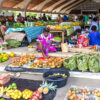
Local Resilience Can Mitigate Climate Conflicts in the Pacific
The Pacific Island countries are at the frontline of climate change. Their territories mostly consist of small, low-lying islands, with long coastlines and vast ocean spaces between them. Many livelihoods are based on agriculture or fishing, and importing water or food is often infeasible or expensive. This makes those large ocean nations highly vulnerable to the impacts of climate change, such as storms, droughts, and rising sea levels. Analysts have expressed concerns that this can result in various forms of socio-political conflict.

‘After Decades of Denial and Silence, the Suffering of Rohingya People Is Being Heard at the World’s Highest Court’
CIVICUS discusses the genocide case against Myanmar at the International Court of Justice (ICJ) with Mohammed Nowkhim of the Arakan Rohingya Society for Peace & Human Rights (ARSPHR), a civil society organisation led by Rohingya people born out of refugee camps in Bangladesh to document atrocities, preserve survivor testimony and advocate for accountability and justice.
‘When Rains Come, Our Hearts Beat Faster’
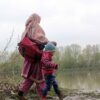
When the rain begins in Kashmir's capital Srinagar, Ghulam Nabi Bhat does not watch the clouds with relief anymore. He watches them with calculation. How much can the gutters take? How fast will the river rise? Which corner of the house will leak first? Where should the children sleep if the floor turns damp?
Myanmar: Five Years Since the Coup and No End in Sight To War
Five years of conflict since the military seized power have reduced Myanmar to a failed state and taken a huge toll of lives lost and destroyed. But with all sides seeking total victory, there is no end in sight.
Explainer: Why Nature Is Everyone’s Business
Our food, fuel, and fortunes come from nature, but as these resources are turned into profits, the balance between exploiting and replenishing the planet is ever more precarious. Global businesses impact nature through mining, manufacturing, processing and retail operations. At the same time, nature impacts business operations because there is a loss of biodiversity and extreme weather events such as droughts, floods, and high temperatures.
Business Growth and Innovation Can Boost India’s Productivity
India’s productivity growth over the past two decades has been impressive, reflecting rapid expansion in high-value services, gradual efficiency-enhancing reforms, and scale advantages from a large domestic market.
Exiled: Myanmar’s Resistance to Junta Rule Flourishes Abroad
From construction and hotel workers to kitchen and restaurant staff—estimates of the numbers of Myanmar migrants living in Thailand range up to six million, with a surge of new arrivals since the 2021 military coup.
‘Since the Coup, Factory Employers Have Increasingly Worked with the Military to Restrict Organising and Silence Workers’
CIVICUS speaks to the Business and Human Rights Centre (BHRC) about labour rights abuses in Myanmar’s garment industry since the 2021 military coup.

Binalakshmi Nepram: Engineering Peace, Creating History
It was Christmas eve: some two decades ago. Binalakshmi Nepram was a witness to the killing of a 27-year-old. In utter disbelief, she saw a group of three men dragging the victim from his workshop. Within minutes, he was shot dead.
As Korea Ages, Fiscal Reforms Can Help Safeguard Government Finances
Korea’s population is aging faster than almost any other country. That’s because people live longer than in most other countries, while the birth rate is one of the lowest in the world.
Steering Nepal’s Economy Amid Global Challenges
Nepal has a unique opportunity for transformation. The recent youth-led protests underscored aspirations for greater transparency, governance and a more equal distribution of economic opportunities and resources. This yearning resonated in Nepal and beyond.« Previous Page — Next Page »


The Week with IPS

NEXT STOP - SDGs
Tracking global progress towards a sustainable world
Tracking global progress towards a sustainable world
